
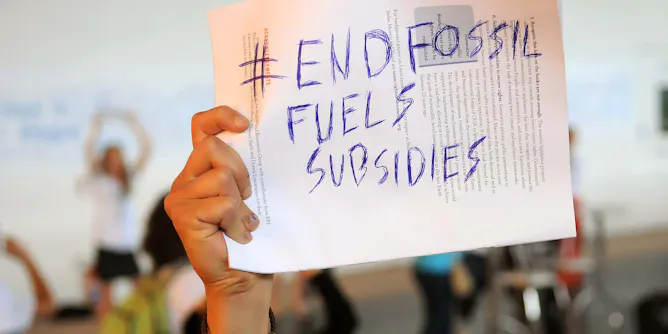
South Africa subsidises fossil fuel companies to the tune of R118 billion (US$6.2 billion) a year. As G20 president, South Africa must push to end these subsidies.
Articles on Just transition
Displaying 21 - 40 of 106 articles
There have always been tensions between developed and developing countries in terms of what is ‘fair’. A new book explains what needs to shift.
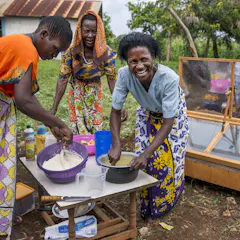
Ubuntu feminism – the idea that everyone is obliged to care for each other’s wellbeing – should become a central focus of the renewable energy rollout in Africa.
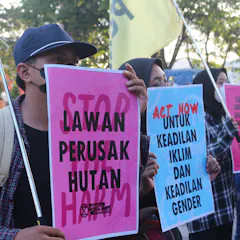
Indonesia’s climate documents have failed to adequately address the social and environmental aspects that are fundamental to a just transition.
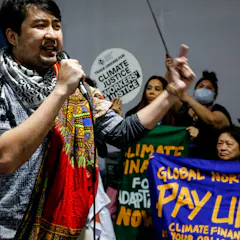
Reducing emissions, removing greenhouse gases, repairing ecosystems and building resilience are the four R’s that can save the planet.

Farm workers milk cows, drive machinery and pick crops – yet their grievances are seldom heard.
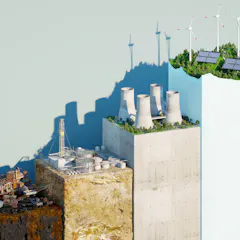
African countries must start manufacturing their own renewable energy systems. Green industrialisation will boost the continent’s economic development.
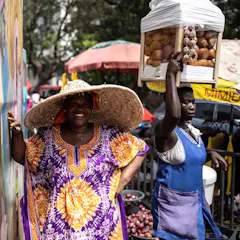
Simple either/or ways of seeing women overlook the power dynamics and structural factors that give rise to the stereotypes.
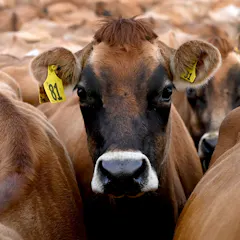
Fewer cows on the farm and a broader range of farming practices, including involvement in the emerging alternative proteins industry, could help New Zealand’s dairy sector remain viable.
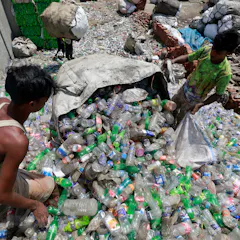
To be truly fair, a global treaty on plastic pollution must tackle the inequalities at the heart of current recycling and waste management systems.
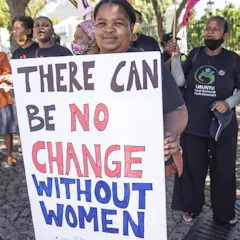
Evidence suggests that a low-carbon transition could worsen gender inequalities if not properly addressed in climate policy.
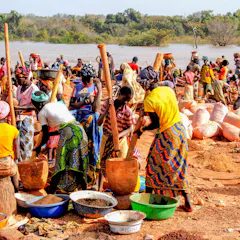
A just transition goes beyond ‘greening’ energy systems. It must also focus on the unrecognised labour – mostly of women – that makes green energy industries possible.

So-called ‘just transition litigation’ focuses on the social justice implications of climate policies.
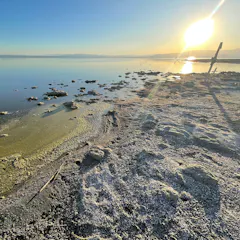
The promised ‘white gold rush’ would extract lithium alongside geothermal power production. The mineral is used in EV batteries, but even this less-polluting mining raises local health concerns.
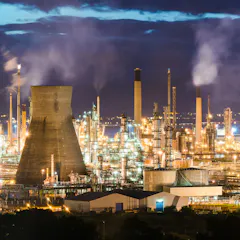
To achieve a ‘just transition’ from oil and gas to renewables, the UK government must learn from what happened with coal.
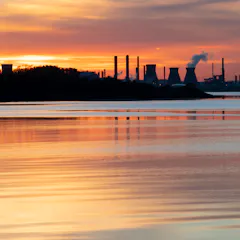
The green jobs promised by government won’t come quickly enough for the workers at the Grangemouth refinery.
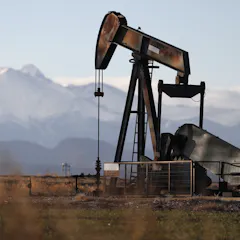
Slowing climate change means cutting fossil fuel use. Many oil- and gas-producing communities aren’t prepared for that future, as a former White House economic and climate adviser explains.

South Africa is phasing out coal and, with it, 91,000 jobs in coal mines and power stations. With no guarantee of retraining or decent work in renewable energy, these workers are concerned.

Climate change is a pressing issue, but its impacts are not felt equally by everyone. A new report seeks to address this by arguing for the importance of climate justice in the tourism industry.

A green new deal is practical, politically possible, and the best chance we have to achieve a just carbon-zero transition in Canada.
Top contributors
-

Senior Lecturer in Climate Justice, University of Bristol
-
Research Principal, Institute for Sustainable Futures, University of Technology Sydney
-
Professor of Physics, University of Johannesburg
-
PhD Candidate in Bioeconomy, University College Dublin
-
Associate Professor in Political Theory and Public Policy, UCL
-
Pro Vice-Chancellor, Climate, Sustainability and Inequality and Director, Southern Centre for Inequality Studies, University of the Witwatersrand
-
Senior Lecturer in Politics, University of Strathclyde
-
Associate Professor, School of Science, University of Newcastle
-
Professor, Department of Geography & Environmental Studies, University of Regina
-
Researcher in Renewable Energy, University of Cape Town
-
Chair of Energy and Climate Governance, University of Manchester
-
Postdoctoral Research Fellow in Energy Transitions, Deakin University
-
Research Principal, Institute for Sustainable Futures, University of Technology Sydney
-
Lecturer in Global Inequalities, University of Glasgow
-
Environment + Energy Editor and Host of the Climate Fight podcast series, The Conversation