
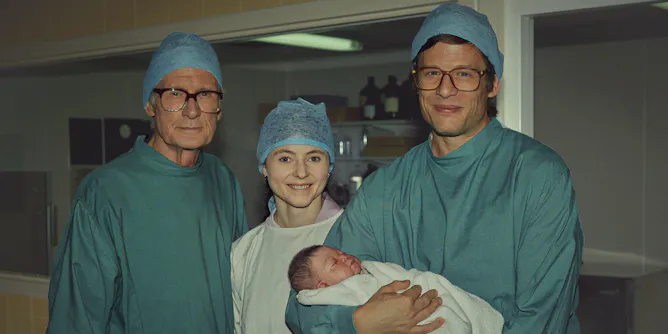
Embryologist Jean Purdy suffered from endometriosis and helped pioneer IVF.
Articles on IVF
Displaying 21 - 40 of 173 articles

Māori and Pacific women are particularly disadvantaged by the BMI limit on access to public fertility treatment. Research shows Polynesians are much leaner than Europeans at significantly higher BMIs.
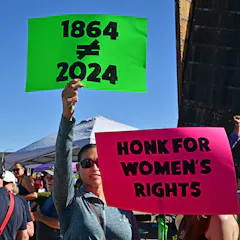
While the Republican Party platform has typically included anti-abortion language, this year’s platform is curiously silent on the issue.

Compared with voters who are trying to have kids or haven’t decided yet, those who definitely don’t want to have kids – known as the ‘child-free’ – have a different set of political priorities.
This link might be explained by a woman’s immune response when carrying a baby that’s not genetically hers.

Accessing super early may be the only way for some people to access life-changing medical care. But there aren’t currently enough safeguards to protect consumers from potential exploitation.
Research shows reproductive health issues are having an impact on the workplace and potentially the economy.

We hear a lot about women’s biological clock and how age affects the chance of pregnancy. But age also affects men’s fertility. Here’s how.
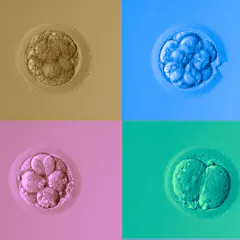
A study of more than 1,000 IVF patients showed a deep learning software system was almost as good as human experts at choosing viable embryos.
Some Muslim patients have to choose between treatments that violate their religious beliefs, or forgoing parenthood altogether.
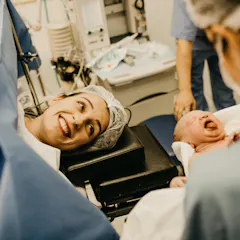
Mitochondrial disease is an inherited condition with a poor prognosis. But a technique using a donated egg can stop this fault passing on to babies.
A scholar who studies Southern Baptists explains why the denomination’s ultraconservative beliefs about women remain the same.
Laws such as Alabama’s controversial ruling that gives personhood rights to frozen embryos will have ripple effects on how advance directives are interpreted by doctors and the courts.

In the past, when courts considered disputes over what to do with no-longer-wanted embryos, they typically considered them property. The Alabama ruling challenges this legal precedent.
I’m a scholar, not an activist or an advocate. But now one of the most intimate, personal events of our lives had been turned into a political event by the state’s highest court.
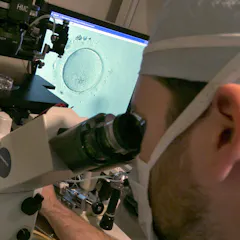
Alabama’s case began when three couples sued an IVF clinic where their frozen embryos had accidentally been dropped.

What constitutes an ‘unborn child’ should not be decided by a relatively small number of religious conservatives.
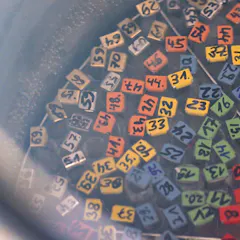
IVF is a decades-old procedure that has allowed increasing numbers of prospective parents to have children. Evolving legislation may put it under threat.

A recent ruling from the Supreme Court of Alabama implies frozen embryos are legally equivalent to living children. This creates risks for IVF providers, and therefore problems for patients.

Surrogacy can exploit women, but others may choose to be involved for altruistic reasons. A scholar points out that surrogacy’s ethical value is dependent upon the people and systems who use it.
Top contributors
-

Adjunct Senior Research Fellow, Global and Women's Health, School of Public Health & Preventive Medicine, Monash University
-
Dean and Professor, Law School, La Trobe University
-
Senior Lecturer, School of Social Sciences and Humanities, Loughborough University
-
Emeritus Professor of Reproductive and Periconceptual Medicine, The Robinson Research Institute, Adelaide University
-
Associate Professor of Law (Health Law), Deakin University
-
Clinical Associate Professor, Faculty of Medicine, Dentistry & Health Sciences, The University of Melbourne
-
Monash University
-
ARC Industry Fellow, Monash Bioethics Centre, Monash University
-
Professor - Emerging Technologies (Stem Cells) at The University of Melbourne and Group Leader - Stem Cell Ethics & Policy at the Murdoch Children's Research Institute, The University of Melbourne
-
Lecturer in the School of Applied Sciences, Edinburgh Napier University
-
Professor and Group Leader, Reproductive Epidemiology, Murdoch Children's Research Institute
-
Professor of Bioethics, Monash University
-
Reader in History and Deputy Dean of Humanities (Research), University of Essex
-
Professor, Director of the National Perinatal Epidemiology and Statistics Unit, UNSW
-
Research Fellow in Biomedical Ethics, The University of Melbourne