
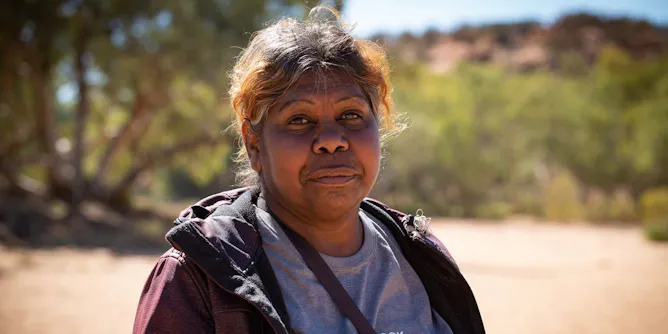
The murder of R. Rubuntja brings to light the ways Australian media and the Australian justice system continues to fail First Nations women.
Articles on Intimate partner violence
Displaying 81 - 100 of 135 articles

Five red flags parents should listen for in popular songs.

For women outside urban Australia, technology-enabled abuse can pose more risk than for those in cities.

Family courts’ hostility – both in the US and abroad – toward claims of paternal or spousal abuse has been widely reported. Now there’s an in-depth study that documents that hostility.

When tech companies aim for ‘safety by design’, they can reduce the risk their products will be weaponised for stalking and domestic violence.

One in three Canadian youth experience dating violence. Early intervention is critical to preventing the negative effects, but adolescents report significant barriers to finding support.

When addressing domestic and partner violence, First Nations communities need to be involved in how men’s behaviour change programs are developed and delivered.
Establishing specialist women’s police stations has been suggested as a solution to violence against women in Australia. However research does not cover racial and gender inclusion in this policing.
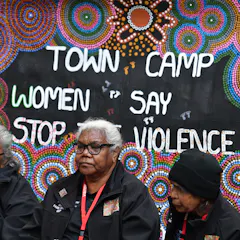
The recent Women’s Safety Summit highlighted Australia’s problem with gender-based violence. However, violence experienced by Aboriginal and Torres Strait Islander women is still not being addressed.

Young people living in the challenging contexts of urban informal settlements may be more at risk of experiencing generalised anxiety disorder.

Prominent cases continue to draw attention to the wrongful imprisonment of First Nations women.
A change in how witnesses, victims and authorities respond to domestic violence reports paired with limited social services placed victims in a vulnerable position during the pandemic.
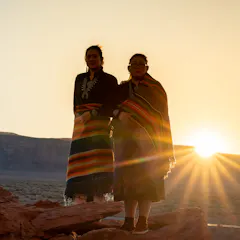
With the reauthorization of the nation’s landmark anti-domestic violence law, there’s the chance that more cases of violence against Indigenous women will be prosecuted.

Policies are needed to prevent child marriage and protect women who marry as children from abusive relationships.

The law continues to treat intimate partner violence like a bar fight – considering only what happened in a given violent incident. But domestic violence isn’t about just physical violence.
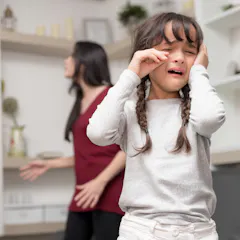
Children exposed to intimate partner violence were two to three times more likely to have impaired language skills, sleep problems, elevated blood pressure and asthma.

A sexual education program in Mexico City provides a blueprint for Australia. It shows how to engage students in conversations about lived experiences, among other effective methods.

Following the 2009 Victorian Black Saturday bushfires, more than half the women in one study reported experiencing domestic and family violence. Many had never experienced it before.
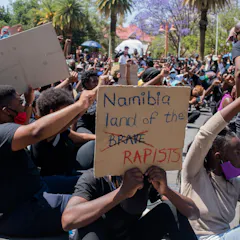
The protests carried on for days and continue to simmer in a country whose social fabric has been torn by toxic masculinity and a violent colonial past.

Australia first needs a better understanding of what coercive control is and how to respond to it. If law reform is rushed, victims will be put at risk.
Top contributors
-

Professor (Practice), Faculty of Business and Economics, Monash University
-
Managing Director, Her Story Consulting & Postdoctoral fellow, Australian National University
-
PhD Candidate, Western University
-
Professor of Family Violence Prevention, The University of Melbourne
-
Eleanor Rathbone Chair of Sociology, University of Liverpool
-
Research Scientist, African Population and Health Research Center
-
Professor of Family and Sexual Violence, RMIT University
-
Professor of Law and Deputy Director of the Centre of Excellence for the Elimination of Violence Against Women (CEVAW), The University of Melbourne
-
Principal Research Fellow, Griffith University
-
Research Technician at RESOLVE (Research and Education for Solutions to Violence and Abuse), University of Manitoba
-
Professor and Co-Lead of the Sexual and Family Violence Program at the Department of General Practice & Primary Care, The University of Melbourne
-
Associate Professor of Public Health, University of Michigan
-
Senior lecturer, University of Exeter
-
Postdoctoral Research Fellow, University of Tasmania
-
Lecturer in Criminology, University of Liverpool