

Changing NZ’s Crimes Act to cover family pets caught in violent situations is a good start. But better resourcing and training will be needed to make it work.
Articles on Coercive control
Displaying 1 - 20 of 61 articles

Violence toward animals and people often occur together. Understanding these connections can improve safety and outcomes for both.

At the time, many people personally identified with Ellis and her experiences of abuse.

Florida’s new unified human trafficking database allows criminologists to determine the scope of the problem and find patterns of exploitation.

Perpetrators used emotional connection to create a sense of closeness early in the relationship, later using it against their victims.

A study interviewing teenagers reveals how parents can coercively control their children under the guise of parental discipline.

New laws are needed to tackle exploitation and coercive control in religious cults What can other states learn from Victoria’s parliamentary inquiry?

First came psychological abuse, then physical, then came sexual abuse.

Location-sharing apps provide convenience and a sense of security for families. But they can also be used as a weapon of control.

One episode brought up three troubling facets of violence: physical violence, coercive control, and expectations of male dominance.

In her new Quarterly Essay, anti-violence campaigner Jess Hill asks whether the government’s response to gender-based violence is fit for purpose.

Abuse in intimate relationships often occurs in a cycle, consisting of three main phases.

Despite global efforts to see economic harm as a form of domestic violence, New Zealand’s Family Violence Act doesn’t recognise it as a standalone form of abuse.

There are several ways a person using violence may exploit their own substance use, or that of those around them, to gain more power. This is sometimes called ‘substance use coercion’.

Liz Evans’ novel of fractured souls and tentative female trust is a natural evolution of the genre of #Metoo fiction.

Like mandatory charging policies, criminalizing coercive control could turn out to be harmful to the victim-survivors they were intended to protect.

In Miranda Darling’s feminist fiction, Mrs Dalloway is a Sydney wife and mother who refuses to be tamed, despite her husband’s attempts at coercive control.
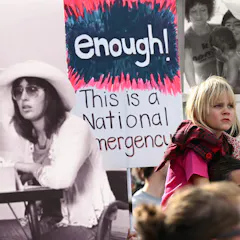
This is not the first time domestic violence has been declared a national crisis. Australian governments first got seriously involved in 1985. What can the past 40 years teach us?

Being given information about the violent past of a current partner can be life changing. Police forces need better resources to be able to process requests.

The concept of “coercive control” reframes domestic violence as an attack on human rights and resources rather than an assault.
Top contributors
-

Eleanor Rathbone Chair of Sociology, University of Liverpool
-
Senior Lecturer in Law, City St George's, University of London
-
Professor (Practice), Faculty of Business and Economics, Monash University
-
Psychologist and Programme Leader, University of Salford
-
Psychologist and Programme Leader, University of Salford
-
Dean, School of Law, Deakin University
-
Associate Professor, School of Humanities and Languages, UNSW
-
Professor of Gender Abuse and Policy, London South Bank University
-
Professor of Social Work; Leneen Forde Chair in Child & Family Research, Griffith University
-
CEO, Sentencing Advisory Council
-
Professor of Criminal Law and Criminal Justice , De Montfort University
-
Professor of Social Work, The University of Melbourne
-
Lecturer in Criminology, Sheffield Hallam University
-
Professor of Family and Sexual Violence, RMIT University
-
Associate professor, Monash University