
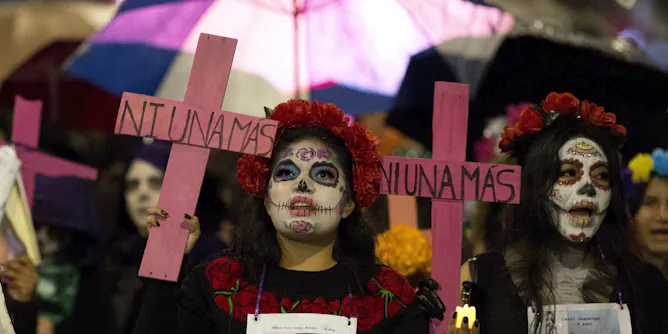
Nearly all countries in the region have criminalised either femicide or feminicide, which has had a tremendous impact on society.
Articles on Intimate partner violence
Displaying 41 - 60 of 135 articles

A domestic violence disclosure scheme is a resource people can check to find out if a particular person has a documented history of domestic violence.

Women are overwhelmingly the victims of sexualised violence, and men are commonly the perpetrators.
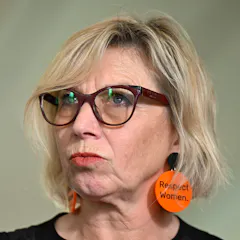
In her new memoir Hope, Rosie Batty reflects on her ‘absolute despair’ at our failure to protect women and children from gendered violence – and the personal toll of becoming an unlikely campaigner.
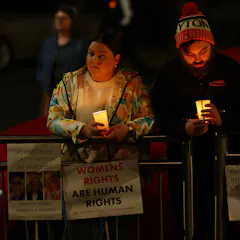
It has been a distressing time. Australians have been – and will continue – taking action to end gender-based violence. So, are we making any progress? Here’s what the data show.

Emotional, violent and sexual abuse are rife at an age when victims are scarred for life.

New research shows that for people living with long COVID and intimate partner violence, each was exacerbated by the other and services were inadequate.

Childhood adversity can put people at risk of perpetrating domestic violence in the future. Having a supportive social network and learning ways to regulate the stress response, however, can help.

Increases in intimate partner violence have highlighted the need for creative and innovative ways of addressing the issue, particularly during emergencies.

The landmark inquest is investigating how four women killed by their partners were failed by systems meant to protect them. How can we stop this from happening?

While it can feel like little progress is being made to stop women being killed by their partners or ex-partners, the data show a steady decline in recent years.

A mass shooting in Sault Ste. Marie, Ont. has been classified as a case of intimate partner violence.

Some children and young people escape family violence, only to find themselves alone, homeless and in violent relationships. How can we support and protect these vulnerable adolescents?

The Victorian parliament has introduced a bill to criminalise non-fatal strangulation – but consent could be a defence.

Teenagers are experiencing intimate partner violence and abuse that is putting their lives in danger. And they want help from others to spot the early warning signs.

Research shows gender-based violence increases in the aftermath of disasters. Governments must incorporate ways of addressing it into their disaster response plans.

The support of friends and family can be crucial for domestic abuse victims.
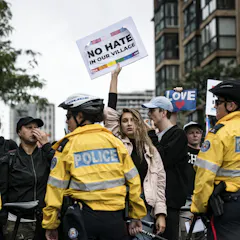
Research finds that police officers engage in discriminatory behaviours towards 2SLGBTQ+ survivors of intimate partner violence.

Police-academic partnerships are key to the success of evidence-based policing. Growing support for coercive control legislation makes research collaboration all the more urgent.

People who have experienced domestic violence can have trouble finding and keeping jobs because of physical injuries and their abusers’ efforts to sabotage their employment.
Top contributors
-

Professor (Practice), Faculty of Business and Economics, Monash University
-
Managing Director, Her Story Consulting & Postdoctoral fellow, Australian National University
-
PhD Candidate, Western University
-
Professor of Family Violence Prevention, The University of Melbourne
-
Eleanor Rathbone Chair of Sociology, University of Liverpool
-
Research Scientist, African Population and Health Research Center
-
Professor of Family and Sexual Violence, RMIT University
-
Professor of Law and Deputy Director of the Centre of Excellence for the Elimination of Violence Against Women (CEVAW), The University of Melbourne
-
Principal Research Fellow, Griffith University
-
Research Technician at RESOLVE (Research and Education for Solutions to Violence and Abuse), University of Manitoba
-
Professor and Co-Lead of the Sexual and Family Violence Program at the Department of General Practice & Primary Care, The University of Melbourne
-
Associate Professor of Public Health, University of Michigan
-
Senior lecturer, University of Exeter
-
Postdoctoral Research Fellow, University of Tasmania
-
Lecturer in Criminology, University of Liverpool