
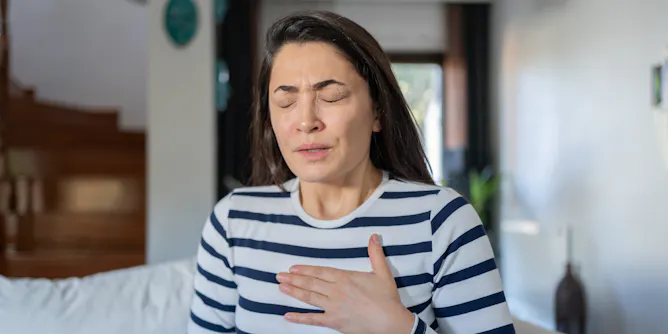
Uncontrolled inflammation is usually thought to be the culprit behind asthma. But in asthma patients who have survived intimate partner violence, a possible new pattern is emerging.
Articles on Intimate partner abuse
Displaying 1 - 20 of 25 articles
Research shows that rural women in the US are more likely to be killed by their current or former male partners compared to their urban and suburban counterparts.

Ghana needs to empower women by providing them with the resources they need to flourish and fight abuse.
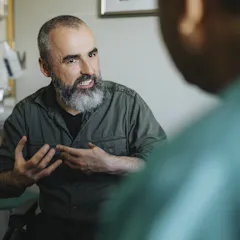
GPs can engage men who are at risk of perpetrating family violence – and prevent them harming their families. Here’s how.
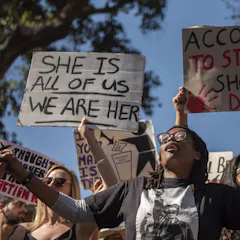
Individuals must be equipped with the tools to understand and practise consent.
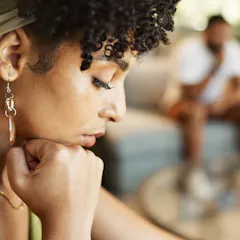
Behaviour to ‘promote’ or prevent pregnancy can intersect with domestic, family and sexual violence. It weaponises someone’s reproductive capacity to control them.

A domestic violence disclosure scheme is a resource people can check to find out if a particular person has a documented history of domestic violence.
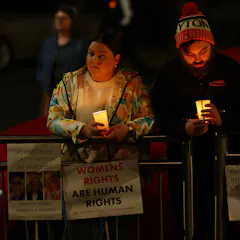
It has been a distressing time. Australians have been – and will continue – taking action to end gender-based violence. So, are we making any progress? Here’s what the data show.

I’ve been writing on representations of domestic abuse since the noughties. It has been gratifying to see the increase in fictional depictions of this theme in the 21st century.

Childhood adversity can put people at risk of perpetrating domestic violence in the future. Having a supportive social network and learning ways to regulate the stress response, however, can help.

Too often, sexual violence from an intimate partner is not taken seriously. New research shows the impact this can have on victim survivors, and how it can be redressed.

According to the texts shared by his ex girlfriend, Jonah Hill had a series of prohibitions for her behaviour during their relationship. He described these as his ‘boundaries’.

Much of the media coverage of Tina Turner’s victim-survivor status overlooks the fact that as a black woman she walked a fine line in speaking publicly about her experiences.

New research has investigated the way police respond to intimate partner violence against First Nations women.

Women in abusive relationships are much more likely to be unemployed and to earn less money than women with non-abusive partners.

Experience of any form of partner violence increases the risk of developing chronic illnesses. Healthcare professionals need to recognise family abuse as a health issue.

An expert in intimate partner abuse on why the world should ‘listen carefully’ to Pamela Anderson’s Netflix documentary.

Providing men who suffer domestic abuse with the help they need can also reduce violence experienced by women and children.

The COVID-19 pandemic has shown that shelters helping survivors of domestic violence are essential. Retention and recruitment issues in the gender-based violence sector require systemic solutions.

We need not just an acknowledgement of children as victim-survivors in their own right but a commitment to boost resourcing of child-centred recovery support.
Top contributors
-

Lecturer in Criminology, Sheffield Hallam University
-
Professor (Practice), Faculty of Business and Economics, Monash University
-
Professor of Family and Sexual Violence, RMIT University
-
Professor in Criminology and Justice Studies, RMIT University
-
Senior Lecturer, Interdisciplinary Studies, UMass Amherst
-
Professor of Social Work; Leneen Forde Chair in Child & Family Research, Griffith University
-
Eleanor Rathbone Chair of Sociology, University of Liverpool
-
Director of Monash Indigenous Studies Centre, Chief Investigator for the Australian Research Council Centre of Excellence for the Elimination of Violence against Women (CEVAW), School of Philosophical, Historical & International Studies, School of Social Sciences (SOSS), Monash University
-
Associate Professor of Criminology and Criminal Justice, The University of Texas at San Antonio
-
Senior Lecturer in Literature and Cultural Studies, University of East London
-
Assistant Professor at the School of Social Innovation, Université Saint-Paul / Saint Paul University
-
Postdoctoral Fellow, RMIT University
-
Senior Lecturer in Criminology, RMIT University
-
Assistant Professor of Economics, Purdue University
-
Associate Professor of Criminology, Simon Fraser University