
Social capital matters in academic career progress.
Articles on Intersectionality
Displaying 1 - 20 of 60 articles

Climate risk assessments guide how much funding is available to support climate impacts and need to work out which women are worst affected.
Medical sociology examines how social, cultural, political and economic factors shape health in ways that medicine alone cannot treat.

Science, technology, engineering and maths are still not an equal playing field for all. Here’s what needs to change.

More and more of us have experience or know someone with experience of being discriminated against. The personal is political.
Activists without ‘lived experience’ can feel unsure of their place.
Women only really emerged in Tunisia’s male-dominated rap scene with the revolution in 2011. And they’re rapping about much more than just patriarchy.
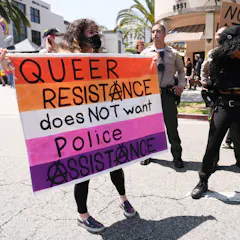
A landmark study of police-LGBTQ relations finds that 21% of respondents have been stopped by police in the past year, and 53% of Black trans respondents have been the victims of police brutality.

Many people agree freedom of speech has its limits and the law has some role to play in prohibiting harmful speech. But what should these laws look like?

The intersectionality of hate, which combines racism, antisemitism and misogyny, leads the white heterosexual male to believe that he is a victim of the “minorities” he must resist.
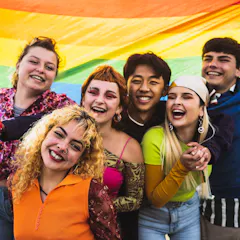
Defining allyship can be challenging. Some people disagree about who an ally is. Others disagree about what an ally does.
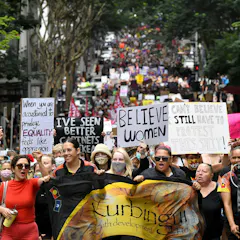
We’re used to describing feminism in ‘waves’, from the first in 1848, campaigning for women to vote, to the current fourth wave, in the age of #metoo. But do waves still work to describe feminism?
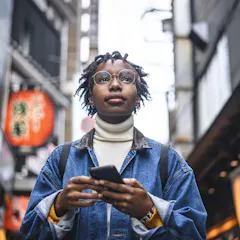
Black travelers want the tourism industry to recognize their full identity. That will require more than procedural checkboxes and targeted advertising.

Mae D Huettig, Romana Javitz and Shirley Graham DuBois were instrumental in their respective media fields but very few of us will be aware of their individual contributions.
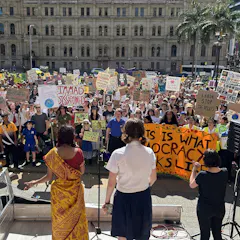
It’s been five years since school students first went on strike for climate action. Much has changed.
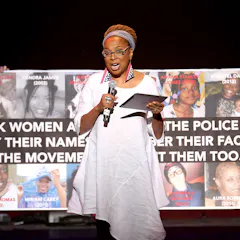
First used in the 1970s, the social theory known as intersectionality triggered widespread debate on racial identifications and the interplay among categories.

If diversity programs are to truly benefit Australia’s most disadvantaged groups, such as Indigenous people, more acknowledgement must be given to class and ‘intersectionality’.

Women have to take on more unpaid labour – and manage their emotional response to this extra work.
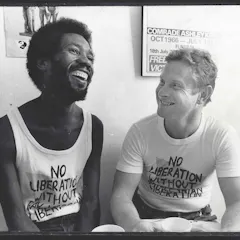
The activist is today the subject of songs, sculptures, an annual lecture and even a new musical.
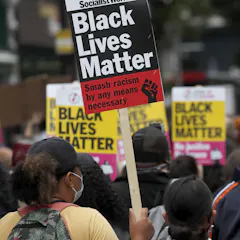
Digital activists are targeted for their work on intersectional issues. But they have developed strategies to deal with online and offline hate.
Top contributors
-

Assistant Director, UCL Grand Challenges, UCL
-
Ph.D. Candidate in Psychology, Northwestern University
-
Deputy Director of Public Policy, UCL
-
Assistant Professor, Teaching Stream, Black Health Lead, Dalla Lana School of Public Health, University of Toronto
-
Associate Professor, History, Macquarie University
-
Head of Urbanism and Associate Professor of Urban Studies, School of Architecture, Design and Planning, University of Sydney
-
Senior Project Advisor, Carumba Institute, Queensland University of Technology
-
Associate Professor of Health Care Ethics, Saint Louis University
-
Casual senior research fellow, Deakin University
-
Senior Research Fellow in Education, Deakin University
-
Lecturer in Criminology and Social Policy, The Open University
-
Professor of Organisational Behaviour, Brunel University of London
-
Assistant Professor in Law, University of Warwick
-
Indigenist Health Humanities Academic Director, Queensland University of Technology
-
Professor of Politics and Director of the Gender Research Centre, University of Bristol, University of Bristol