

Meta has revised how teenagers will experience Instagram. It’s a win – especially if it prompts parents to talk to their kids about online safety.
Articles on Instagram
Displaying 61 - 80 of 306 articles
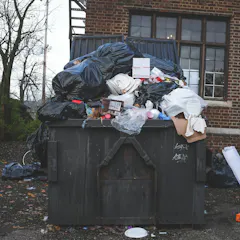
Almost all online ads are now automated. And they’re becoming more and more annoying.

There’s ever-evolving ways for children and young people to be harmed online. Here’s what kids think about the harms they experience and how to prevent them.

The Albanese government will legislate this term to enforce a minimum age for children to access social media.

Children under 14 would be banned from social media, while teens aged 14–15 would need parental consent. But this law will be challenging to implement.

Meta wants Apple and Google to force parents to approve apps on their child’s phone. A better solution would be for the tech giants to cooperate.

Cottage cheese has had a glow up. Forget bland and boring, and embrace the social media trend.

Even though social media is free to use, research found many US university students would pay to quit it – especially TikTok – if they could beat their fear of missing out.

Meta, the parent company of Facebook, has already switched news off in Canada. Australia could easily be next – here’s what that might lead to.

Decades of unequal coverage in traditional media has prompted women’s sport to use social media to increase visibility.

The global trade in data means minor drug dealing by 16-year-olds on social media could hurt their ability to get a job, house or insurance in their 30s.

Is a cellphone ban, along with increased surveillance, the right way to deal with the impact of addictive and harmful technology in classrooms?
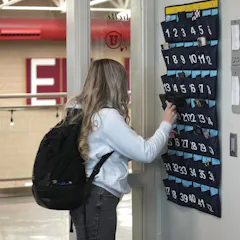
Four Canadian school boards are suing social media giants. This comes as 95 per cent of Ontario schools report needing more resources to support student mental health.
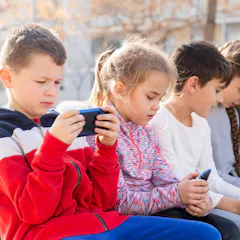
Four Ontario school boards have filed a lawsuit against social media platforms to force them to change practices that harm schoolchildren.

A new change to Meta’s apps will see users no longer recommended political content by default. The ramifications of this will be far-reaching.
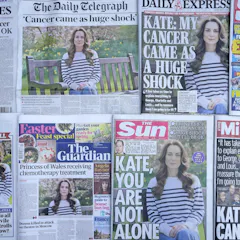
What should have been a simple announcement to a sympathetic public turned into a spider’s web of conspiracy theories across social media. How did it all go so terribly wrong?

Platforms like Facebook, Instagram and TikTok vie for our attention and boast billions of users. Ultimately, what matters is connection.

As political parties desperately battle for voters’ attention, cybersquatting is one of many online tools in the toolkit. It’s only effective at further diminishing trust in government.
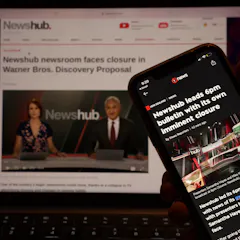
Calls for the Fair News Digital Bargaining Bill to be fast-tracked are misguided. A better solution would be a straight levy on digital advertising to fund public interest news production.
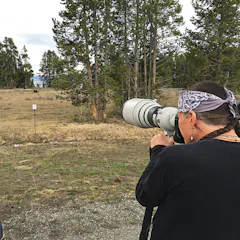
The caption may say that only scientists and trained professionals should handle wild animals, but viewers remember the image, not the words.
Top contributors
-

Professor of Internet Studies, Curtin University
-
Professor of Information Sciences & Director, Social Change Enabling Impact Platform, RMIT University
-
Research Fellow in Public Health, The University of Queensland
-
NHMRC Research Fellow, School of Population Health and Co-founder UNSW Beach Safety Research Group, UNSW
-
Associate Professor of Marketing, Loyola University Chicago
-
Professor of Internet Studies & Director of Influencer Ethnography Research Lab, Curtin University
-
Senior Research Associate in Media and Communications, University of Sydney
-
Professor of Digital Culture, Business and Computing, Durham University
-
Associate Professor in Marketing, Director Centre for Organisations and Social Change, RMIT University
-
Professor of Cybersecurity, School of Computing and Information Systems, The University of Melbourne
-
Associate Professor Visual Communication, University of Technology Sydney
-
Researcher, Digital Wellbeing, Western Sydney University
-
Associate Professor of Marketing, Saint Mary’s University
-
Assistant Professor, Marketing, Toronto Metropolitan University
-
Associate Professor of Advertising and Public Relations, University of Tennessee