
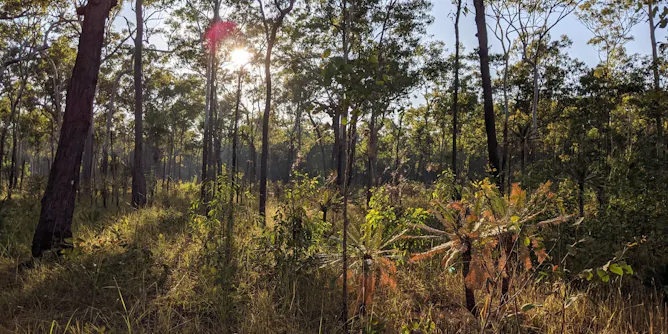
New research examines the reasons for the decline of small mammals in Australia’s tropical savannas and identifies the most effective practical solutions.
Articles on Indigenous rangers
Displaying all articles
Researchers worked with Indigenous Rangers to map life in 34 estuaries across NSW using environmental DNA - and made a host of unexpected discoveries.
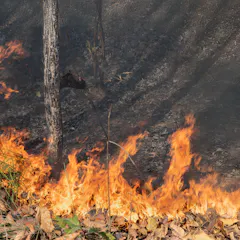
Cultural burning has enjoyed a strong resurgence in recent years. Now this cool burn technique is being used to ward off disastrous bushfires
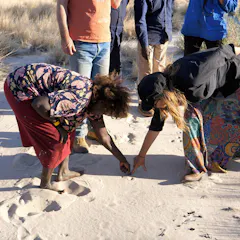
Footprints, droppings, diggings and other signs left behind by animals reveal a lot to a skilled observer. Indigenous knowledge feeds into one of Australia’s largest wildlife monitoring endeavours.
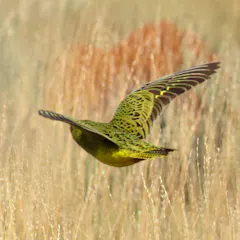
Urgent action is now needed to protect these vulnerable populations and ensure the night parrot doesn’t become extinct.

A partnership that combines Western science and Traditional Owners’ ecological knowledge is restoring the seagrass meadows of Gathaagudu/Shark Bay.
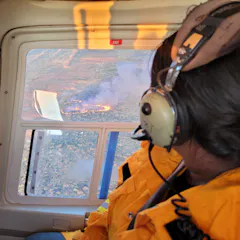
Deserts in Australia burn – and burn big – if fuel is left to build up. But this year, Indigenous rangers across the deserts have burned huge tracts early to make Country healthier.
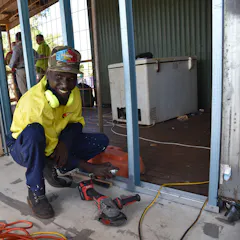
One crucial element of the regional jobs discussion is the need for a redefinition of ‘work’, to include community responsibilities, care and caring for land and Country.
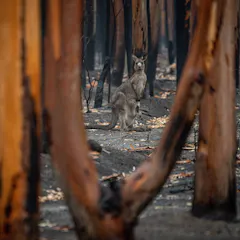
Three chief authors of the State of the Environment Report provide its key findings. While it’s a sobering read, there are a few bright spots.
Labor and the Greens launched environmental policies last week. We take a close look at what was promised, and if they’re enough to tackle Australia’s extinction crisis.
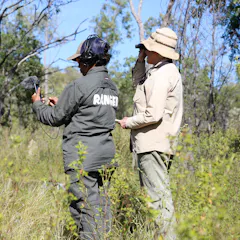
Australia relies on Indigenous people to meet our conservation goals, but they’re short-changed by federal funding.

Indigenous ranger programs have now been running successfully for a decade. Given Queensland’s size and large Indigenous population, there’s a strong case for expanding the program in that state.
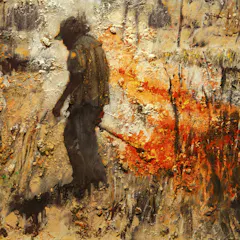
Feral cats and pigs, mission grass and climate change - in western Arnhem Land, Indigenous rangers are battling many environmental threats. Through painting and performance, they are also telling ‘healthy country’ stories.

What are the issues facing rural and regional Australia? The challenges are many and varied – and only some have made the national political agenda – but these areas deserve better than neglect.

Remote Indigenous communities aren’t just places to live - they are also crucial for supporting ranger programs and other projects that protect the environment in areas that might otherwise go untended.
Top contributors
-

Associate Professor in cross-cultural ecology, Macquarie University
-
Adjunct Senior Research Fellow, ecology, The University of Western Australia
-
Professor, Research School of Biology, Australian National University
-
Director, The Cairns Institute, James Cook University
-
Associate professor, James Cook University
-
Senior research fellow, Charles Darwin University
-
Co-Chairperson of the Indigenous Desert Alliance and a Regional Land Management Coordinator at the Central Land Council, Indigenous Knowledge
-
Professor, Urban Ecology and Biodiversity, The University of Melbourne; RMIT University
-
Professor in Conservation Science, School of Ecosystem and Forest Science, The University of Melbourne
-
Honorary Associate Professor, UNSW
-
Adjunct professor, The University of Western Australia
-
Adjunct Asssociate Professor, James Cook University
-
Professor and Deputy Vice-Chancellor (Research), University of Sydney
-
Associate Dean of Business (Indigenous Leadership & Engagement); Director, UTS Centre for Indigenous People and Work, University of Technology Sydney
-
Lecturer, Deakin University