
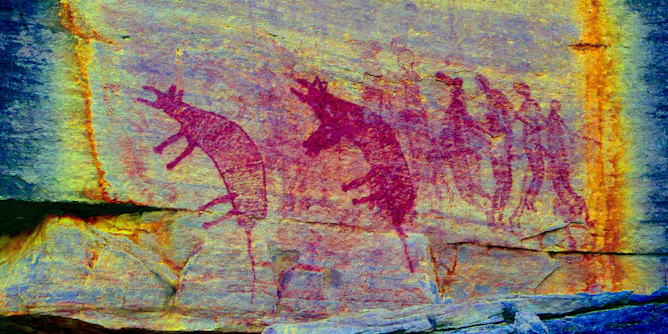
The rock art reveals the Thylacine’s deep significance to Aboriginal peoples.
Articles on Arnhem Land
Displaying 1 - 20 of 26 articles

New research examines the reasons for the decline of small mammals in Australia’s tropical savannas and identifies the most effective practical solutions.

The Yolngu Bark Petitions were immediately recognised by many as emblems of the unshakeable confidence of Indigenous Australians in their right to their territory.
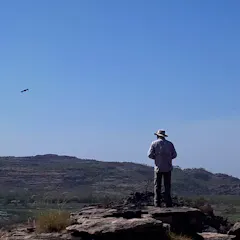
Rock art directly represents how our ancestors saw the world. A new approach involving the history of the landscape brings fresh meaning to Arnhem Land rock art.
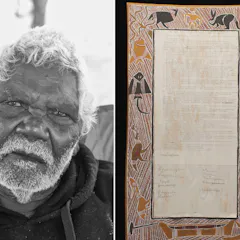
Clare Wright has spent ten years researching the history of these groundbreaking petitions. Though few Australians have heard of them, she writes, we can learn much from the story of their creation.
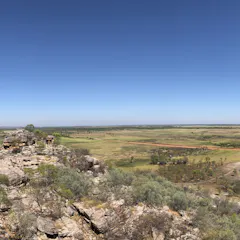
Beneath the floodplains of Arnhem Land lies a hidden landscape that has been transformed over millennia as seas rose and fell.
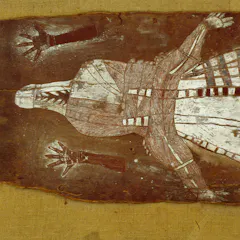
Majumbu’s work sits in the Melbourne Museum, but until now he has not been named as the artist.
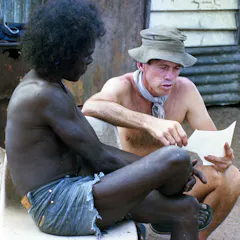
Anthropologist Neville White has spent two months a year since 1974 in Arnhem Land, as a guest of Yolngu families residing at the Donydji community.
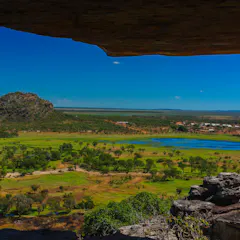
Tim Rowse concludes that Paul Daley’s new novel, inspired by true events in Arnhem Land, is fluent and skilfully paced – but doesn’t risk complicating the critical narrative of our colonial history.

The Spencer/Cahill Collection at Museums Victoria contains approximately 170 bark paintings – and now we can name one of the artists behind them.
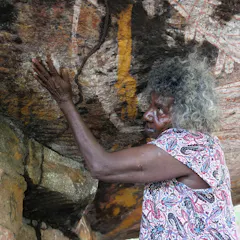
Australia’s stunning galleries of rock art are vast repositories of knowledge that can teach us much.
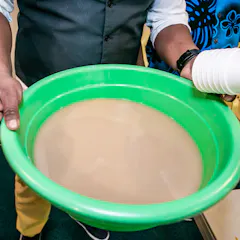
Kava is not commonly used in Australia. But that will change and we need to keep an eye on what happens next.
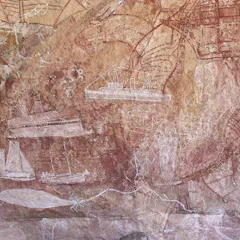
Pictures of boats and ships in rock art at the northwestern tip of Australia show the European incursions from the 1800s — but also the much earlier and lesser known sea trade with southeast Asia.
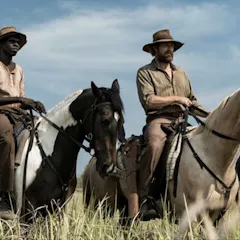
In depicting brutal massacres and mission life, this film gets a lot right. And the model for its central protagonist may well be a young man called Narlim, exiled from his country in the late 1930s.

Tiny nutshell fragments, found at a rock shelter in the Kakadu region, have helped researchers track past climate change in the region.

More than 500 paintings at 87 rock shelters provide a remarkable glimpse into past Aboriginal life.
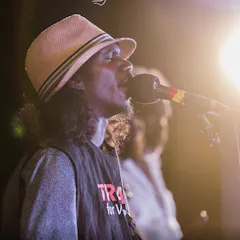
A series of four live-streamed concerts from Arnhem Land offers a welcome break from bad news and a way for Indigenous musicians to share their talents with the world.
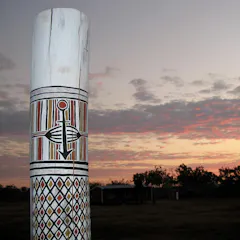
Yothu Yindi’s music introduced the world to the Yolŋu clan traditions of northeast Arnhem Land. But few listeners know these songs echo long histories of engagement with Southeast Asian visitors.
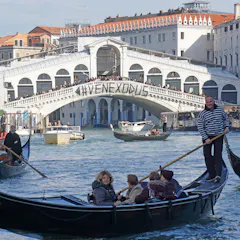
The future of tourism depends on ensuring visitors do not wear out their welcome. Giving locals more of a say in tourism can help ensure they share in the benefits and minimise the costs.
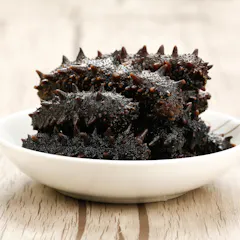
Trade tells a story of modern Australia that began long before January 26, 1788.
Top contributors
-

Professor, College of Creative Arts, Design and Humanities, Adelaide University
-
Chair in Rock Art Research and Director of the Place, Evolution and Rock Art Heritage Unit (PERAHU), Griffith University
-
Professorial Research Fellow, Adelaide University
-
Emeritus Professor, Institute for Culture and Society, Western Sydney University
-
Senior research fellow, Flinders University
-
Senior Research Fellow, Centre for Social Cultural Research, Griffith University
-
Associate Lecturer, Flinders University
-
Professor of Archaeological Science, Flinders University
-
Adjunct professor, Adelaide University
-
Co-manager, Injalak Arts, Indigenous Knowledge
-
Danek Senior Traditional Owner, Indigenous Knowledge
-
Senior Erre Traditional Owner, Indigenous Knowledge
-
ARC DECRA Research Fellow, Australian National University
-
Professor and Inaugural Director, Indigenous Knowledge Institute, The University of Melbourne
-
PhD candidate, School of BioSciences, The University of Melbourne