
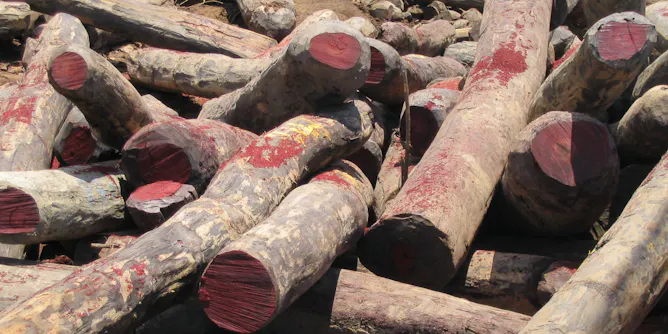
We highlight ways to celebrate Wounaan wisdom, joy, beauty and resistance while discussing centuries of taking from Indigenous communities.
Articles on Indigenous-led
Displaying all articles
To close the gap, we need First Nations people involved in the evaluation of what worked and what didn’t about Indigenous-focused wellbeing programs.
New research shows how Western science can support cultural burning to deliver benefits across cultures – as well as for nature.

‘40 acres and a mule’ never happened. Now governments and communities across the US are redistributing land and wealth, from Evanston, Illinois, to Athens, Georgia.

Archaeologists and Wurundjeri Woi-wurrung people are shedding new light on a series of enigmatic earth rings located in southeastern Australia.

To First Nations women, ‘care’ is more broad and all-encompassing than traditional definitions. We need a new approach to capturing, and appreciating, their work, paid and unpaid.

Aboriginal Elders play an important role as community leaders and cultural knowledge holders. Supporting this aspect of ageing well is crucial.
Indigenous women are using sustainable tourism to overcome generational challenges and as an entrepreneurial means of generating income.

Water sharing arrangements have the potential to enhance water security, but they require strong communication and co-ordination between community leaders in addition to adequate financial support.

As protected and conserved areas increase, an equity-based approach that respects Indigenous rights can help bring the transformative changes we need to halt and reverse biodiversity loss.
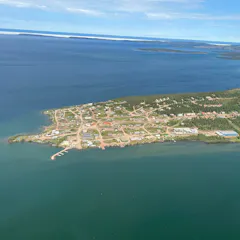
To address the climate and biodiversity crises, we must stop criminalizing Indigenous Peoples for exercising their treaty rights and start upholding them instead.

An Indigenous-led effort to increase caribou abundance and cultural practices like hunting is successfully increasing the caribou population
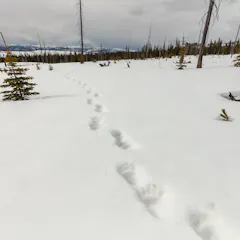
Parks and refuges are important for conservation, but without connections, they’re like islands. Linking them by protecting land in between makes it possible for wildlife to move over bigger areas.

Rather than sitting in the back seat, Indigenous Australians must be up front in managing the recovery of Australia’s unique and precious environment.
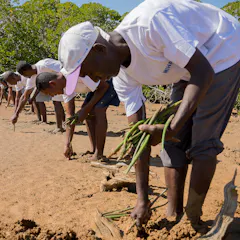
Conservation must be carried out by local communities to be most effective, new research shows.

Universities must meaningfully acknowledge they are sited on unceded First Nations land and Indigenous culture should be recognised in campus design. These steps are vital for reconciliation.
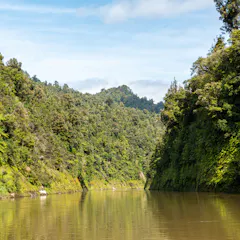
The Māori world view provides a viable framework for building a new tourism model that prioritises quality over quantity.
While investments are important, what’s more important is the process and mechanisms through which Indigenous people access funding.
Top contributors
-

Senior research fellow, Curtin University
-
Postdoctoral Researcher, Liber Ero Fellow, University of British Columbia
-
Senior Lecturer in Social Work and Policy Studies, University of Sydney
-
PhD Candidate, School of Architecture and Built Environment, Deakin University
-
Professor, Department of Geography, Environment and Geomatics, University of Guelph
-
Indigenous Chair of Biodiversity & Environmental Science, Curtin University
-
Co-Founder and Managing Director of Her Story, lead on U Right Sis? project, Indigenous Knowledge
-
Professor of Food, Agricultural and Resource Economics, University of Guelph
-
Research Fellow in International Development, University of East Anglia
-
Secretary of the Dharriwaa Elders Group, Indigenous Knowledge
-
Associate Professor, Rural Planning and Development, University of Guelph
-
Associate Professor, School of Hospitality and Tourism Management, Toronto Metropolitan University
-
Executive Co-Director, UNU Hub on Empowering Communities to Adapt to Environmental Change, United Nations University; University of Calgary
-
Associate Professor, School of Management and Marketing, University of Waikato
-
Associate Professor of Geography, University of Guelph