
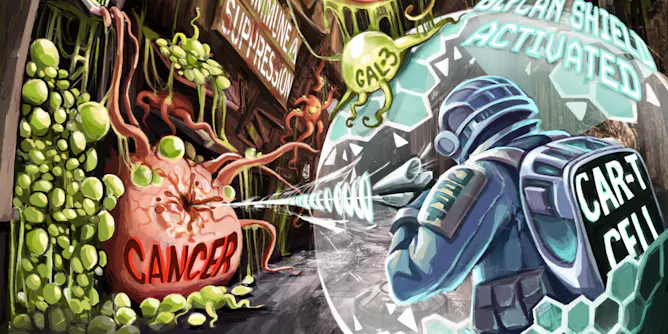
CAR-T therapy engineers a patient’s own immune cells to fight cancer. Making these cels more resilient can make treatments more effective.
Articles on Cancer immunotherapy
Displaying 1 - 20 of 28 articles

Ultrasound is perhaps best known as an imaging technique to monitor pregnancy or disease. When these sound waves are highly concentrated, however, they can be used to treat a host of diseases.

Mistletoe may play a role in fighting cancer, when used alongside immunotherapies.
Few would have thought that the COVID pandemic would have a silver lining, but scientists in Chicago may just have found one.

Immunotherapy hasn’t quite lived up to its early promise – but chemotherapy took a while to get off the blocks, too.
Until now, chemo and radiation therapy have been main cancer treatments but they can also damage healthy tissues. Immunotherapy uses the body’s immune system to fight cancer with minimal harm

Melanoma is the deadliest form of skin cancer.
The goal of mRNA technology is to harness the power of the cell to potentially prevent infections and treat diseases.
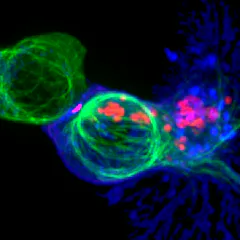
T cells recognize and kill cancer cells but quickly lose their effectiveness. This fast dysfunction may help explain why immunotherapy doesn’t lead to long-term remission for many patients.
From cancer immunotherapy and antibiotics to GMO crops and pandemic surveillance, gain of function is a cornerstone of basic research.
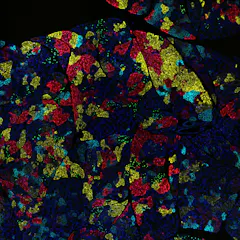
There is no one-size-fits-all approach to treating cancer. Understanding how cancer cells evolve could help researchers develop more effective drugs.

Preventive and therapeutic vaccines both train the immune system to fight disease, but they are used in different ways.
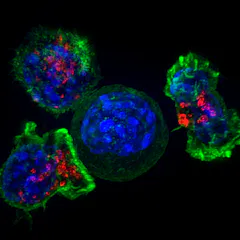
Immunotherapy has the potential to eliminate tumors, but works best for select patients. Engineering T cells to bypass cancer’s defenses could help expand treatment eligibility to more patients.

October is awash in seas of pink T-shirts, balloons and ribbons in honor of Breast Cancer Awareness Month. But this messaging fails to recognize people who are not cured of the disease.
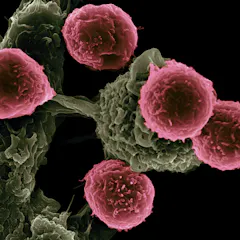
One promising cancer treatment has been in the works for decades, but severe side effects have kept it out of the clinic. A reengineered version may offer a way to safely harness its potent effects.

The parasite which causes toxoplasmosis has shown promise in treating difficult tumours in mice.

Cancer mortality has dropped in the US, due largely to lower smoking rates, as well as early detection and better treatments. These advances often do not extend to people in developing nations.

Researchers are trying to boost the power of our immune system by genetically altering our white blood cells and transforming them into super-soldiers to fight cancer.
Most cancer research has been done in Europe, there’s minimal data on African populations.

Cancer immunotherapy is a revolutionary treatment for many but it can cause nasty side effects like inflammation of the colon that can derail treatment. Could the solution be a fecal transplant?
Top contributors
-

Professor of Biomedical Sciences, Anglia Ruskin University
-
Professor of Health Economics, University of Technology Sydney
-
Professor of Health Economics, Deputy Director of CHERE, University of Technology Sydney
-
Professor of Pharmaceutical Chemistry, Macquarie University
-
Senior Research Fellow, University of Technology Sydney
-
Professor of Neurosurgery, University of Florida
-
Professor of Experimental Cancer Research, University of Southampton
-
Graduate Student in Cancer Systems Biology, Rice University
-
Assistant Professor of Gastroenterology, Hepatology & Nutrition, The University of Texas MD Anderson Cancer Center
-
Lecturer in Neuroscience, University of Lancashire
-
PhD Candidate at the MB&I Unit
-
MD-Ph.D. Candidate in Molecular Pathology and Immunology, Vanderbilt University
-
Professor Emeritus of Biochemistry, University at Buffalo
-
Postdoctoral Research Fellow in Materials Science and Engineering, Stanford University
-
Postdoctoral research scientist, Columbia University