

When we’re awake, our imaginations are quite different. But what about our dreams?
Articles on Imagination
Displaying 1 - 20 of 46 articles

Novelists and translators from Bulgaria to Brazil make up this this year’s impressive shortlist.

There’s a lot going on in your brain all the time. To power your imagination, the neurons need some silence.

This fascinating show offers visitors a deeper sense of Le Guin’s maps as world-making and storytelling devices.
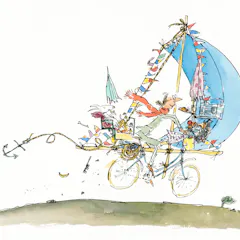
A new exhibition reveals how Blake’s warm, funny and kinetic illustrations transport readers young and old.

When people listen to music, they’re more likely to imagine social interactions.

Imagination is a fundamental tool for everyday life. Unsurprisingly, many kids harness it during athletic play, conjuring a fun teammate, a supportive coach or a worthy opponent.
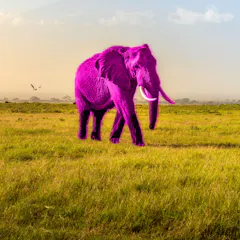
Research shows people with more vivid visual imaginations may also be more prone to certain kinds of intrusive thoughts.

Imagining speaking to your younger self might not be helpful, you can’t change the past but you can regret it.

The future and its possibilities are something that you actively co-create with others. New research suggests that imagining together makes you closer and more connected to them in the here and now.

Audiobooks can develop children’s listening skills, expand their vocabulary and encourage independent learning.

Political scientists describe the age we are living in as “post-political”. This controversial concept refers to a noted lack of political alternatives on a global scale.

Philosophers have been debating whether we need conditioning to link information from different senses for centuries.

Some children have companions that are disobedient or even mean.
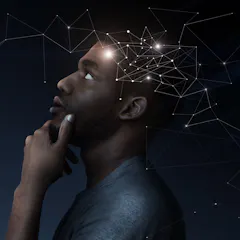
Some people have subtitles synaesthesia’ which means they see all speech appear as writing in their mind. And they only realised not everyone thinks this way when they saw a research study ad.
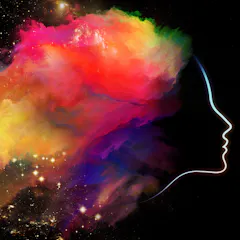
By learning what parts of the brain are crucial for imagination to work, neuroscientists can look back over hundreds of millions of years of evolution to figure out when it first emerged.

Maladaptive daydreaming affects about 2.5% of people.

The key to understanding online conspiracy theorists is to understand how the line between fantasy and reality can become blurred.

Science fiction books can inspire more children to become scientists if authors and illustrators do a better job of depicting characters from diverse backgrounds.

The gravity of the current situation is obscuring a less visible crisis – a failure of political imagination
Top contributors
-

Associate Professor of Developmental Psychology & Psychopathology, University of Leeds
-
Professor, School of Psychology, The University of Queensland
-
PhD Student, Neuroscience, The University of Queensland
-
Professor of Psychology, Wellesley College
-
Professor of Neuroscience, Boston University
-
Professor of Cognitive Neuroscience, University of Sydney
-
Professor of Cognitive Neuroscience, UNSW
-
Director of the International Gaming Research Unit and Professor of Behavioural Addiction, Nottingham Trent University
-
Distinguished University Professor and Louis D. Beaumont University Professor, Case Western Reserve University
-
Associate Lecturer, University of Notre Dame Australia
-
L Stanton Williams 1941 Professor of American Studies and English, Amherst College
-
Senior Lecturer in Psychology, Oxford Brookes University
-
Vice-Chancellor’s Fellow in Science Communication, The University of Melbourne
-
Professor Emeritus, Education and History, York University, Canada
-
Research Fellow, Department of Cognitive Science, Macquarie University