

When we’re awake, our imaginations are quite different. But what about our dreams?
Articles on Aphantasia
Displaying all articles

Every day in class, students are encouraged to ‘visualise’, ‘imagine’ or ‘picture’ concepts in their minds. Some find this impossible.
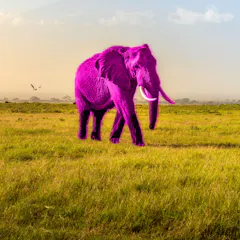
Research shows people with more vivid visual imaginations may also be more prone to certain kinds of intrusive thoughts.
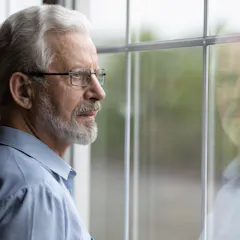
The lack of an inner monologue seems linked to a lower ability to recall words and predict their sound.

Philosophers have been debating whether we need conditioning to link information from different senses for centuries.

People with aphantasia can’t imagine seeing things in their mind. People with ‘deep aphantasia’ may have no inner voice, either, and different real-world visual experiences.

Around 4% of the population are unable to see things in their mind’s eye. Except when they are dreaming.

People with aphantasia are unable to deliberately bring to mind mental images. Understanding the mechanisms of aphantasia reveals that different types of cognition exist.

If a friend seems to be immune to your spooky, ghost story this Halloween, ask them if they can see the story unfold in their mind’s eye.

Experiment that creates altered states of consciousness sheds light on an old problem.

People with aphantasia, when asked to form an image in their minds, will report they cannot “see” anything.

There are many people who are astonished to discover that their complete lack of ability to picture visual imagery is different from the norm.
Top contributors
-

Professor, School of Psychology, The University of Queensland
-
PhD Student, Neuroscience, The University of Queensland
-
Research Fellow, Department of Cognitive Science, Macquarie University
-
Professor of Cognitive Neuroscience, UNSW
-
Professor of Cognitive and Behavioural Neurology, University of Exeter
-
Senior Lecturer, School of Education, Macquarie University
-
Scientia Professor and Professor of Educational Psychology, UNSW
-
Researcher in Educational Neuroscience, UNSW
-
Postdoctoral Research Associate, University of Oxford
-
Lecturer in Psychology, University of Liverpool
-
PhD Candidate, Brain & Cognitive Science, University of Calgary
-
Professor of Psychology, Western University
-
Senior Lecturer in Psychology, Queen Mary University of London
-
Associate Professor in Educational Psychology, University of Sydney