

Usual approaches to addresing the climate crisis are not working, and as the world changes many are struggling to find a clear sense of place. Learning to love the world could help solve both issues.
Articles on Hurricane Milton
Displaying all articles
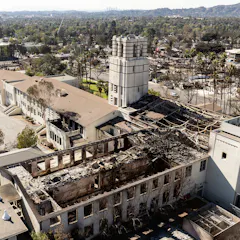
As students and teachers return to school after the fires, educators will have to focus on emotional rehabilitation before academic recovery can begin.
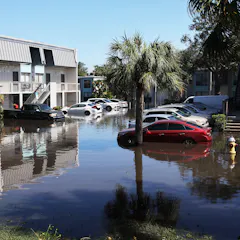
If you live in a flood-prone area, especially near the ocean, it’s important to know the risks if your EV is flooded. Or your golf cart, e-bike or other device with lithium-ion batteries.
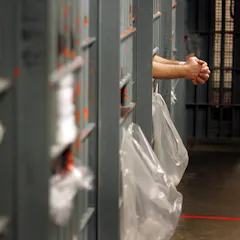
Prisons and jails are difficult to evacuate when wildfires or storms approach. Many of these facilities lack evacuation plans and may keep incarcerated people on-site instead of moving them to safety.

Terror management theory explores the lengths our minds will go to to deny existential threats. Psychologists explain what that can mean for climate denial.
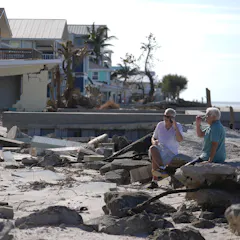
FEMA’s recovery work after Helene and Milton has been hampered by misinformation. Here’s what the agency actually does to help people displaced by disasters.

Politicians sometimes lie because it confuses others and gives them pleasure.
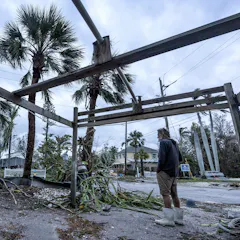
When faced with uncontrollable climate change, people often embrace conspiracy theories to regain a sense of control.
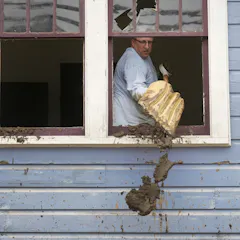
Disasters such as hurricanes Helene and Milton often hit low-income and other disadvantaged groups hardest. 2 policy experts suggest ways long-term aid could help.

Disaster relief requires cooperative, healthy relationships between the president, federal agencies and state, local and tribal governments. But with politicians in the mix, trouble can happen.
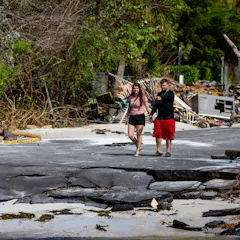
Natural disasters create practical challenges for voters and election administrators. But in some cases, voters can also pin the blame on the government, or judge a candidate by the federal response.
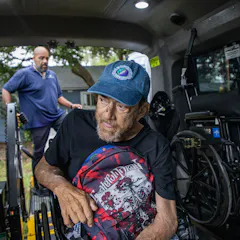
Evacuating is expensive, and for some people the risks of leaving can seem greater than staying despite the storm.
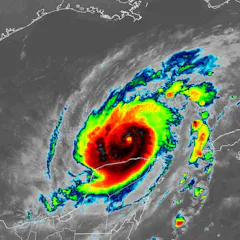
Milton’s fast spin-up in the Gulf of Mexico was one of the most rapid intensifications on record. Two scientists who study hurricanes explain why this happens and what’s changing.
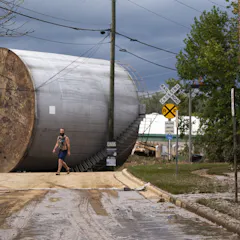
People living near these industries, as well as emergency responders, often have few details about the chemicals inside. New interactive maps pinpoint the risks.
Top contributors
-

Assistant Professor of Atmospheric Science, Georgia Institute of Technology
-
Atmospheric Science Educator, Georgia Institute of Technology
-
Research Scientist in Urban-Environmental Sociology, Rice University
-
Professor of Anthropology, Rice University
-
Research Associate, Natural Hazards Center, University of Colorado Boulder
-
Professor of Sociology, Rice University
-
Associate Professor of Political Science, Fordham University
-
Associate Professor of Law, Arizona State University
-
Assistant Professor of Policy and Public Affairs, UMass Boston
-
Professor of Public Policy and Public Affairs, UMass Boston
-
Associate Professor in Social Psychology, School of Psychology, University of Nottingham
-
Research Fellow, Psychology, University of Nottingham
-
Professor of Psychology, Edge Hill University
-
Professor of Landscape Architecture & Urban Planning, Texas A&M University
-
Professor of Landscape Architecture and Urban Planning, Texas A&M University