

Why do some people perceive a robot as ‘creepy’ while others don’t? It seems our response to these increasingly common non-human companions is highly subjective.
Articles on Human-computer interaction
Displaying 1 - 20 of 21 articles

Cancer survivors often experience cognitive, visual or physical challenges that hinder software use. Better designs can help.

Aussie slang is rich, weird and wildly specific—so what happens when artificial intelligence tries to learn it?

People – individually and in groups – were not as good at facial recognition as an algorithm. But five people plus the algorithm, working together, were even better.

When algorithms are at work, there should be a human safety net to prevent harming people. Artificial intelligence systems can be taught to ask for help.
Years of research into how humans work best together yield lessons useful for designing robots to interact with people.

Humans and machines perceive the world differently and respond in different ways to what they perceive. This lays the groundwork for conflict – and crashes.

Poorly designed critical warning systems need a radical overhaul to prevent a repeat of Hawaii’s errant ‘ballistic missile threat’ alert.

Humans and computers are collaborating to create a new genre of ‘synthetic literature’. But how does it work and can a computer ever really be creative?
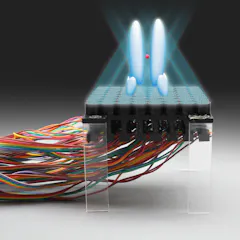
From acoustic holograms to tractor beams.
People want video games and interactive experiences that help them explore deep and meaningful themes, such as creating family, valuing diversity and living responsibly.

Making the mechanical more human.

Doing favours is a basic feature of human society – but can robots join in?
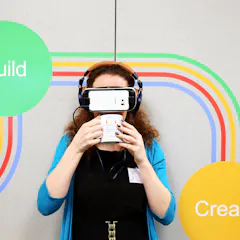
As more companies move towards intelligent, natural voice controlled devices, is the writing on the wall for the keyboard and mouse?
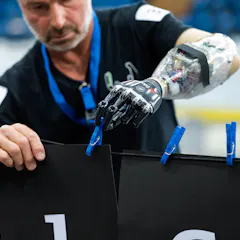
After the Olympics and the Paralympics come the Cyberolympics – bionic men and women are coming to competitive sports.

If computer pioneer Ada Lovelace had strong women role models even in her day, we must ensure women continue to do so today.
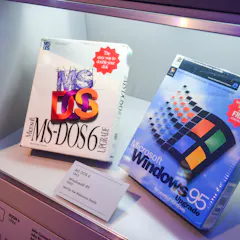
The desktop interface originated in the 1970s and was exemplified by the arrival of Windows 95. Surely there’s a better approach, 20 years on?
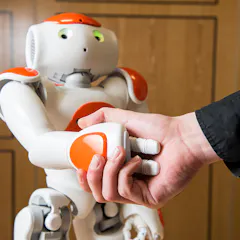
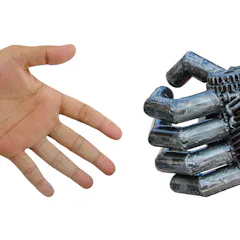
Shaking hands builds trust, and the same applies whether it’s a human or robot hand you’re shaking.
Eye tracking devices sound a lot more like expensive pieces of scientific research equipment than joysticks – yet if the latest announcements about the latest Assassin’s Creed game are anything to go by…
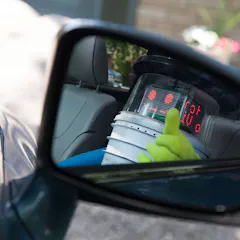
How do you rate your chances of completing a transcontinental road trip? What if you can’t drive and don’t have car? What if you can’t even move unaided? In fact, what about if you’re not even human? Tweeting…
Top contributors
-

Professor of Human Systems Engineering, Arizona State University
-
Professor in Human Computer Interaction, University of Bath
-
Postdoctoral Associate, University of Florida
-
Professor of Collective Intelligence, Cardiff University
-
Professor of Social Psychology, University of Exeter
-
Professor of Computational Media, University of California, Santa Cruz
-
Professor, Bangor University
-
Assistant Professor in the Department of Communication Studies and Multimedia, McMaster University
-
Professor of Computational Media, University of California, Santa Cruz
-
Professor of Systems Security, Coventry University
-
Professor of Computer Science, Boston University
-
Lecturer in Digital Media and Cultures, The University of Queensland
-
Ph.D. Student in Computer Science, Boston University
-
PhD student, Lancaster University
-
Lecturer, University of Glasgow