
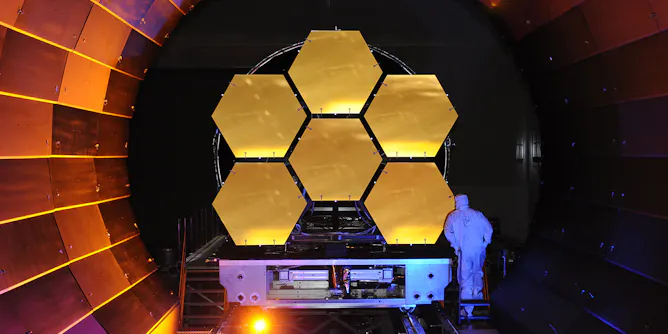
India may land on the Moon this coming year, while Nasa will launch its new, powerful rocket farther into space than any other human rated spacecraft.
Articles on Hubble Space Telescope
Displaying 21 - 40 of 54 articles
Fantasy fiction provides more than escapism for young readers.
Thirty years ago the Hubble Space Telescope began snapping photos of distant stars, providing a time machine that has taken astronomers back to when the universe was less than a billion years old.

New research using the Hubble Space Telescope reveals that galaxies may be forming at faster rates than previously believed.
Poets and scientists don’t occupy separate poles in the quest to understand the universe. In many ways, they sing from the same hymn sheet.
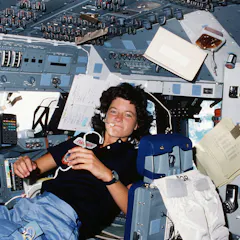
35 years ago Sally Ride became the first American woman in space. But rather than focus on her own extraordinary achievements, her passion became boosting the number of girls pursuing STEM. Another pioneering astronaut remembers her friend and colleague.
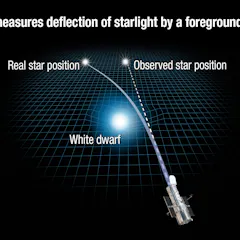
Astronomers report the first ever measurement of light bending around a star other than our own.
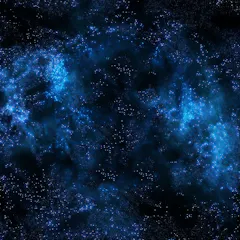
People used to think that when they looked up at the night sky, they were seeing all of space. Then American astronomer Edwin Hubble found out something so amazing, NASA named a telescope after him.
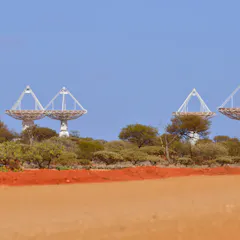
It’s almost impossible for any human to spot something unknown or unusual in the massive amount of data collected by our telescopes. So we’re teaching an intelligent machine to search the data for us.
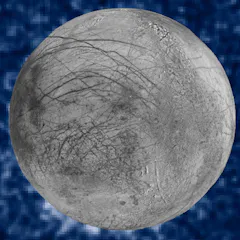
There’s now strong evidence that Europa might be a worthwhile place to search for life.

Stargazing seems such a quiet, calm activity. But whether our eyes can see or not, those stars out there are in constant flux. Time-domain astronomy studies how cosmic objects change with time.
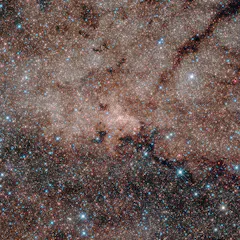
Each fortnight I get the amazing opportunity to speak about my top stories in space on ABC Breakfast News TV but for those of you who hate early mornings I wanted to make sure you got to hear of these…
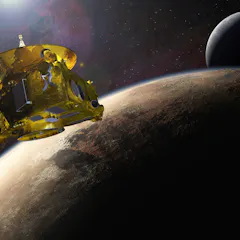
2015 was a year where we expanded our view of the universe, embraced new technologies and got a hint of the profound changes to come.
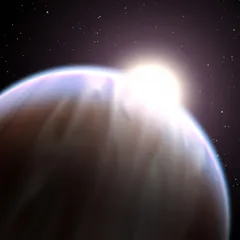
A hint of oxygen and a whiff of methane in a distant exoplanet’s atmosphere may be the first evidence we discover of alien life.

A giant golden mirror is on the brink of opening up a glimpse of the very first galaxies to be formed.
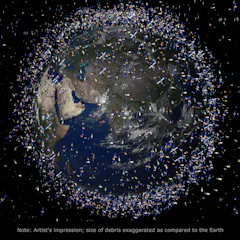
Near-Earth orbits are filled with useful satellites, and also flying junk. If we’re not careful they may collide - literally.
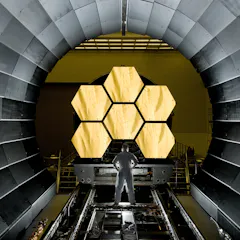
It’s urgent that we turn our attention to a high definition space telescope that will allow us to directly image exoplanets.
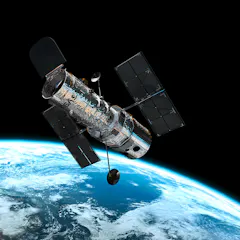
Ground-based telescopes are getting bigger and better while still being cheaper than space telescopes. But the vital scientific contributions made by Hubble demonstrates why we need both.
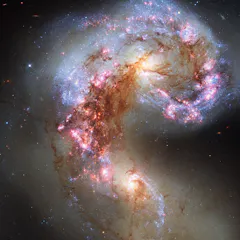
After a slow start, Hubble’s ultraviolet vision changed the face of astronomy.
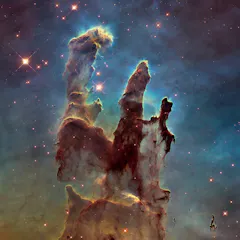
Astronomers from around the world identify their favourite images sent back to Earth by the Hubble Space Telescope.
Top contributors
-

Pro Vice-Chancellor Flagship Initiatives, Swinburne University of Technology
-
ARC Laureate Fellow & Distinguished Professor, Centre for Astrophysics & Supercomputing, Swinburne University of Technology
-
Associate Professor in Astronomy, Monash University
-
Host, The Conversation Weekly Podcast, The Conversation
-
Professor (Astrophysics), University of Southern Queensland
-
Senior Curator (Astronomy), Museums Victoria Research Institute; The University of Melbourne
-
Professor of Astrophysics and Space Science, University of Leicester
-
Senior Lecturer in Physics, Nottingham Trent University
-
Professor (Physics), University of Southern Queensland
-
Professor, National Astronomical Observatories, Chinese Academy of Sciences
-
Honorary Fellow, Space and Astronomy, CSIRO; Western Sydney University
-
Professor of Astronomy & Astrophysics, Penn State
-
Adjunct Professor, University of Southern Queensland
-
Dean of Science, University of California, Santa Cruz
-
Senior Instrument Scientist, Australian Nuclear Science and Technology Organisation