
In the second part of our review of what The Conversation experts have to say about housing, we focus on affordability, social housing and what government can do about a growing crisis.
Articles on Housing policy
Displaying 181 - 200 of 225 articles
Housing experts writing for The Conversation largely agree on the government policies that are causing negative distortions in the market and the wider economy. And supply is not the key concern.
Housing has become integral to our welfare system, so even governments can’t afford for prices to decline.
Think it’s hard for first-home buyers? Ask people with an intellectual disability about it.

We now value the house as a wealth builder, not just a place to live in and raise a family. The result is a distorted investment market that makes home ownership and rental unaffordable.
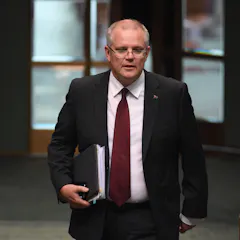
The latest thought bubbles about using super savings for housing might be less harmful than in the past, but they would be just as ineffective.

Victoria has been lagging behind other states in developing an affordable housing strategy. Now that one has been released, how well does it meet the needs of households on lower incomes?
Weak state policies, which lack clear targets and mechanisms for providing more and better affordable housing, are part of the problem. Victoria still doesn’t have an affordable housing strategy.
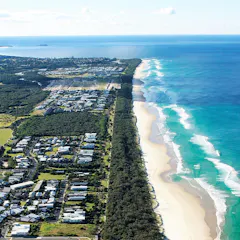
The affordability crisis in regional Australia has a long history. In some places the problem is even worse for residents than in the capital cities.

Many children are living in low-income families that struggle to pay the rent to keep a roof over their heads. Unaffordable housing is fuelling childhood poverty, so where is the policy response?
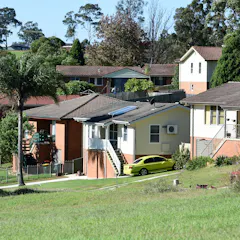
The report’s stated goal is to make the social housing system work better. It does not present as a manifesto for an entirely marketised and deregulated framework driven by the profit motive.
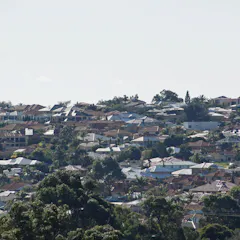
Government and industry need to demonstrate the benefits of well-designed higher-density housing. Rich residential display projects may be the ideal catalyst for creating smarter cities.
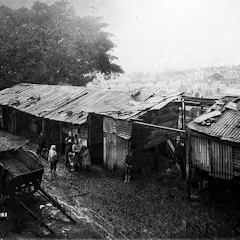
New research finds almost a million Australians are living in poor or very poor-quality housing, with more than 100,000 in dwellings regarded as very poor or derelict.
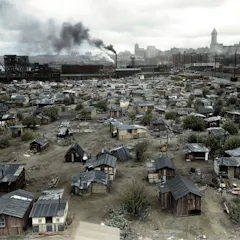
Like Brazil’s favela dwellers, America’s working poor felt a sense of pride and community in their shantytowns – and desperately resisted the powerful interests that sought to demolish them.

Without long-term solutions to the imbalance between incomes and house prices, Gen Ys face a lifetime of renting without the financial and emotional security of home ownership.
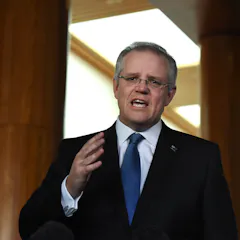
The default position for politicians is to sound concerned about housing affordability, but do nothing. This can be explained by the idea of ‘policy capture’, in this case by industry interests.

What if there was a middle option between retention and abolition that made negative gearing work better? There are multiple ways to improve accountability for this $8 billion-a-year tax concession.
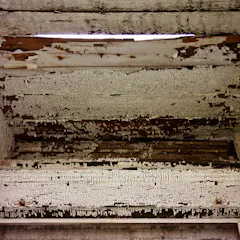
How did lead poisoning become a persistent threat in U.S. cities? Lead paint and slumlords played key roles, but so did postwar housing policies that trapped minorities in crumbling inner cities.
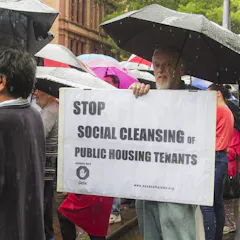
In what looks to be a landmark policy announcement with possible national ramifications, the NSW government has outlined the first phase of a $1 billion fund to develop social and affordable housing.
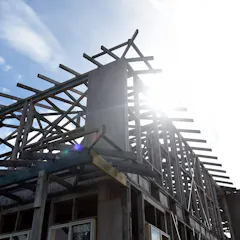
An increase in land supply is the usual solution put forward to solve the housing affordability crisis. What proponents of this argument fail to mention is that you need an industry prepared to deliver…
Top contributors
-

Emeritus Professor of Housing, UNSW
-
John Curtin Distinguished Professor, Curtin University
-
Professor of Urban and Regional Planning, University of Sydney
-
Professor of Housing Research, Adelaide University
-
Professor, City Futures Research Centre, Faculty of the Built Environment, UNSW
-
Emeritus Professor, Urban Planning and Policy, University of Sydney
-
Professor of Housing & Social Policy, HHAUS Housing, Homelessness & Urban Studies, Swinburne University of Technology
-
Research associate, The University of Melbourne
-
Senior Research Fellow, City Futures Research Centre, UNSW
-
Head of Urbanism and Associate Professor of Urban Studies, School of Architecture, Design and Planning, University of Sydney
-
Associate professor in urbanism, University of Sydney
-
Associate Professor, Geography and Urban Studies, Western Sydney University
-
Professor of Social Epidemiology and Director of the Centre of Research Excellence in Healthy Housing at the Melbourne School of Population and Global Health, The University of Melbourne
-
John Curtin Distinguished Professor, Curtin Business School, Curtin University
-
Honorary Professor of Housing Policy and Practice, City Futures Research Centre, UNSW