
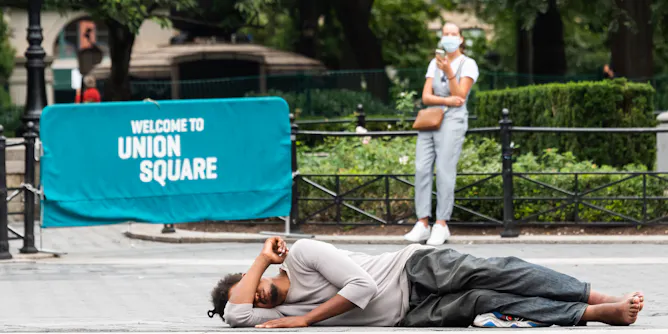
What happens to unhoused people who get COVID-19?
Articles on Homelessness
Displaying 181 - 200 of 371 articles
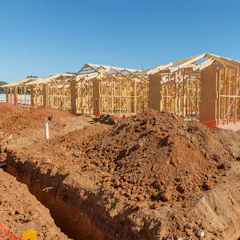
The shortfall of social housing has built up over decades. Even after the building program is complete, the gap between housing supply and the numbers on waiting lists will still be huge.

In some cases, women are left without food or anywhere to live for the duration of their pregnancy.

‘Homeless Jesus’ exemplifies how faith-based organizations can use public art to communicate religious ideas in a respectful and accessible way.
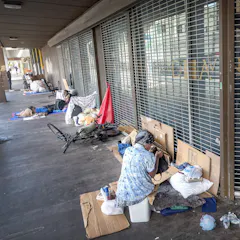
Australia found shelter for more than 33,000 rough sleepers and other homeless people during the pandemic, but a coming surge in homelessness demands a comprehensive national housing strategy.
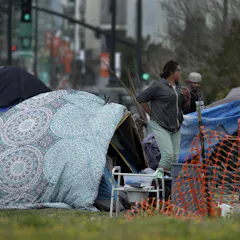
Debt-free property ownership is no longer a requirement for voting rights, but the idea remains that a person must have a residence in a particular community to be allowed to vote.
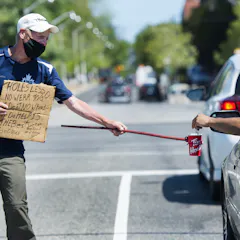
The outbreak of the COVID-19 pandemic has exposed gaps in the health-care system that leave those without identification documents vulnerable.
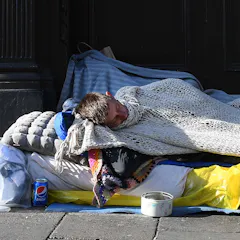
COVID-19 changed rough sleeping from a social issue into a public health one – but if numbers are to stay down, it needs to remain a political priority.
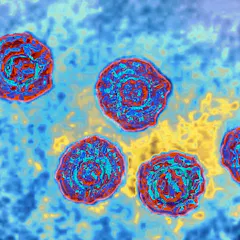
The 2020 Nobel Prize for Physiology or Medicine goes to the discoverers of the hepatitis C virus. There’s an effective cure but homelessness and the opioid epidemic are driving a surge in infections.
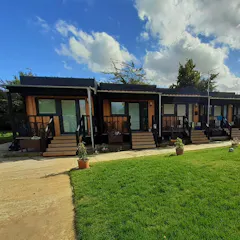
We monitored the progress of a modular housing project for people experiencing homelessness in Cambridge, UK.
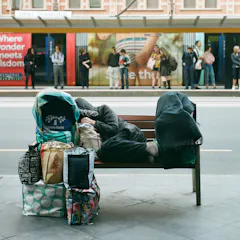
When the moratorium on evictions ends, even more Australians will face housing insecurity and homelessness. Beyond the moral and health cases, there’s a powerful financial reason to end homelessness.

The fallout from COVID-19 for housing and homelessness just adds to the urgency of fixing the long-standing ills of the housing market. The well-being of Australia’s economy and people depends on it.
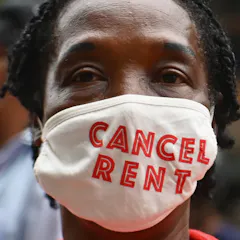
The CDC’s sweeping eviction moratorium leaves more questions than answers – as well as concerns that it merely pushes the problem into winter.

High rents and insecurity are constant sources of financial and emotional stress for low-income women. They describe what it’s like struggling to survive and being one step away from being homeless.

Older women have been the fastest-growing group of homeless people in recent years. New research shows about 240,000 women aged 55 or older and another 165,000 women aged 45-54 are at risk.
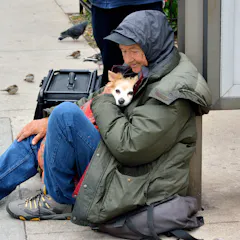
Pets are a source of physical, psychological and social support for homeless people.
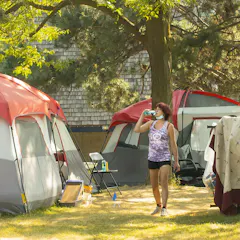
Suspending homeless camp evictions during the COVID-19 pandemic is a start, but it is not enough. The problem is failed housing policies, not the pandemic.
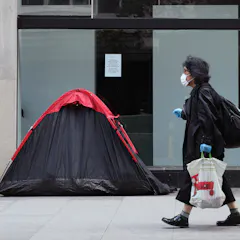
Pandemic is once in a generation opportunity to help homeless people stay off the streets for good – we must not waste this.
The hotspots in Melbourne align with areas of significant housing and financial stress.
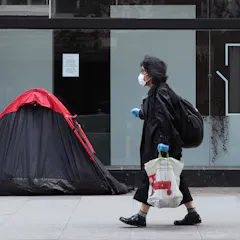
Some people abandon emergency accommodation or refuse to ‘come indoors’ at all, choosing to sleep rough or squat instead.
Top contributors
-

Professor, School of Social Science, The University of Queensland
-
Emeritus Professor of Housing, UNSW
-
Associate Professor, Adelaide University
-
Reader in Social Policy, Nottingham Trent University
-
Professor of Housing and Social Inclusion, Nottingham Trent University
-
Adjunct Senior Research Fellow, Gonski Institute for Education, UNSW
-
Senior Research Fellow, Housing, Homelessness & Urban Studies (HHAUS) research group, Swinburne University of Technology
-
Associate Professor, Geography and Urban Studies, Western Sydney University
-
Alan Morris is a Friend of The Conversation.
Professor, Institute for Public Policy and Governance, University of Technology Sydney
-
Senior Research Fellow, City Futures Research Centre, UNSW
-
Professor of Housing Research, Adelaide University
-
Adjunct Lecturer at the Centre for Justice, Queensland University of Technology
-
Professor of Sociology and Director of the Housing and Community Research Unit, University of Tasmania
-
Researcher, Aging In the Right Place | M.A. student, Gerontology, Simon Fraser University
-
Assistant Professor of Law and Director of the Medical-Legal Partnership Clinic, University of Memphis