

Governments and organizations must listen to older adults’ experiences with extreme heat, flooding and wildfire smoke to create effective policies and programs
Articles on Homelessness
Displaying 141 - 160 of 371 articles

One social housing application assessor told us getting on the priority wait list is so challenging, some applicants abandon the process altogether.

Gambling during homelessness is sometimes motivated out of desperation and in the hope of financial gain.

Finding stable housing is one of the biggest challenges facing prison leavers. Access to public housing has been found to flatten the curve on rates of recidivism.

In Norway, Sweden, Finland and Denmark, housing co-operatives help both renters and those wanting to own a secure, high-quality home. Better housing options for Australia are waiting in plain sight.

In a period when homelessness and housing costs have reached crisis levels, it’s time to look at housing co-operatives as a potential game-changer.
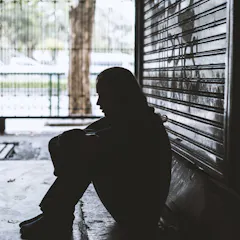
Low literacy levels are a common contributing factor in Australia’s homeless population. We asked people who have experienced homelessness how poor literacy affected their lives – and what would help.

Governments acted swiftly to reduce homelessness during the pandemic. Their actions could tell us how to end it permanently.

When a homeowning couple splits, it is the woman who is most likely to be forced to rent. Our proposal would help change that.

Providing more decommodified housing alternatives, like co-op, could offer a partial remedy to rampant housing inequality in Canada.

When it comes to helping students who are homeless during the pandemic, identifying who they are is crucial, says a researcher studying the issue in one of the largest US school districts.

In the first analysis of its kind, researchers interviewed Australians over 50 who have been house-sitting for more than a year.

The $10 billion fund will provide only $450 million for social housing per year, and less when markets turn down, but such funds can make financial sense.

The Grattan Institute is proposing a $20 billion fund managed by the Future Fund Board of Guardians which, if matched by the states, would fund 6,000 new places per year.

To really reduce homelessness we need to prevent those at risk from ever becoming homeless in the first place.
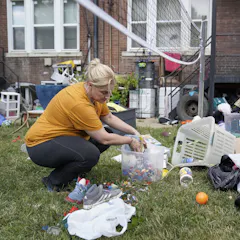
California and other states plan to build more homes in an effort to fix America’s affordable housing problem. But that’s not the main reason housing remains unaffordable for millions of people.

This approach would cause an outcry, but when it comes to homelessness, addressing only the symptoms has been the norm.

While public libraries and faith-based organizations may not be able to solve the issue of social stigma, looking at how they provide spaces for homeless people is a good place to start.
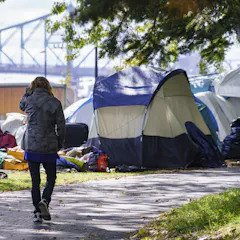
Women, girls and gender-diverse people have unique experiences of housing and housing loss.

Empowering older adults to become digital citizens will not only help them stay connected, but help them access essential services like housing.
Top contributors
-

Professor, School of Social Science, The University of Queensland
-
Emeritus Professor of Housing, UNSW
-
Associate Professor, Adelaide University
-
Reader in Social Policy, Nottingham Trent University
-
Professor of Housing and Social Inclusion, Nottingham Trent University
-
Adjunct Senior Research Fellow, Gonski Institute for Education, UNSW
-
Senior Research Fellow, Housing, Homelessness & Urban Studies (HHAUS) research group, Swinburne University of Technology
-
Associate Professor, Geography and Urban Studies, Western Sydney University
-
Alan Morris is a Friend of The Conversation.
Professor, Institute for Public Policy and Governance, University of Technology Sydney
-
Senior Research Fellow, City Futures Research Centre, UNSW
-
Professor of Housing Research, Adelaide University
-
Adjunct Lecturer at the Centre for Justice, Queensland University of Technology
-
Professor of Sociology and Director of the Housing and Community Research Unit, University of Tasmania
-
Researcher, Aging In the Right Place | M.A. student, Gerontology, Simon Fraser University
-
Assistant Professor of Law and Director of the Medical-Legal Partnership Clinic, University of Memphis