
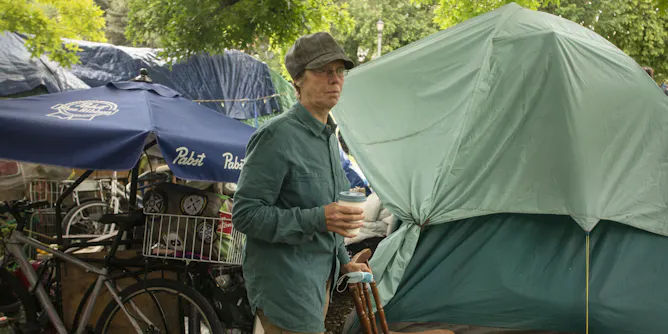
As we push for a real solution — an increase in housing supply and related supports — the encampment evictions must stop. We need to make encampments unnecessary.
Articles on Homelessness
Displaying 161 - 180 of 371 articles
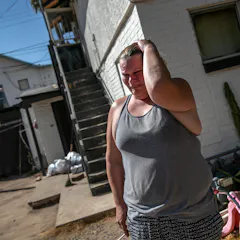
‘Informal evictions’ in which landlords harass or pressure tenants out of their homes continued during the the pandemic and may have even seen an increase.
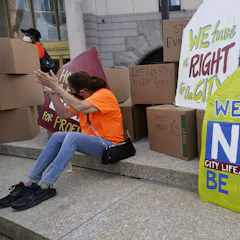
A legal scholar explains background on the ruling, what it means and who’s affected.
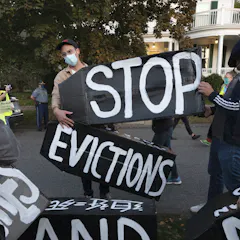
Millions of Americans with tens of billions in unpaid rent face eviction and loss of their home.

Because COVID-19 is airborne, we can’t know if the shelter system is as safe as it should be without seeing metrics related to ventilation, filtration and occupancy.
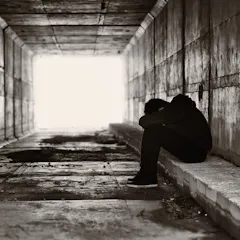
Nurse practitioners can be the missing link between homeless children, housing services and schools, our study shows.
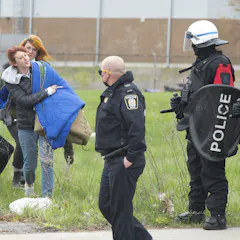
A key component in any planning around encampments is the voice of people with lived experience. It is clear the go-to response of policing is not working.
Even when the economy is strong, these young adults face economic hardship.

JobKeeper, the COVID boost to JobSeeker, and moratoriums on rent increases and evictions all ended this month. Only smarter policies will prevent homelessness, as a landmark Victorian report explains.

People with schizophrenia are almost three times more likely to die from COVID-19 than those without the serious mental illness, making it second only to age as a risk factor for mortality.
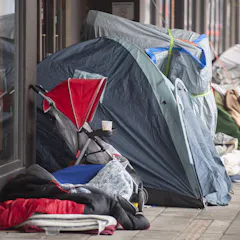
It’s possible to prevent homelessness, but it will take a commitment and dedication to understanding the conditions that produce it.
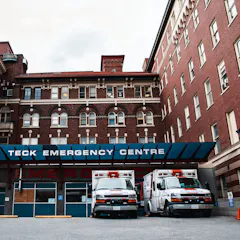
Infectious dysentery, usually found in developing countries with poor living conditions, is turning up in Vancouver’s most marginalized neighbourhood.
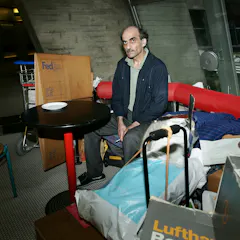
Some do so of their own accord, using airport amenities to meet their basic needs. Others, however, would rather be anywhere else – and find themselves at the mercy of bureaucratic wrangling.

Many older women are in desperate need of affordable housing where they can age in place securely, with dignity and as part of a community. The siheyuan model offers ways to meet these needs.
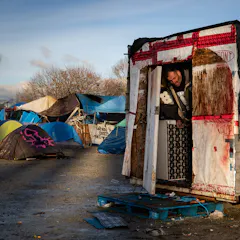
Adopting a universal basic income requires a fundamental restructuring of the existing social safety net in Canada, and would not necessarily conquer income inequality and poverty.
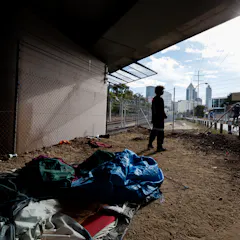
More people than expected needed help, and the states have found stable housing for less than a third of rough sleepers who were put up in hotels. A hands-off federal government simply isn’t helping.
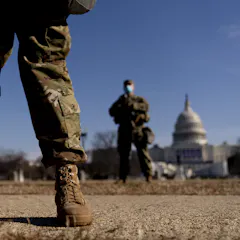
The U.S. illustrates this week that changing a nation’s leader without rethinking the system he or she is upholding is no longer acceptable for citizens. We need an improved form of democracy.

The absence of effective government policy doesn’t make citizens free. It takes away their power, leaving them less able to act to address their needs. That’s especially clear during the pandemic.

Homelessness among veterans is not as common as the headlines suggest, but leaving the Armed Forces is a difficult process that can lead to housing problems

Research for the Australian Housing and Urban Research Institute proposes a path forward to reduce, and even eliminate, homelessness in Australia.
Top contributors
-

Professor, School of Social Science, The University of Queensland
-
Emeritus Professor of Housing, UNSW
-
Associate Professor, Adelaide University
-
Reader in Social Policy, Nottingham Trent University
-
Professor of Housing and Social Inclusion, Nottingham Trent University
-
Adjunct Senior Research Fellow, Gonski Institute for Education, UNSW
-
Senior Research Fellow, Housing, Homelessness & Urban Studies (HHAUS) research group, Swinburne University of Technology
-
Associate Professor, Geography and Urban Studies, Western Sydney University
-
Alan Morris is a Friend of The Conversation.
Professor, Institute for Public Policy and Governance, University of Technology Sydney
-
Senior Research Fellow, City Futures Research Centre, UNSW
-
Professor of Housing Research, Adelaide University
-
Adjunct Lecturer at the Centre for Justice, Queensland University of Technology
-
Professor of Sociology and Director of the Housing and Community Research Unit, University of Tasmania
-
Researcher, Aging In the Right Place | M.A. student, Gerontology, Simon Fraser University
-
Assistant Professor of Law and Director of the Medical-Legal Partnership Clinic, University of Memphis