
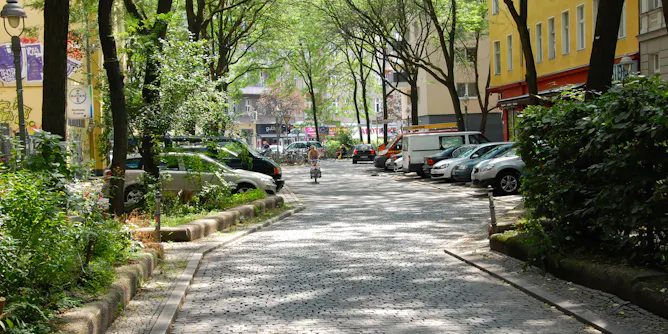
All around us, the places we inhabit send us physical and visual cues that influence our behaviour. Good design can tilt the balance so our surroundings help us act in ways that fulfil our needs.
Articles on Healthy Liveable Cities
Displaying 21 - 28 of 28 articles

The connections between city planning and health are many and varied, but getting health objectives integrated into all aspects of planning in New South Wales has been a long struggle.
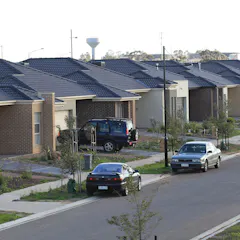
One of the most effective ways to reduce health inequalities across Australia is to design neighbourhoods that free residents from having to rely on cars for transport.

Traditionally, new communities first get hard infrastructure – schools, hospitals, transport – and ‘soft’ social infrastructure comes later. Liveability and public health suffer as a result.

Governments, developers and urban planners all aspire to create liveable cities. Yet when it comes to Australian cities, the rhetoric and reality don’t quite match.
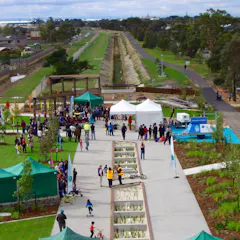
Tree plantings are making a visible difference to Melbourne’s west. It’s the result of a collaborative model of greening, one that Australian cities need to apply more widely.
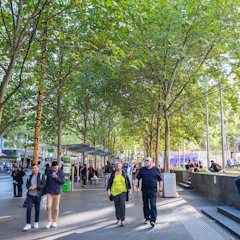
The challenge of creating liveable communities across Australia’s capital cities comes down to seven key factors. And assessed on this basis, parts of our cities don’t fare so well.
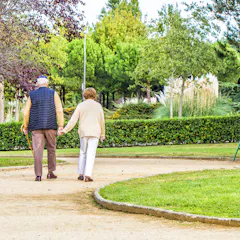
Our ageing population presents several social and economic challenges, particularly for the health sector. Physical activity can tackle many of these.
Top contributors
-

Professor, Director Australian Urban Observatory, Centre for Urban Research, RMIT University
-
Distinguished Professor and Director, Urban Futures Enabling Capability Platform, and Director, Healthy Liveable Cities Group, RMIT University
-
Senior Research Fellow, Healthy Liveable Cities Group, Centre for Urban Research, RMIT University
-
Professor in Architecture, Griffith University
-
Senior Lecturer in Public Health, Victoria University
-
Urban Designer and Sessional Lecturer, La Trobe University
-
Associate Professor in Urban and Regional Planning, University of Sydney
-
Professor of Urban Policy and Director, Urban Futures Enabling Impact Platform, RMIT University
-
Postdoctoral Research Fellow, Centre for Urban Research, RMIT University
-
GIS Analyst, Centre for Urban Research, RMIT University
-
Senior Research Fellow, Healthy Liveable Cities Group, Centre for Urban Research, RMIT University
-
Professorial Fellow, Mary MacKillop Institute for Health Research, Australian Catholic University; Emeritus Professor, Wertheim School of Public Health, University of California San Diego, University of California, San Diego
-
Research Fellow, Centre for Urban Research, RMIT University
-
Senior Research Fellow, Acting Director, CHETRE, UNSW
-
Research Officer, Healthy Liveable Cities Group, Centre for Urban Research, RMIT University