
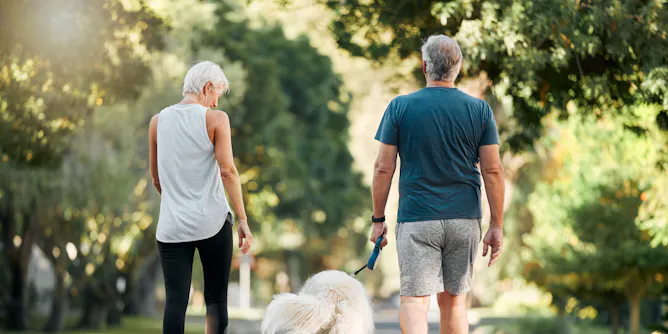
In a new study, we found that a program combining walking and education can effectively reduce the recurrence of low back pain.
Articles on Health research
Displaying 101 - 120 of 138 articles

Timely stroke treatment can limit brain damage and improve outcomes for patients. But this depends on early recognition of the symptoms, which is not always easy.

People who have a lower threshold for defining distress as a disorder are more likely to identify themselves as having a mental illness.

A recent study found only around half of people disclosed or felt they should disclose an STI to a partner before having sex.

At least one in six people who stop taking antidepressants experience withdrawal symptoms. Here’s why – and how you can work with your doctor to taper your dose and safely stop.

After this model was implemented, the gap in heart health outcomes we measured between First Nations and non-Indigenous patients closed.

Could mRNA vaccines be the next big thing for melanoma?

Is one term less pathologising than another? Here’s what our new research found.

Psilocybin, commonly known as magic mushrooms, has shown promise in treating anorexia in early studies, mostly in rats. But more research is needed to test if it’s safe and effective in humans.
Pregnancy and an acne medication called oral retinoids don’t mix. Australia needs a clear strategy to manage this risk.

Apart from folic acid and iodine, other supplements may not be needed. For the most part, they’re a waste of money. At worse, they could harm.

A new study has calculated how long you should be sleeping, standing and moving each day for optimal health. And you might be doing more physical activity than you thought.

In a new study, we spoke to young adults about navigating sexual consent during sexual encounters. Here’s what they told us.
Has your child fractured a bone? A new report shows it’s the leading type of injury for kids. But the causes of injury change as children grow older and differ between boys and girls.

Financial links between corporations and health research invariably lead to conflicts of interest.

The new Netflix documentary follows identical twins as they adopt different diets. This is a great example of a twin study – a uniquely useful research tool in science.

Translation involves more than just transferring words from one language to another. Better translations of study materials can improve both the diversity of study participants and research results.

New health technologies raise complex economic, social, environmental and safety concerns. Just as greenwashing tarnished sustainability efforts, ‘responsibility washing’ threatens health innovation.

Three factors that can speed up adoption of clinical research discoveries are context, tailoring resources and efficient knowledge sharing.

In health care crises, researchers can avoid waiting for clinical trial results by using data from health care systems to analyze the effectiveness of treatments for COVID-19 and other illnesses.
Top contributors
-

Professor of Infectious Diseases, Monash University
-
Professor of Psychology, The University of Melbourne
-
Professor of Nursing and Health Services Research, University of Newcastle
-
Lecturer in Physiotherapy, Adelaide University
-
Research Officer, Australian Research Centre in Sex, Health and Society, La Trobe University
-
Associate Professor, Sydney School of Public Health, University of Sydney
-
Full Professor and Associate Vice-President, Research, Mount Saint Vincent University
-
Research Fellow, Australian Research Centre in Sex, Health and Society, La Trobe University
-
Professor of Physiotherapy, Macquarie University
-
Medical Director, Kimberley Aboriginal Medical Services, Indigenous Knowledge
-
Principal Research Fellow, Australian Research Centre in Sex, Health and Society, La Trobe University
-
Professor of Paediatric and Perinatal Epidemiology and Chair in Translational Childhood Medicine, University of Sydney
-
Associate Professor, Epidemiology, Deakin University
-
Associate Professor, School of Public Health, University of Sydney
-
Lecturer in Exercise Science, Adelaide University