
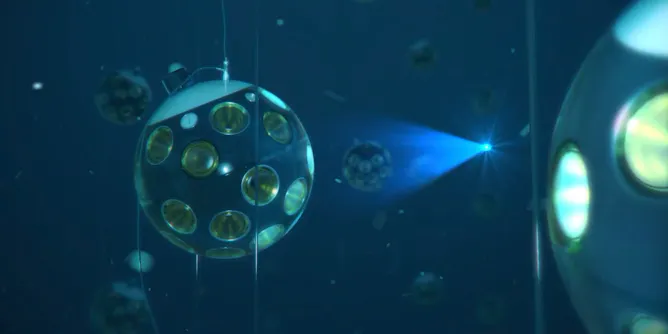
In the search for elusive particles called neutrinos, researchers are stringing thousands of detectors in the depths of the Mediterranean.
Articles on Ground-based telescopes
Displaying all articles

In 1924, astronomer Edwin Hubble realised two objects were too distant to be inside our galaxy.
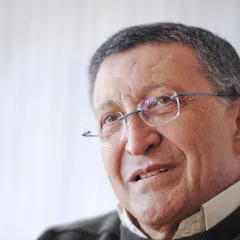
Fanaroff is one of the key individuals responsible for the current growth and strength of astronomy in South Africa.
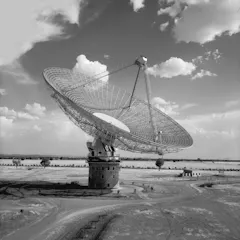
After six decades during which it tracked lunar missions, spotted distant pulsars and quasars, and even expanded our concept of the size of the Universe, the Parkes telescope is still going strong.
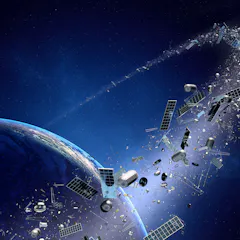
SpaceX recently launched 60 satellites into orbit around Earth as part of its Starlink programme.
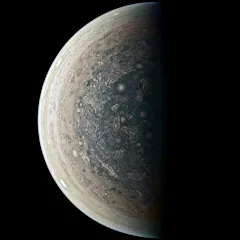
We may need to re-think our models of Jupiter’s formation thanks to the first results from Juno probe orbiting the planet, and new observations from Earth.
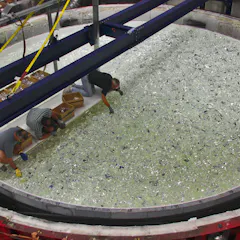
The laws of physics dictate that to pick out ever fainter objects from space and see them more sharply, we’re going to need a bigger telescope. And that means we need massive mirrors.
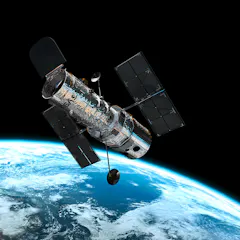
Ground-based telescopes are getting bigger and better while still being cheaper than space telescopes. But the vital scientific contributions made by Hubble demonstrates why we need both.
Top contributors
-

Director of Steward Observatory and Head of the Department of Astronomy, University of Arizona
-
Project Scientist at the Steward Observatory and Associate Research Professor of Optical Sciences, University of Arizona
-
Program Manager / Adjunct Research Fellow, Swinburne University of Technology
-
Research fellow in space physics, Lancaster University
-
Professor of Optical Sciences, University of Arizona
-
Science Engagement Astronomer, South African Astronomical Observatory, National Research Foundation
-
ScotCHEM Chair in Chemical Physics, Heriot-Watt University
-
Operations Scientist, CSIRO
-
Lecturer, University of Cape Town
-
Senior Lecturer in Physics Education, King's College London
-
Senior Lecturer in Physics, Western Sydney University