
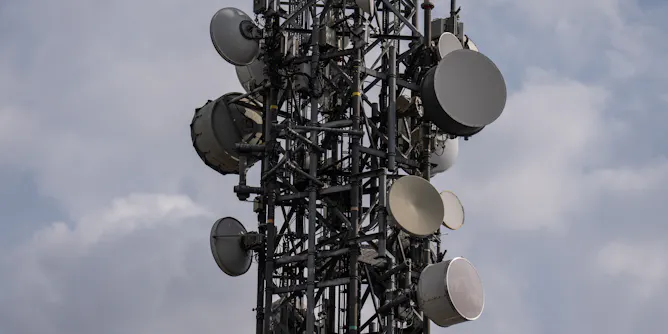
Radio spectrum is a critical but limited resource, but advances in technology are making it possible to share.
Articles on Radio waves
Displaying 1 - 20 of 27 articles

For one thing, there’d be a much higher rate of brain cancers in the decades since mobile phones were widely adopted.

Most of the universe is made up of dark matter and dark energy. The majority of everything else is dispersed throughout space as tiny particles.

Radio astronomy opened up the universe for scientists. They could map new elements across galaxies and also search for signals from extraterrestrial civilizations.
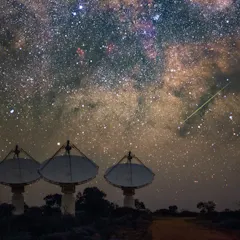
The quest to pin down the source of the burst led to a derelict 60-year-old satellite.
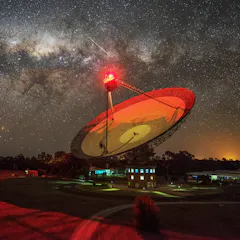
‘Project Phoenix’ was initiated by small research organisation known as the SETI Institute. But it was lucky to get off the ground.

Corporate-controlled, political infotainment makes up the bulk of AM radio programming. But there was a time when these stations were more attuned to the needs of the community.

Astronomers caught the bizarre ‘awakening’ of an incredibly rare magnetic star.

Previous searches for extraterrestrial life have included only the radio band above 600 MHz, leaving lower frequencies virtually unexplored.

Your brains can perceive some electromagnetic waves – but not without your body’s help.

Pictures and sound, flying through the air to a box in your house? Back in the 1940s, it seemed like a miracle.

Hiding in plain sight, they’re subtle reminders that we’re being watched, tracked, studied.

Despite the name, some black holes effectively “shine” as they suck up nearby material with such force that it begins to glow. New research reveals a new method for detecting these active black holes.
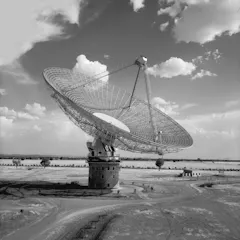
After six decades during which it tracked lunar missions, spotted distant pulsars and quasars, and even expanded our concept of the size of the Universe, the Parkes telescope is still going strong.

Astronomers have taken a close-up look at the jets of plasma streaking away from a supermassive black hole - one of the strangest and most energetic features of galaxies.
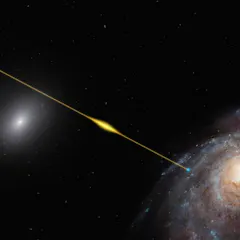
Fast radio bursts are the focus of a young and fascinating field of astronomy. Researchers just released data on more than 500 new bursts, quadrupling the total number of detected events.
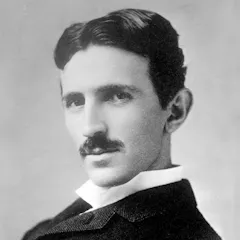
New 5G technologies also boast the raw ingredients needed to beam wireless power to small devices.
Wi-Fi has become a fundamental part of modern digital life, but its foundation is the same as the technology that allowed your great-grandparents to listen to their favorite radio programs.

When the USSR launched the world’s first satellite, Sputnik 1 didn’t do much other than regularly “beep” over the radio. Yet, this simple sound is associated with the beginnings of space exploration.

Should we be concerned about the health effects of 5G? The short answer is no – there’s no substantiated evidence that the electromagnetic energy used by mobile telecommunications causes harm.
Top contributors
-

Senior Research Scientist, Australia Telescope National Facility Science, CSIRO
-
Professor, Radio Astronomy, University of Sydney
-
University Distinguished Professor of Astronomy, University of Arizona
-
SKA-Low Senior Commissioning Scientist and Adjunct Associate Professor, Curtin Institute of Radio Astronomy, Curtin University
-
Timothy J. Jorgensen is a Friend of The Conversation.
Director of the Health Physics and Radiation Protection Graduate Program and Professor of Radiation Medicine, Georgetown University
-
Postdoctoral Scholar in Electrical Engineering, University of California, Los Angeles
-
John Curtin Distinguished Professor (Radio Astronomy), Curtin University
-
Professor, Curtin Institute of Radio Astronomy, Curtin University
-
Professor of Electrical Engineering/Electromagnetics, University of California, Los Angeles
-
Associate Dean for Research, Coventry University
-
Director Radiation Research and Advice, Australian Radiation Protection and Nuclear Safety Agency (ARPANSA), and Adjunct Associate Professor, University of Wollongong
-
Postdoctoral Researcher, Fundamental Physics in Radio Astronomy, Max Planck Institute for Radio Astronomy
-
Professor of English and Digital Humanities (Ret.), University of South Florida
-
Research Fellow in Astronomy, The University of Western Australia
-
Radio Astronomer, Curtin University