
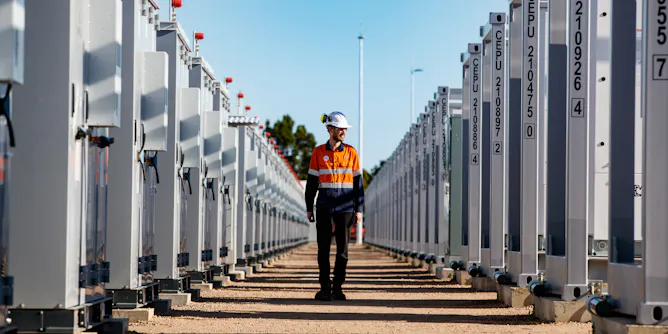
Gas was long thought to be essential as a backup for a clean energy grid. But enormous growth in grid-scale batteries has changed the game.
Articles on Grid batteries
Displaying all articles
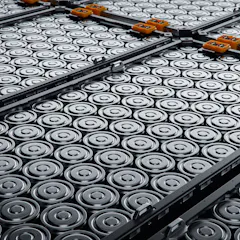
Old EV batteries have huge potential. But it’s not going to be easy to realise this.

Flow batteries can feed energy back to the grid for up to 12 hours – much longer than lithium-ion batteries, which only last four to six hours.
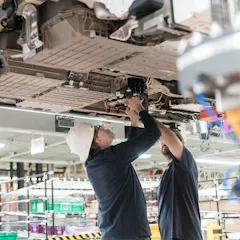
The future of these job-generating gigafactories, many of them in Republican states, could be at risk if the next president tries to wipe out the programs that made them possible.

For years, the ‘duck curve’ of low daytime demand due to cheap solar power has challenged energy planners. California is showing the solution is storage.
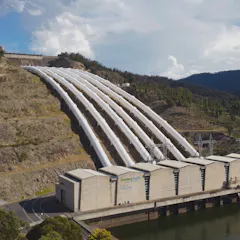
Storing energy in large pumped hydro schemes sounds simple. But engineering and terrain challenges have put Snowy 2.0 well off track – while grid-scale batteries get better and better
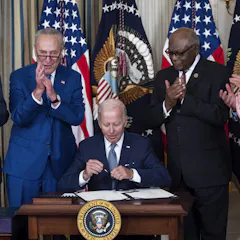
The Biden Administration’s signature climate legislation is unleashing a wave of clean energy investment, along with some opportunities and risks for countries like Australia.

Lithium-ion batteries are holding back the full-scale decarbonization of Canada’s energy grid. Zinc-ion batteries may be the solution.
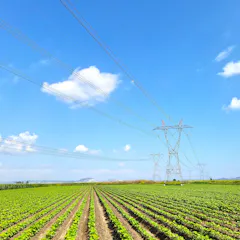
We’ll need some new transmission lines to make Australia’s grid ready for the green energy shift. But there are clever ways of making more use out of our existing network.
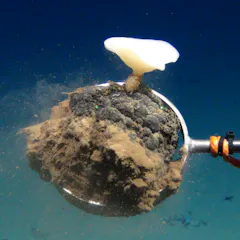
Mining nodules from the deep ocean seabed could provide the metals crucial for today’s EV batteries and renewable energy technology, but little is known about the harm it could cause.
Australia is already in the grip of a skills shortage. We’re going to have to solve that before we can start on the big renewables build.
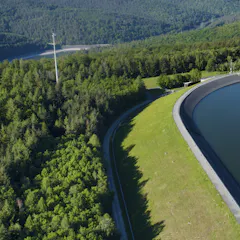
A team of researchers found 35,000 pairs of existing reservoirs, lakes and old mines in the US that could be turned into long-term energy storage – and they don’t need dams on rivers.

Renewable energy is expanding at a record pace, but still not fast enough. Here are the key areas to watch for progress in bringing more wind and solar into the power grid in 2022.
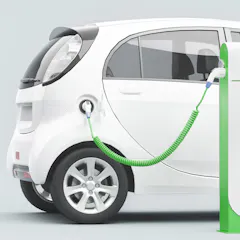
Electric cars are still more resilient to price shocks than vehicles running on fossil fuels.
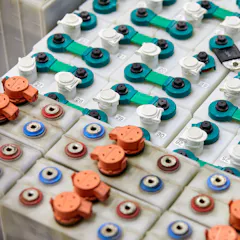
Britain’s electricity sector continues to decarbonise, but its capacity to store energy lags far behind.
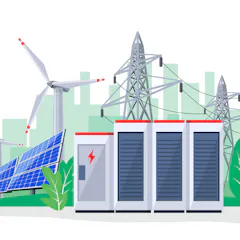
A planned battery project in Essex will be ten times larger than the UK’s current biggest battery.
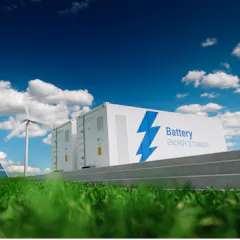
Grid-scale batteries could be at least double the cost of those in electric vehicles.
Top contributors
-

Professor of Energy Technology, University of Southampton
-
Senior Research Consultant, Institute for Sustainable Futures, University of Technology Sydney
-
Professor of Sustainability, Curtin University
-
Adjunct Professor in Sustainability, The University of Western Australia
-
Research Fellow, ANU College of Engineering and Computer Science, Australian National University
-
Senior Lecturer in Power Engineering, Edith Cowan University
-
Professor of Environmental and Energy Policy, Indiana University
-
Associate Professor of International Studies, Indiana University
-
Senior Lecturer in Operations and Supply Chain Management, Anglia Ruskin University
-
Assistant Professor, Department of Chemical Engineering, McMaster University
-
Senior Research Fellow in Renewable Energy, Australian National University
-
PhD Candidate, Chemical Engineering, McMaster University
-
Fellow and Senior Research Associate, Renewable & Sustainable Energy Institute, University of Colorado Boulder
-
Associate Director of Energy Policy and Analysis, Renewable & Sustainable Energy Institute, University of Colorado Boulder
-
Associate Professor, RMIT University