
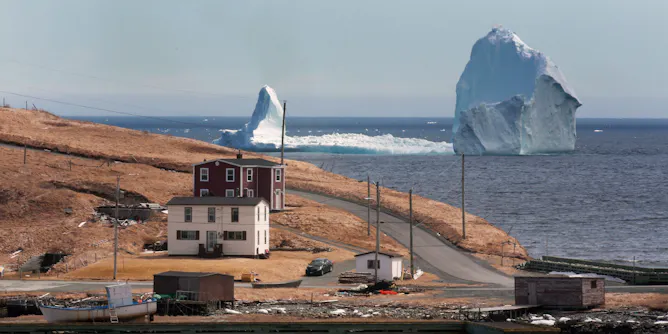
Between zero and 2,000 icebergs reach Newfoundland each spring, but the warming climate could see an end to Iceberg Alley.
Articles on Greenland ice sheet
Displaying 21 - 32 of 32 articles
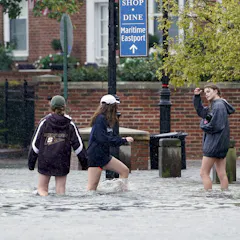
Climate change is making ocean levels rise in two ways. It’s a problem that will endure even after the world stabilizes and slashes greenhouse gas pollution.
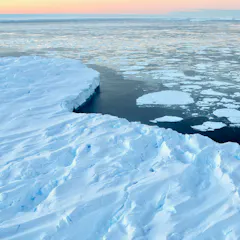
If the world is to adapt to sea level rise with minimal cost, we must address the uncertainty surrounding Antarctica’s melting ice sheet. This requires significant investment in scientific capacity.
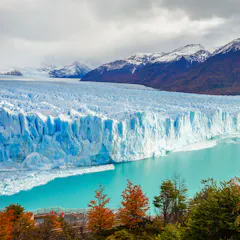
Glaciers aren’t sterile wastelands – they’re chock-full of microscopic life.
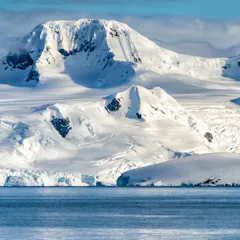
When Antarctica’s land-based ice melts, the land bounces up slightly as the weight of the ice lifts. This affects sea levels across the world, but not enough to offset sea-level rise.
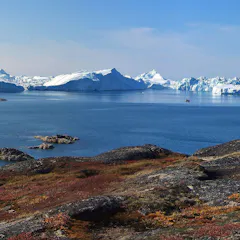
Our new research shows the island’s largest glaciers are losing ice faster than previously thought.

The Laptev Sea is one of the Arctic’s biggest nurseries of new sea ice in winter, but Siberia’s record summer heat may have halted production.
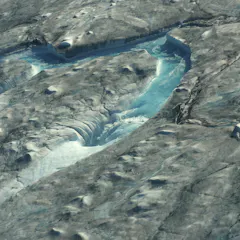
Studies show that the Arctic is heating up twice as fast as the rest of the planet.

Sea levels could rise by two metres by 2100, sparking a refugee crisis unlike anything the world has ever seen.
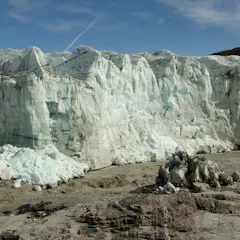
The ice sheet is melting and permafrost is thawing. What’s happening in Greenland will speed up climate change across the world.
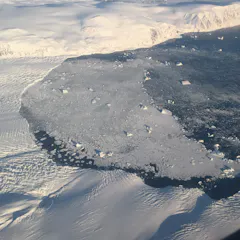
Greenland’s ice is largely responsible for the accelerating pace of sea-level rise. A new analysis shows that, while Greenland accounted for just 5% of the rise in 1993, that figure rose to 25% by 2014.

A glaciologist develops a lightweight method for probing the depths of Greenland’s ice sheet to answer a crucial question: How fast is it melting?
Top contributors
-

Professor of Natural Resources and Environmental Science, University of Vermont
-
Professor of Glaciology and Earth Observation, University of Bristol
-
Professor of Glaciology, Fulbright Scholar, University of Tromsø
-
ARC DECRA Senior Research Fellow, Institute for Marine and Antarctic Studies, University of Tasmania
-
Senior Lecturer, School of Geography, Planning, and Spatial Sciences, University of Tasmania
-
Professor of Geosciences, University of Montana
-
Chair Professor, Climate Change Research Centre, UNSW
-
Postdoctoral Research Associate, University of Cambridge
-
Principal Research Scientist, CSIRO
-
Assistant Professor in Physical Geography and Environmental Science, Northumbria University, Newcastle
-
Professor in Applied Mathematics, Te Kunenga ki Pūrehuroa – Massey University
-
Reader in Biology, Department of Life Sciences, Aberystwyth University
-
Deputy Lead Scientist, National Snow and Ice Data Center (NSIDC), Cooperative Institute for Research in Environmental Sciences (CIRES), University of Colorado Boulder
-
Associate Professor of Geoscience, University of Arizona
-
Research scientist, Memorial University of Newfoundland