
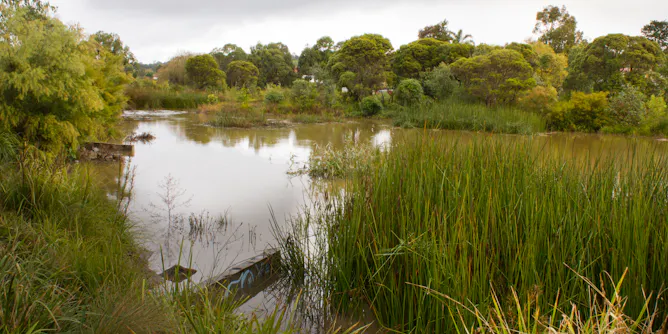
Natural assets produce important city services and complement engineered infrastructure. Investing in natural assets can help protect our environment, reduce municipal service costs and create jobs.
Articles on Green infrastructure
Displaying 21 - 40 of 50 articles
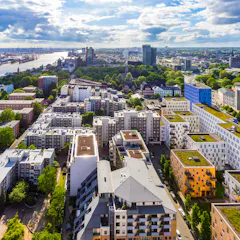
The coronavirus pandemic has highlighted the lack of green space available to those living in urban areas. Cities must be managed as ecosystems to make them more liveable and resilient.

The release of a roadmap for green roofs, walls and facades in Australia can help our cities catch up with the world leaders in urban greening.

Half-a-dozen strategies are effective for cooling urban areas. Used in combination, these strategies can drop the temperature even more.
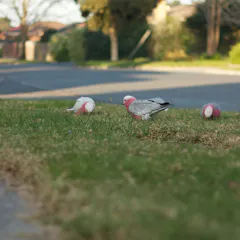
When so much of the green space in our cities is in the form of nature strips, current restrictions on plantings are denying us the many social and environmental benefits of more diverse greenery.
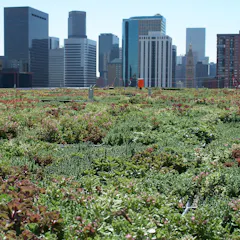
From happier and healthier residents to more resilient buildings – green roofs offer significant benefits to cities.
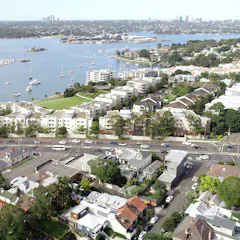
Greater urban density is making it harder to preserve, let alone increase, tree cover. It’s vital, then, to demonstrate the full value of green infrastructure for healthy liveable cities.
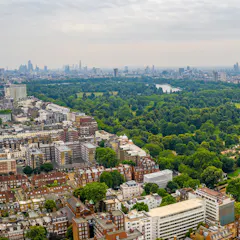
The values of a national park, translated to an urban context, to make life better for local people.

Expanding green cities needs a holistic approach, and learning from Melbourne and Canberra is a good place to start.
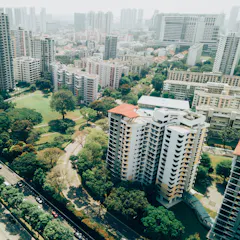
As the population of the world’s cities grows, so too does resource and energy use as well as waste generation. We can combat these issues with a circular economy that uses nature as a template.
Two trends in Australia, an ageing population and warming climate, are increasing the threat that heatwaves pose to our health. Increasing vegetation cover is one way every city can reduce the risk.

There are other things which cause air pollution – cars, for example – which will have a much bigger impact.

Urbanisation is the main reason for rising temperatures and water pollution, but receives little attention in discussions about the health of water streams, reefs and oceans.
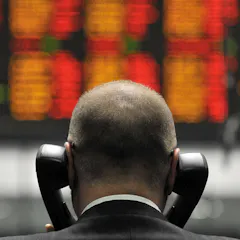
Private finance crashed the economy and is too consumed by the profit motive to be a reliable ally against climate change. We should not allow COP24 to be their board meeting.
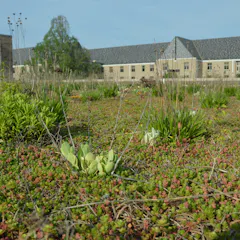
Taking this step may improve the quality of life for vulnerable people and reduce the amount of air conditioning they use, making their neighborhoods less prone to power outages.
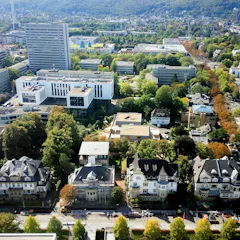
It’s not all bad news at Bonn – with low carbon precincts, living infrastructure and urban networks, cities are leading the charge against climate change.
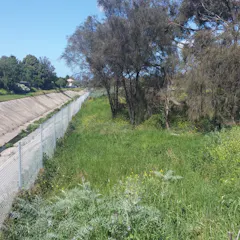
Residents often have concerns about informal green space but some still use it. Work to enhance these areas should aim to resolve these concerns without destroying what residents do value.

Drains take up precious but inaccessible open space in our cities. Converting these to living streams running through the suburbs could make for healthier places in multiple ways.
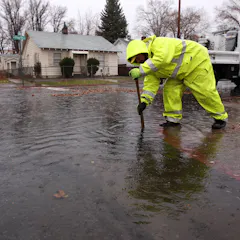
The US wants to invest in more infrastructure to handle our rainfall and melted snow. Stormwater credits could help cut costs and protect the environment.
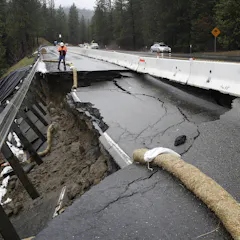
The American Society of Civil Engineers gives US infrastructure a D+. What is it that we’re doing wrong?
Top contributors
-

Professor of Human Geography and Planning, University of Tasmania
-
Senior Lecturer in Urban and Environmental Planning, Griffith University
-
Postdoctoral Research Fellow, The University of Queensland
-
Research Assistant, School of Ecosystem & Forest Sciences, The University of Melbourne
-
Professorial Research Fellow, Victoria University
-
Research Fellow in the Victorian Institute for Strategic Economic Studies, Victoria University
-
Academic, Landscape Architecture and Urban Ecology, The University of Melbourne
-
Lecturer, Australian Urban Design Research Centre, The University of Western Australia
-
Senior Research Fellow, Healthy Liveable Cities Group, Centre for Urban Research, RMIT University
-
Illinois Research Climatologist, University of Illinois Urbana-Champaign
-
Adjunct Senior Lecturer, School of Architecture and Built Environment, University of Newcastle
-
Deputy Head of School, School of Architecture and Built Environment, University of Newcastle
-
Senior Vice President for Agriculture and Natural Resources and Professor of Wildlife Ecology and Conservation, University of Florida
-
Enseignant chercheur, Université de Rouen Normandie
-
Professor and Head of School of Architecture and Built Environment, University of Newcastle