

Governments must stop treating climate action as merely an aspirational goal. It is an absolute imperative.
Articles on Global temperature
Displaying 1 - 20 of 21 articles

Solar cycles, sea ice and rising electricity use all play a role. So does an unhealthy surprise that has been quietly hiding a large amount of global warming – until now.
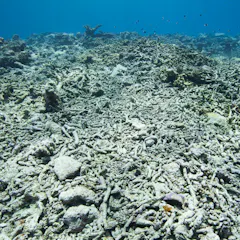
Dangerous climate tipping points will threaten food, water and coastlines. They’re irreversible and only radically accelerated climate action can stop them now.

Even allowing warming to exceed 1.5°C for a few decades could trigger irreversible damage.

These ‘warming stripes’, adopted around the world as a symbol of climate awareness, action and ambition, now include another dark red stripe for 2024.
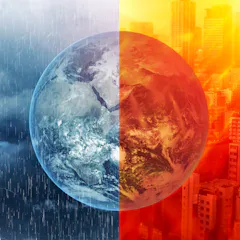
2024 was first calendar year with warming above 1.5°C with unprecedented extremes putting humans and ecosystems at risk
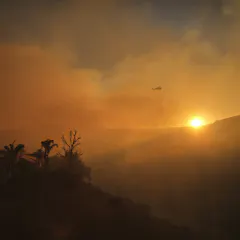
This record-breaking heat is primarily driven by humanity’s burning of fossil fuels. The warming won’t stop until we reach net-zero emissions.

The Pacific Ocean is entering the hot phase of its temperature cycle, an event that will turbo-charge global warming.
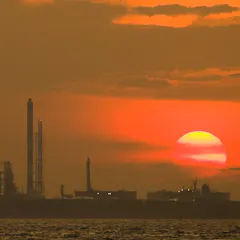
Our annual reports will update the world on the climate’s vital signs.

There is no safe limit to global warming – there is only what people deem to be acceptable damage.

Injecting reflective particles into the atmosphere won’t immediately cool the entire planet. A new study shows how parts of the US, China and Europe might still see temperatures rising a decade later.

Climate change will increase the frequency of both floods and droughts in Pakistan. To address these challenges, enhancing infrastructure, building dams and educating the public are necessary.

Most concerning is the long-term upward trends of CO₂ emissions form burning fossil fuels, which are far from trending towards net-zero by 2050.

These giant predators are helping solve the mystery of Earth’s cooling shift some 50 million years ago.

Climate models are likely underestimating the true severity of future warming in urban areas.

Some atmospheric pollutants actually help cool the planet, but the sudden shutdown of heavy industry threatened to purge them.

The report by the World Meteorological Organisation shows that with large and rapid emissions cuts, we can still avoid the most severe climate change. But worryingly, we also have time to make it far worse.

Abrupt losses of biodiversity from climate change represent a significant threat to human well-being.
Set aside the politics. If by some miracle we turned off carbon emissions immediately, how would the climate respond?
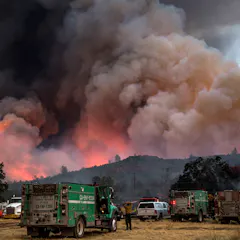
Thanks to El Niño and climate change, last year broke temperature records – and reduces any importance attached to the global warming ‘hiatus.’
Top contributors
-

Chief Research Scientist, CSIRO Environment; Executive Director, Global Carbon Project, CSIRO
-
Professor, Department of Earth System Science, and Chair of the Global Carbon Project, Stanford University
-
Professor of Physical Climate Change; Director of the Priestley Centre for Climate Futures, University of Leeds
-
Senior Research Fellow in Climate Change Risks, University of Cape Town
-
Professor, Environmental Science, UNSW
-
Associate Professor of Maritime Security and Governance, US Naval War College
-
Professor and Scott Presidential Chair in Environmental Science and Engineering, Colorado State University
-
Senior Researcher, Center for International Climate and Environment Research - Oslo
-
Distinguished Scholar, National Center for Atmospheric Research; Affiliate Faculty, University of Auckland, Waipapa Taumata Rau
-
Assistant Professor of Paleoecology, University of California, Merced
-
Professor of Atmospheric Science, Colorado State University
-
Senior Researcher, Center for International Climate and Environment Research - Oslo
-
Chair, Mathematical Modelling of Climate, University of Exeter
-
Postdoctoral Research Associate in Atmospheric Science, University of Cambridge
-
Professor of Earth System Science, Stanford University