
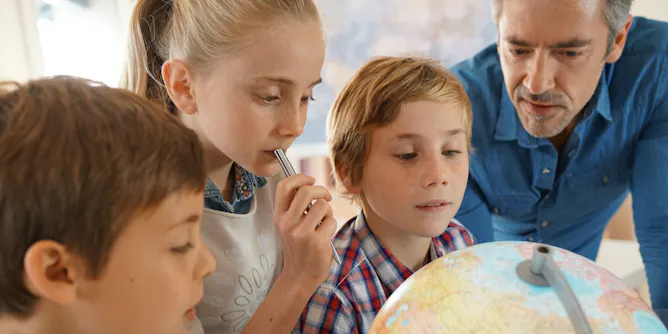
The number of content descriptions of what teachers should teach and what students should learn has been cut by 21%. In primary school geography, 50% of these descriptions have gone or been reduced.
Articles on Geography
Displaying 41 - 60 of 95 articles

Millions of people around the world live on river deltas and are vulnerable when those rivers shift direction. A new study shows why and where these events, called avulsions, happen.
Geographers often talk about the ‘silences’ of maps – what’s missing and unseen. Those silences can be as meaningful as what’s shown.
Everest didn’t become the highest mountain overnight. This process was excruciatingly slow; a result of complex interactions between the solid earth, the atmosphere and the biosphere.
The pandemic exposed the contradictions and tensions at the heart of ‘creative class’ cities and jobs.
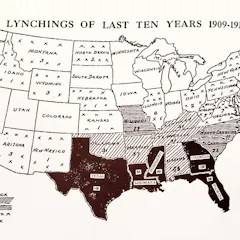
Mapping is one way African Americans fight for equality and help each other navigate a racially hostile landscape.
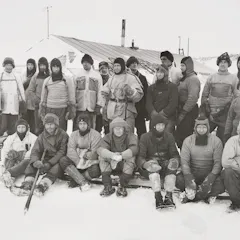
Antarctic research has historically been a bastion of men from Europe and North America. Only now is the field opening up to women and people of colour. And there’s a way to go yet.
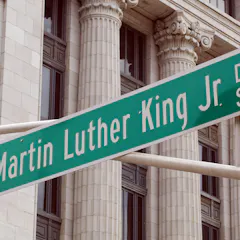
US cities began naming streets in Black neighborhoods for Martin Luther King Jr. after his 1968 assassination. Researchers studying these areas 50 years later found entrenched deprivation.
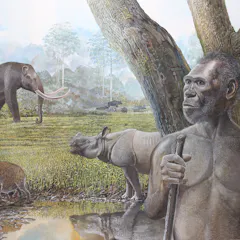
Several theories have suggested either humans, climate change or both drove megafauna extinctions in Southeast Asia. Our newest work suggests otherwise.

In football, a number of African teams draw heavily on their European-born diasporas, a reflection of a colonial past and deeply entrenched migration routes.
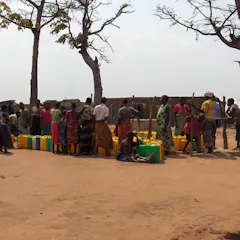
The study confirms that collecting water for daily use weighs more heavily on women, making life more difficult for especially older women.
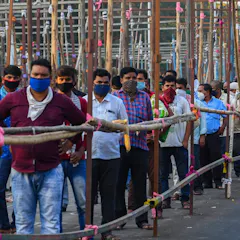
Preliminary results of new research show how using data from social networks such as Facebook may help us understand how the coronavirus spread on local and regional levels.
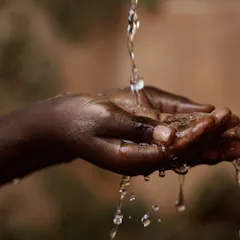
Governments must take note of specific geographic contexts and local attributes that drive water insecurity.
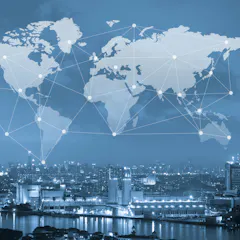
What can we do as individuals to help save the planet? Acting locally is satisfying because we can see the results, but a geographer argues that large-scale solutions often make the most difference.
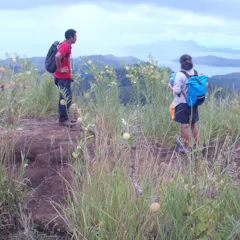
New research casts light on the pre-colonial mountain settlements in Fiji.

Hundreds of archaeologists provided on-the-ground data from across the globe, providing a new view of the long and varied history of people transforming Earth’s environment.

Firearms are the second leading cause of death among US children and adolescents.
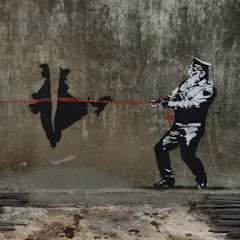
A spatial analysis of India’s election results shows a unique geographical footprint of the BJP vote and how its recent progression follows obvious geographic patterns.
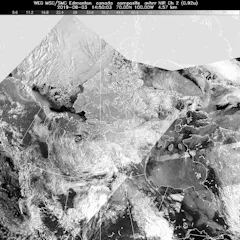
In May 2019, Canada made a partial submission to the United Nations on the limits of its extended continental shelf in the Arctic.
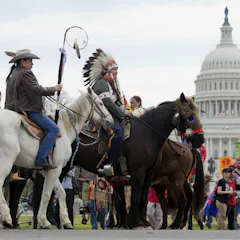
By appealing to the hearts and minds of their white neighbors, Native Americans are carving out common ground. Together, these different groups are building unity through diversity.
Top contributors
-

Associate Professor, School of Geosciences, University of Sydney
-
Derek H. Alderman is a Friend of The Conversation.
Chancellor's Professor of Geography, University of Tennessee
-
Professor of Geography, University at Buffalo
-
Visiting Honors Lecturer, Southern Illinois University Edwardsville
-
Professor of Civil and Environmental Engineering, The University of Texas at San Antonio
-
Associate Professor of Geography, University of Wisconsin-Stout Polytechnic
-
Professor of Geography, School of Law and Society, University of the Sunshine Coast
-
Professor Emeritus of Geography, Louisiana State University
-
Associate Professor, Earth and Planetary Sciences, Curtin University
-
Earth sciences researcher, Centre national de la recherche scientifique (CNRS)
-
PhD Candidate, Université Grenoble Alpes (UGA)
-
Professor of Economic Geography, University of Portsmouth
-
Economiste à l'INRA, AgroParisTech – Université Paris-Saclay
-
Registered Professional Archaeologist, PhD Candidate, University at Albany, State University of New York
-
Lecturer, Peace Studies, Egerton University