
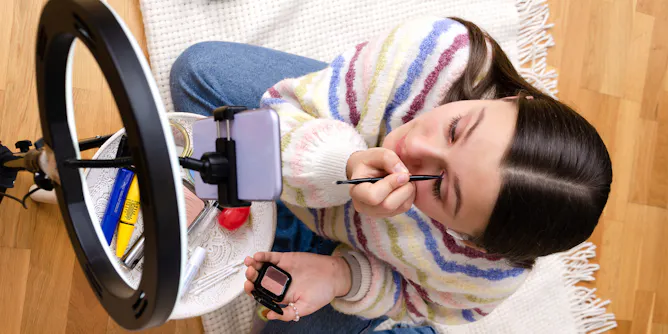
Boosting body confidence should be as important as boosting sales to beauty brands.
Articles on Generation Z
Displaying 21 - 40 of 55 articles

The gradual changes in voting behaviour represent an existential crisis for the Liberals going forward.
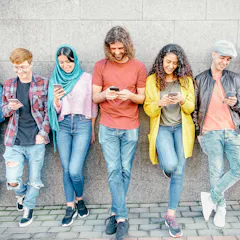
Recent research highlights the links between Gen Z smartphone addiction and compulsive buying.

About a third of American adults in Generation Z lack the money or resources needed for reliable access to nutritious food.

About two-thirds of generation Z seem to want a hybrid working pattern in the future.

New research suggests that for millennials and Generation Z, a lack of rules around love and dating brings both loss and liberation.

Etsy’s purchase of Depop shows that eco-conscious fashion could threaten fast fashion retailers.

Anyone who wants to market to ‘Zoomers’ needs to do their research first.
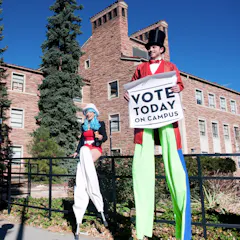
Researchers examined the voting behavior of 5,762 students at 120 colleges and universities. Two groups stood out as an untapped electoral resource – if the candidates can turn out Gen Z.

One positive thing coming out of pandemic-related self-isolation could be that people will spend more time in their kitchens, a place where fewer Canadians have ventured in recent years.

We must put in measures to protect the young as well as the old.

We don’t know how long-lasting the effects of the virus will be, but the outbreak is already having a deep psychological impact on people and disrupting life on a massive scale.
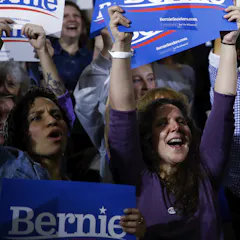
Americans under 30 are far less likely to vote than older citizens. Stepping up civics instruction might help change that, a scholar explains.

This Valentine’s Day, a researcher reveals some insights after conducting interviews with young university undergrads to explore their sex lives, dating and intimacy.
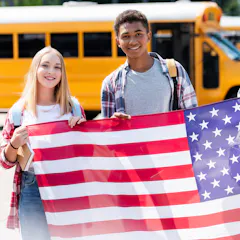
A teen asks why so many young people don’t stand for the Pledge of Allegiance or the national anthem. The data shows that young Americans today do view the U.S. more negatively than older generations.

An employment law expert explains why you shouldn’t use an age-related insult at work to demean an older colleague – an issue even the Supreme Court is now talking about.

A cognitive scientist observes that the words that bother college-age Americans today can cause harm.

In a survey, 56% of Americans aged 14 to 24 said they knew little to nothing about the juvenile justice system.
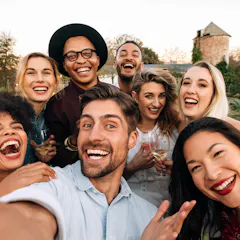
Millennials are now between about 23 and 38 – and the group is more diverse than it often gets credit for.

In a world that is unrecognisable to that of 1914, should the British army be relying on recruitment tactics that are a century old?
Top contributors
-

Senior Research Fellow, Institute for Water Futures & School of Cybernetics, Australian National University
-
Associate Professor, University of Cape Town
-
Senior Lecturer (Associate Professor) in Digital Marketing, Royal Holloway, University of London
-
Director, Center for Information and Research on Civic Learning and Engagement in the Jonathan M. Tisch College of Civic Life, Tufts University
-
Reader in Fashion, Marketing and Sustainability, Glasgow Caledonian University
-
Professor, Business and Management, Queensland University of Technology
-
Research Lead at Rhythm Obscura / Lecturer in the School of Art, Design and Architecture, University of Plymouth
-
Professor of Political Science, Hamline University
-
Smith Professor of Equity and Inclusion in Business, Queen's University, Ontario
-
Professor of Human Resource Management, Cranfield University
-
Professor of Political Science, Washington College
-
Professor of Strategy, Hult International Business School
-
Assistant Professor of Higher Education Leadership, Mississippi State University
-
Senior Lecturer in Human Geography, University of Dundee
-
President, Penn State