

Our findings highlight life-long inequalities in mental health by factors that are down to chance.
Articles on Generation X
Displaying 1 - 20 of 26 articles

The idea of generations as self-conscious group identities came into being with the trauma and upheaval of the first world war.

Younger generations today agree more on key national issues than older generations do. A time of intense polarization may be ending.

Increasing life expectancy and falling birthrates means many of us may have to keep working until beyond 71 years of age.

The law changed older adults’ caregiving behavior because their children became more able to take paid time off work to care for their own newborns.

Middle age means staying a step ahead on both the medical and financial fronts.

About a third of American adults in Generation Z lack the money or resources needed for reliable access to nutritious food.

The political alliance between American evangelicals and Israel’s right wing may have peaked during the Trump administration.

For those born around 1950, 84% earned more at age 30-34 than their own own parents did at the same age. It has been about 68% for those born since the early 1960s.

Published in 1991, the tale of over-educated, under-employed young people who lament the broken world they’ve inherited speaks to the concerns of today’s youth.

The return of actors like Karate Kid Ralph Macchio and Bill & Ted’s Alex Winter sees them older and wiser. Fewer role revivals remind us of character growth related to womanhood.

As the adult children of baby boomers start inheriting their parents’ wealth, it’s time we looked seriously at taxing this unearned income.

We don’t know how long-lasting the effects of the virus will be, but the outbreak is already having a deep psychological impact on people and disrupting life on a massive scale.

An employment law expert explains why you shouldn’t use an age-related insult at work to demean an older colleague – an issue even the Supreme Court is now talking about.

In the late 1970s, 52 percent of 12th-graders hung out with their friends almost every day. By 2017, only 28 percent were doing so.

Millennials are more financially conservative than their high debt balances might suggest.

Baby boomers didn’t all benefit from free education, and not all millennials are struggling to buy a home.

“Millennial snowflakes” are derided as weak and sensitive but this nastiness is patently false and actively harms progress on tackling mental health.

Following the explosion of screen-based personal devices, the risk of users slipping into hyper reality has multiplied enormously since the television age.
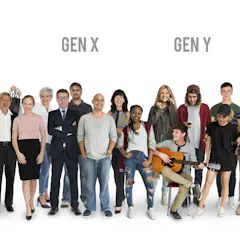
The generational ‘war’ is a con, designed to hide a darker truth.
Top contributors
-

Professor of Psychology, San Diego State University
-
Associate Professor, University of Cape Town
-
Senior Lecturer in Human Geography, University of Dundee
-
Professor of Social Policy and Ageing, University of Bristol
-
TR Ashworth Professor in Sociology, The University of Melbourne
-
Professor of communications, The University of Melbourne
-
Research Lead at Rhythm Obscura / Lecturer in the School of Art, Design and Architecture, University of Plymouth
-
Professor of Law, University of Oregon
-
Professor of Economics, University of Technology Sydney
-
Professor of Visual & Cultural Studies, Edith Cowan University
-
Director, Master of Engineering in Financial Technology, Duke University
-
Assistant Research Scientist at the Survey Research Center, University of Michigan
-
Research Fellow, Department of Humanities, Northumbria University, Newcastle
-
Professor of Political Science, Hamline University
-
Principal Lecturer in Finance, Cardiff Metropolitan University