
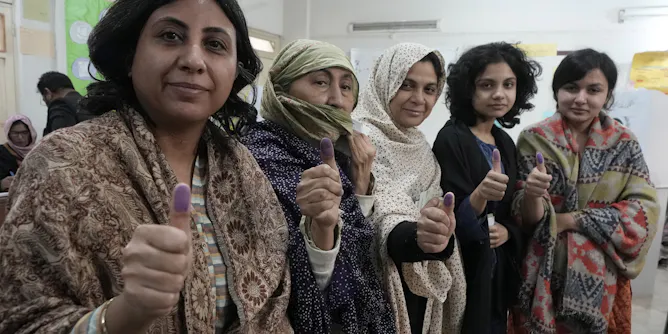
Pakistan added millions of women voters in 2024, but declining turnout reveals deeper barriers to meaningful political participation.
Articles on Voter turnout
Displaying 1 - 20 of 96 articles
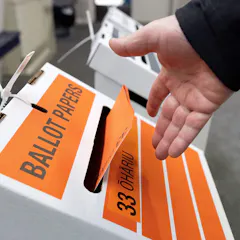
Voter turnout in New Zealand elections has been sliding for decades. Research suggests compulsory voting could reverse the trend – so what are the objections?

Romuald Wadagni’s election is viewed by many as a continuation of a pre-existing political system, rather than a genuine change in leadership.

A rigged electoral system and fragmented opposition allowed Denis Sassou Nguesso to claim 94.90% of the vote.
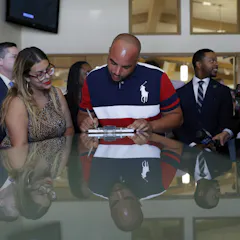
At least 20 million Americans have served time. Most of them can’t or don’t vote, and that may distort some election outcomes, a political scientist argues.

Fostering a sense of pride in local communities increases citizen participation, including, at a bare minimum, voting in municipal elections.

It’s not that youth don’t care enough to vote. It’s that they are turning away from conventional, formal participation in favour of alternative ways of sharing and expressing their views.

When voters know more about candidates and their policies, and when the issues are more relevant, local democracy thrives.
Low voter turnout in local elections is a problem worldwide. But evidence is growing that timing them with general elections can reverse the trend.

Canada’s recent federal election was the first in many years where the economy and pocketbook issues were key issues, which likely played a role in the uptick in voter turnout.
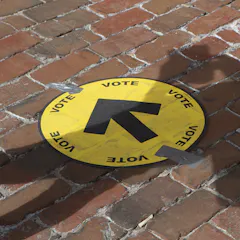
Neither heroic behaviour nor exceptional courage is required to engage in these accessible building blocks of a sustainable democracy.

With so many parties on offer, voters are overwhelmed by choice – and many are simply staying home.
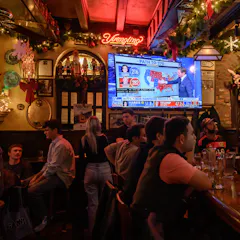
Philly turnout underwhelms, steel country sides with Trump, and Erie County keeps its bellwether status.

The globally popular virtual gaming platform has now become a place for young people to engage with politics in the real world – including registering to vote.
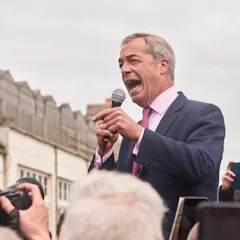
Listen to the fifth and final episode of Know Your Place: what happened to class in British politics from The Conversation Documentaries podcast.

Class was once a strong indicator of which political party you would support. But since 2001, something quite different has been happening.
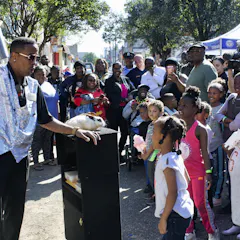
Residents of streets that held a block party in 2012 were slightly more likely to vote in that year’s presidential election compared to residents of streets that didn’t host a block party.
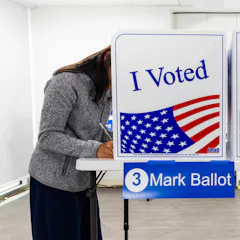
More than 40% of Democrats and Republicans didn’t vote in the past three US elections. These non-voters could be pivotal in deciding who wins this year’s contest.
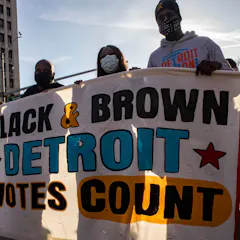
Working-class and poor Black Detroiters tend to vote inconsistently in presidential elections, but they could be key to winning the swing state of Michigan in 2024.

The 2024 election has upended traditional voting blocs, with young people trending rightward and seniors embracing Harris. New research proposes an intriguing theory: It may come down to happiness.
Top contributors
-

Professor American Politics, Political Science, Georgia State University
-
Full Professor, Department of Political Science, Université de Montréal
-
Assistant professor of Political Science, Georgia State University
-
Chief Policy Fellow, University of Leeds
-
Associate Professor of Public Policy, Politics, and Education, University of Virginia
-
Fellow, Center for Congressional and Presidential Studies, American University
-
Director, Center for Information and Research on Civic Learning and Engagement in the Jonathan M. Tisch College of Civic Life, Tufts University
-
Professor, Department of Government, University of Essex
-
Vice Provost for Graduate Studies and Dean of the Graduate Division, Professor of Education, University of California, Berkeley
-
Senior Lecturer in Politics, University of Exeter
-
Senior Lecturer in Politics, York St John University
-
Professor of Government and Director of the Center for Congressional and Presidential Studies, American University School of Public Affairs
-
Professor of Politics and Public Policy, University of East Anglia
-
Professor of Government, American University School of Public Affairs
-
Professor of Politics, Royal Holloway, University of London