
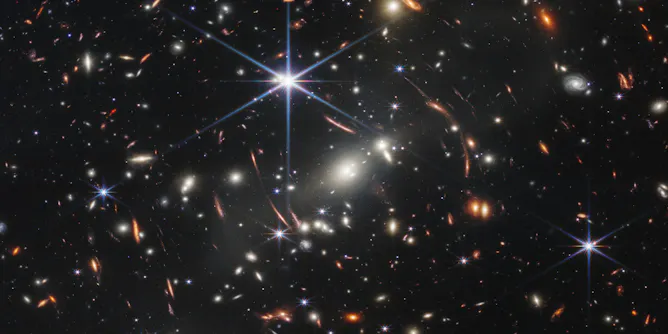
The theory of gravity may need to be altered.
Articles on General Relativity
Displaying 21 - 40 of 79 articles
Cutting-edge theories of physics suggest time may not be real – but even if they’re right, life can still go on as usual.
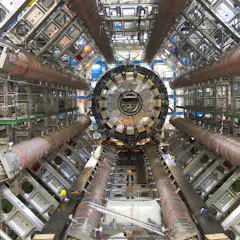
Physicists know a lot about the most fundamental properties of the universe, but they certainly don’t know everything. 2021 was a big year for physics – what was learned and what’s coming next?
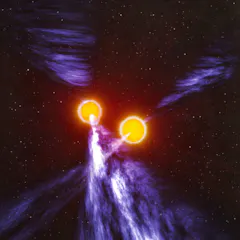
Astronomers watched a pair of pulsars for 16 years to test the theory of general relativity, which has stood unchallenged for over a century.
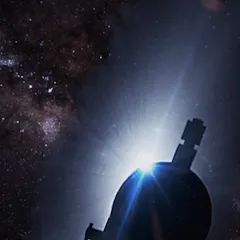
Such a mission could be developed soon, allowing astrophysicists to take selfies of the solar system and use the Sun’s gravity as a lens to peer deep into space.

Gravity is something every person on Earth intuitively understands: It is what keeps you on the ground. But how come gravity pulls down, rather than pushes up? Einstein came up with the answer.
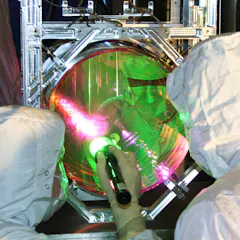
The world’s biggest gravitational wave observatory is now probing the limits of quantum mechanics.
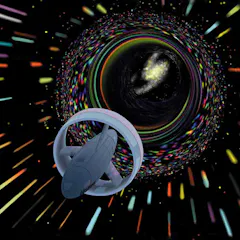
If humanity wants to travel between stars, people are going to need to travel faster than light. New research suggests that it might be possible to build warp drives and beat the galactic speed limit.
Bending space into warp bubbles to travel faster than light may never be a reality, but distorting the flow of time just might be possible.
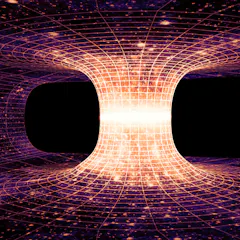
Calculations show that wormholes should create a spectacular display of gamma rays that we could try to observe.
Field theory describes the universe as energy flowing along unending lines. With this perspective, it is possible to define a new fundamental building block of matter.
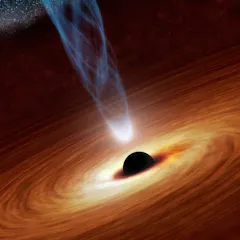
Roger Penrose helped resurrect Einstein’s general theory of relativity, and Reinhard Genzel and Andrea Ghez showed there was a black hole in the middle of our galaxy.
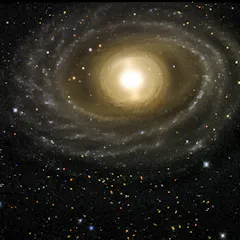
Dark energy is probably a sea of constant energy in empty space itself, according to new research.

The h-index has become an indicator of quality for many researchers and may influence the allocation of research funds. But some question its value.
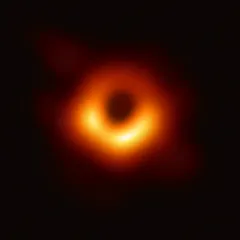
Scientists turned Earth into one giant telescope to capture the uncapturable.

The crucial phase of our discovery of black holes took place in a suitably dark period of human history – World War II.

Astronomers traced a single star as it passed close to the black hole at the centre of our galaxy, and detected the telltale signature of Einstein’s gravity in action.
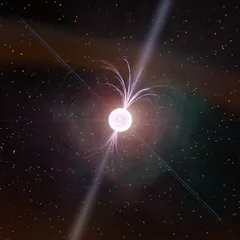
An extreme laboratory in space involving three dead stars has shown that all objects really do accelerate identically, proving Einstein right.

Exactly 99 years after Einstein’s theory of general relativity was proven right in our own solar system, scientists show that it also holds true for entire galaxies.
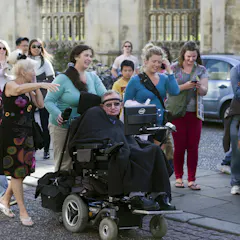
Stephen Hawking was a highly creative scientist, pushing past assumptions and playing with “what if” scenarios to take physics to new levels.
Top contributors
-

Professor of Astrophysics, University of Sydney
-
Professor, Philosophy of Science, The University of Melbourne
-
Observatory Manager and Instructor, Astronomy, University of Saskatchewan
-
Associate Professor of Physics, Oklahoma State University
-
Pro Vice-Chancellor Flagship Initiatives, Swinburne University of Technology
-
Professor and Director of the Centre of Excellence for Data Science, AI and Modelling, University of Hull
-
Professor of Gravitational Astrophysics and Cosmology, University of Glasgow
-
Senior Lecturer in Astronomy & Astrophysics, Coordinator of Swinburne Astronomy Online, Swinburne University of Technology
-
Emeritus Professor, ARC Centre of Excellence for Gravitational Wave Discovery, OzGrav, The University of Western Australia
-
Professor of Astrophysics and Royal Society University Research Fellow, University of Hertfordshire
-
Professor of Physics, Penn State
-
Co-Founder of BQI@UNSW and PhD Student, UNSW
-
Professor of Theoretical Physics, University of Canterbury
-
Professor in mathematical physics, Lancaster University
-
Cosmologist, University of Tasmania