
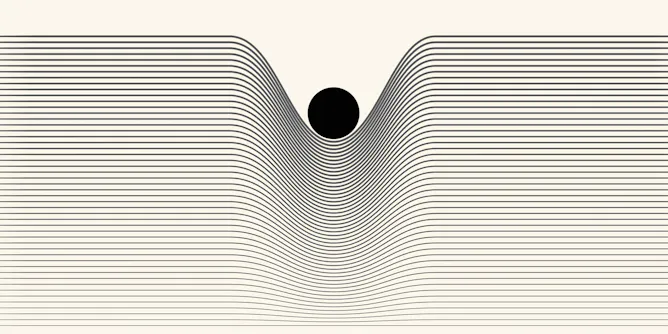
Einstein’s theory of general relativity suggests that our universe originated in a Big Bang. But black holes, and their gravitational forces, challenge the limits of Einstein’s work.
Articles on Theory of General Relativity
Displaying 1 - 20 of 23 articles
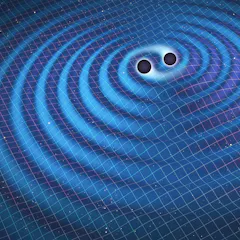
Upgrades to the hardware and software of the advanced observatory should allow astrophysicists to detect much fainter gravitational waves than before.
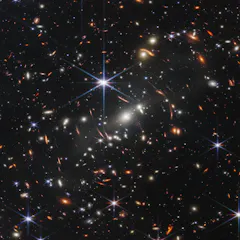
The theory of gravity may need to be altered.
Time dilation might seem like science fiction, but it’s not. There are astronauts circling the Earth right now who are experiencing it – though luckily nowhere near as much as Buzz Lightyear.

Gravity is something every person on Earth intuitively understands: It is what keeps you on the ground. But how come gravity pulls down, rather than pushes up? Einstein came up with the answer.
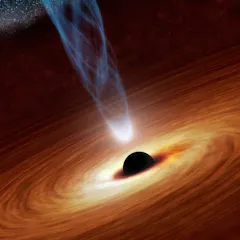
Roger Penrose helped resurrect Einstein’s general theory of relativity, and Reinhard Genzel and Andrea Ghez showed there was a black hole in the middle of our galaxy.
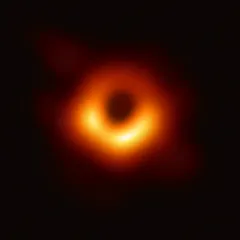
Scientists turned Earth into one giant telescope to capture the uncapturable.

Astronomers traced a single star as it passed close to the black hole at the centre of our galaxy, and detected the telltale signature of Einstein’s gravity in action.

A future that continues to have increasingly fast computing depends on quantum physics – but research is showing that there are limits to how fast quantum computers can go.
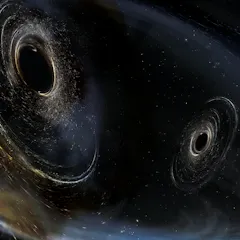
These ripples in the very fabric of the universe were hypothesized by Einstein a century ago. Now scientists have detected them for the third time in a year and a half – ushering in a new era in astrophysics.
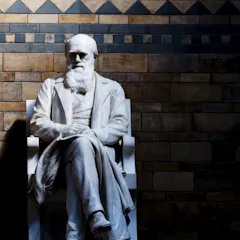
In science, the word ‘theory’ has a very specific meaning that’s easy for nonscientists to misunderstand or misconstrue. Here’s what a theory must withstand to be accepted by the scientific community.
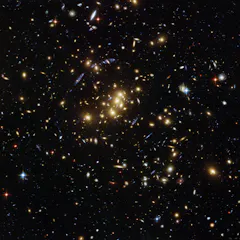
Einstein’s famous theory of general relativity theory lives on thanks to new research.
There’s a good reason you should care about the discovery of gravitational waves, even if you don’t understand the science.
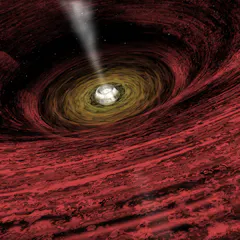
The discovery of gravitational waves has ushered in a new era in astronomy and physics. Where will the next big discovery be made? There’s no reason for it not to be Africa.

It’s taken centuries for our understanding of gravity to evolve to where it is today, culminating in the discovery of gravitational waves, as predicted by Albert Einstein a century ago.
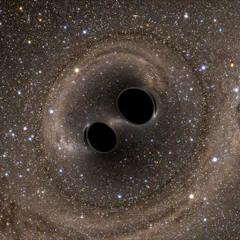
Here’s a LIGO insider’s description of how he got the news of a phenomenon that had first been theorized 100 years ago.

General relativity challenges our intuitive conception of how space and time work, which might explain why it’s such a popular target for crank theorists.

As Doctor Who’s 50th anniversary looms, time travel is everywhere – on the screen, at least. Famously, the Doctor can whizz through the years using a “dimensionally transcendental” machine, the TARDIS…
It is hard to imagine a scientific breakthrough more abstract and less politically contentious than Einstein’s general theory of relativity. Yet in Weimar Germany in the 1920s it attracted fierce controversy…
School students today are taught physics based on obsolete theories and outmoded ways of thinking. Instead of the truth, most learn a naive simplification - the 300 year-old Newtonian physics, itself based…
Top contributors
-

Professor of Astrophysics, University of Sydney
-
Professor of Physics, Penn State
-
Emeritus Professor, ARC Centre of Excellence for Gravitational Wave Discovery, OzGrav, The University of Western Australia
-
Deputy director, Institute for Particle Physics Phenomenology, Durham University
-
Assistant Professor of Physics and Astronomy, West Virginia University
-
South African Research Chair in Physical Cosmology, Department of Mathematics and Applied Mathematics, University of Cape Town
-
Associate Professor in Astronomy, Monash University
-
Senior Lecturer and ARC Future Fellow, Monash University
-
Professor of Public Ethics, Charles Sturt University
-
Professor of Mathematical Physics, University of Cape Town
-
Professor of Physics and Astronomy, Bucknell University
-
Professor of Astrophysics, University of Cambridge
-
Research Fellow in Cosmology, University of Portsmouth
-
Post Doctoral Research Associate, Centre for the Subatomic Structure of Matter, Adelaide University
-
PhD Candidate, Centre for the Subatomic Structure of Matter, Adelaide University