
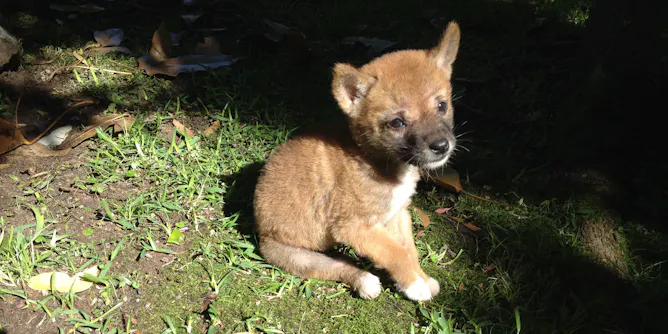
The first high-quality Australian dingo genome gives a multi-thousand-year-old snapshot into the evolutionary history of dogs.
Articles on Gene sequencing
Displaying 1 - 20 of 21 articles

Deciphering the biological pathways behind rare genetic diseases often involves assembling a team of specialists to work closely with the family members of those affected.

Record-breaking technology can sequence an entire human genome in a matter of hours. The work could be a lifeline for people suffering from the more than 5,000 known rare genetic diseases.
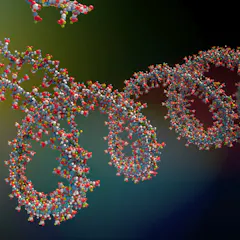
Machine learning is great at finding patterns but doesn’t know what those patterns mean. Combine it with knowledge gained from genetic research and you have a powerful view into the workings of cells.
After more than 300 years of effort, scientists have documented fewer than one-third of Australia’s species. The remaining 70% are unknown, and essentially invisible, to science.
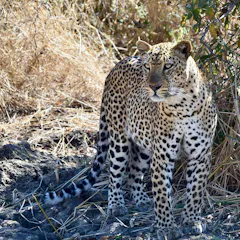
We studied the genomes of African and Asian leopards using specimens from natural history museums.

The achievement didn’t live up to the hype, but it has illuminated new areas of ‘genetic dark matter’.

The stench was once thought to originate from plants, but scientists have now pin-pointed its true origin.

The glue that gives spider webs their stickiness is a form of spider silk protein. Researchers can imagine cool uses for a synthetic version – but had to wait for the tricky glue gene to be sequenced.
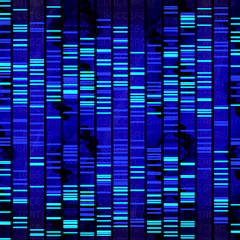
Do you own your own genetic data? The future of genomic databases is almost here, and now is the time to figure out how we are going to allow this information to be used.
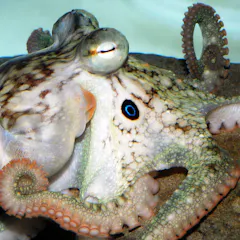
A peek inside the genome of the octopus gives some hints as to what makes it such a remarkable creature is so many ways.
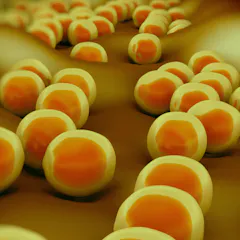
While many of the fruits of the human genome project could be decades away, DNA sequencing of drug-resistant bacteria has been striding forwards
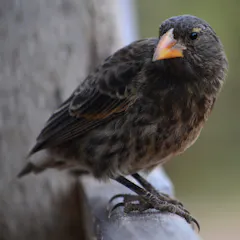
Darwin’s finches are known to be a paragon of evolution by natural selection, but a recent genetic discovery relating to their beaks highlights the evolutionary connectedness of all life.

Genomics is increasingly hailed by many as the turning point in modern medicine. Advances in technology now mean we’re able to make out the full DNA sequence of an organism and decipher its entire hereditary…
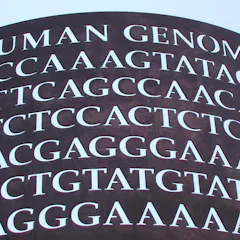
An ambitious project has been launched that will involve sequencing genomes of 100,000 individuals to improve our understanding of a range of diseases and – hopefully – eventually find new treatments for…

Genetic testing is a powerful tool. Two years ago, with the help of my colleagues, it was this tool that helped us identify a new disease. The disease, called Ogden Syndrome, caused the death of a four-month…

Tobacco doesn’t immediately conjure up ideas of fuel for cars and planes. But that’s precisely what a three-year, $4.8m project from the US Department of Energy’s ARPA-E PETRO (Plants Engineered to Replace…
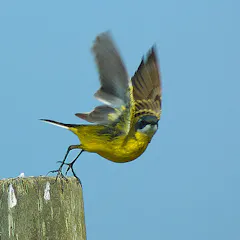
The extinction of an animal is no longer the end of our opportunity to learn new things about its ecology and biology. The same technology that recently reconstructed the genome of the Neanderthal man…
University of Adelaide researchers have developed a simple and cost-effective DNA test to identify kangaroo species from…
Researchers have found that a single change in genetic sequence of the fat mass and obesity-associated FTO gene has a significant…
Top contributors
-

Investigador I+D+i en Armadora Pereira / IIM-CSIC, Instituto de Investigaciones Marinas (IIM-CSIC)
-
Visiting Research Fellow, History of Biomedical Sciences, University of Cambridge
-
Reader, University of Aberdeen
-
Professor of Marine Biology and Aquaculture, James Cook University
-
Postdoctoral Researcher in Biological Sciences, University of Maryland, Baltimore County
-
Research fellow, The University of Queensland
-
Assistant Professor in Human Genetics, Cold Spring Harbor Laboratory
-
Cooperative Extension Specialist, Lemaux Lab, University of California, Berkeley
-
Professor, UCL
-
Senior Lecturer in Computational Biology, University of Manchester
-
Lecturer, Business School & Centre for Policy Futures, The University of Queensland
-
Emeritus Professor of Animal Genetics, University of Sydney
-
Lecturer in Zoology, Bangor University
-
Adjunct Assoc. Professor, The University of Western Australia
-
Postdoctoral Fellow in Precision Medicine and Emerging Biotechnologies, Arizona State University