
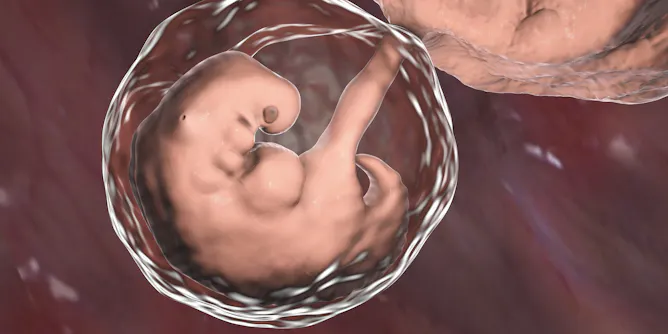
A number of things may have gone wrong when researchers edited Chinese twins Lulu and Nana’s genome. Either way, the failed experiment is a cautionary tale for us all.
Articles on Gene editing summit
Displaying all articles
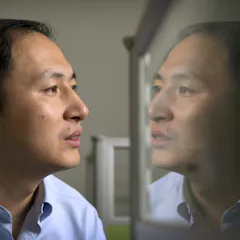
To announce the world’s first gene-edited babies, scientist He Jiankui did what movie directors do: release a trailer on YouTube. The video is a positive spin on unauthorized gene editing.
A Chinese scientist has revealed he edited the DNA of twin girls born through in vitro fertilization. These girls are designed to be resistant to HIV. Is the edit a medical necessity or an enhancement?
Controversy over a Chinese study that used CRISPR-Cas9 gene-editing technology shows how the West still looks at the East through the lens of Orientalism.
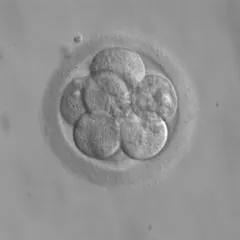
We’re not quite there yet but there is already a potential blueprint for editing the human germline.
The International Summit on Human Gene Editing drew a distinction between editing an individual’s body cells and editing germline cells that would pass changes to future generations. Does that make sense?

Public attention is focused on whether we should use gene editing technology on embryos, but it could potentially have a bigger and more immediate impact on human health via animal organ donation.

Experts from around the world are in the US to discuss the scientific, ethical and governance issues linked to human gene editing. Here are five reasons they shouldn’t ban research in the field.
The debate about regulating gene editing technology is often couched in polar terms, but understanding degrees of regulation that might be a better approach.
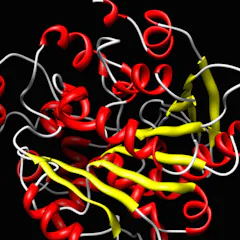
Should the gathering of experts from around the world that’s considering the scientific, ethical, and governance issues linked to research into gene editing ring alarm bells?

While gene editing offers the exciting potential for disease therapies, using it on human embryos opens up a can of worms.
Top contributors
-

Senior Lecturer, Faculty of Transdisciplinary Innovation, University of Technology Sydney
-
Professor of Sociology, University of California, San Diego
-
Instructor, Oregon State University
-
Assistant Professor of Bioethics, National University of Singapore
-
Professor of Bioethics & Medicine, Sydney Health Ethics, Haematologist/BMT Physician, Royal North Shore Hospital and Director, Praxis Australia, University of Sydney
-
Chair, The Conversation Media Group
-
Research Scholar, Centre for Values, Ethics and the Law in Medicine, University of Sydney
-
Chen Su Lan Centennial Professor in Medical Ethics, National University of Singapore; Distinguished Visiting Professor in Law, University of Melbourne; Uehiro Chair in Practical Ethics, The University of Melbourne
-
Director of Germline and Epigenomics Research at the Gurdon Institute, University of Cambridge
-
Associate Professor, School of Arts and Media, UNSW
-
Assistant Professor in Biomedical Ethics, National University of Singapore
-
Research Group Head, Germ Cell Development and Epigenetics, Hudson Institute
-
Geneticist and Group Leader, The John Curtin School of Medical Research, Australian National University
-
Head of School (Computer Science) and Co-Director (Centre for Data Science), Queensland University of Technology