

Whole-life sentences are rarely handed down in the UK. Recent instances of their use point to gendered violence finally being taken more seriously.
Articles on Gender-based violence
Displaying 141 - 160 of 287 articles

Projects that are easy to participate in, reproduce and that make people feel like they are part of a community that cares are important.

When a patriarchal society is combined with a history of colonialism, women in that country are at heightened risk of gender-based violence.
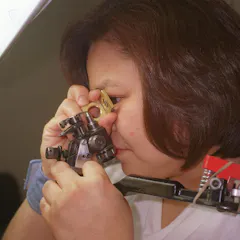
While marketing has made diamond rings a symbol of heteronormative happy endings, women from the Northwest Territories tell a different story about their experiences with the diamond mines.

Ignorant assumptions about what the headscarf means fail to recognise how integral it can be to a woman’s identity.
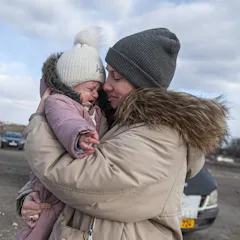
While most people offering support to Ukrainians are well-intentioned, it’s not always the case. There are a reports of women and girls fleeing Ukraine being raped in their new countries.
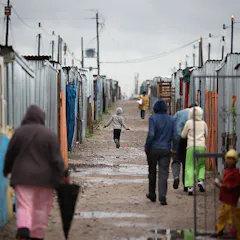
Social security reforms are needed that include support for the long-term and chronically unemployed and informal workers.

Kicking off the cup with three straight wins, South Africa is ranked 2nd in the world in one day internationals.
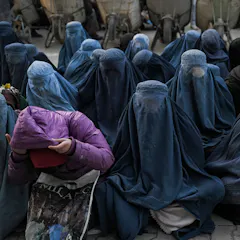
The Taliban’s recent abduction of 40 people, and gang rape of eight women, has not captured Western media attention. But activists inside Afghanistan point to worrying levels of violence.
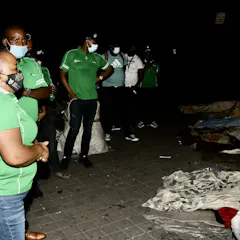
The census will focus everyone in on the core challenges the country faces, where they are, and who is most affected.
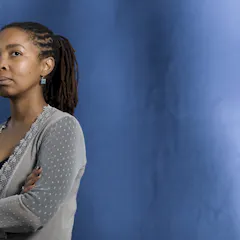
Female Fear Factory by Pumla Dineo Gqola sees gender violence as a sophisticated ecosystem kept alive by socially manufactured fear.
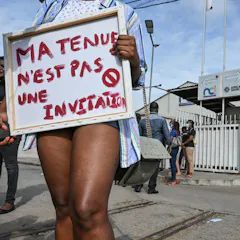
Stigmatiser les victimes de viol est lourd de conséquences. Il les réduit au silence, protège les violeurs, les décourage à se faire consulter et à réclamer justice.
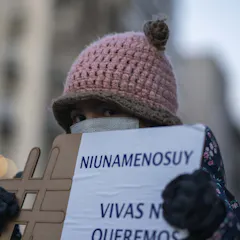
Latin American activists have made important contributions to the movement against gender-based violence. Their impact has been significant within global feminist movements.
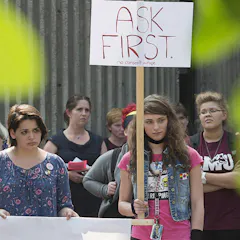
The struggle against sexual harassment and sexual assault at Ontario universities goes back to the 1970s.
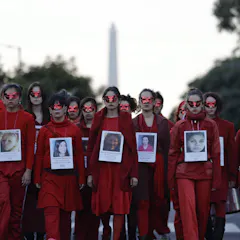
Private and public violence rely on each other as forces that work together to ensure women and girls ‘stay in their place’ — the one that patriarchal social structures have prescribed.
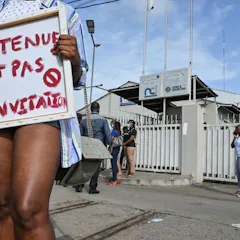
The practice of blaming and stigmatising rape survivors has devastating consequences. It silences them and protects rapists. It discourages survivors from accessing healthcare and pursuing justice.

Statistics show that about 41% of women in Kenya have reported physical or sexual violence from their husbands or partners in their lifetime.

A French trial will use virtual reality headsets to trigger empathy in perpetrators. But previous research findings suggest we need to be sceptical of claims about what the technology can do.
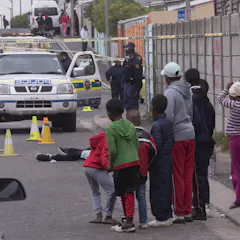
Findings show that in the face of marginalisation and social exclusion, youth in gangs think that they have no options except violence to prove that they are ‘real’ men in their communities.
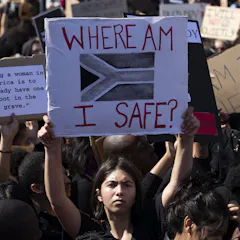
The problem of gender-based violence and femicide in South Africa is structural and fuelled by inequalities that transect race, class, gender, sexuality and age.
Top contributors
-

Professor of Family and Sexual Violence, RMIT University
-
Professor (Practice), Faculty of Business and Economics, Monash University
-
Professor of Political Science and Chair of the South African Research Initiative in Gender Politics, Stellenbosch University
-
Associate Professor in Criminology, The University of Melbourne
-
Adjunct Assistant Professor, Media and Technology Studies, and Director of the Feminist Collaboratory and Data Visualization Centre, University of Alberta
-
Professor, Department of Sociology & Anthropology, University of Guelph
-
Director of Monash Indigenous Studies Centre, Chief Investigator for the Australian Research Council Centre of Excellence for the Elimination of Violence against Women (CEVAW), School of Philosophical, Historical & International Studies, School of Social Sciences (SOSS), Monash University
-
Senior Lecturer in Global Studies, RMIT University
-
Assistant Professor, Global Development Studies, Queen's University, Ontario
-
Associate Professor, Indigenous Education & Research Centre, James Cook University
-
Associate Professor of Disaster and Emergency Management, York University, Canada
-
Criminologist / Senior Lecturer, Stellenbosch University
-
Senior lecturer, University of Exeter
-
Assistant Professor, Vrije Universiteit Amsterdam; Independent Social Research Foundation
-
Professor of Social Work; Leneen Forde Chair in Child & Family Research, Griffith University