

A new community risk assessment tool allows post-secondary institutions to make evidence-based decisions about their policies and procedures.
Articles on Gender-based violence
Displaying 101 - 120 of 287 articles

While women in poverty are more likely to experience sexual harassment and domestic abuse than higher-income women, people assume it is less distressing for them.

Research shows gender-based violence increases in the aftermath of disasters. Governments must incorporate ways of addressing it into their disaster response plans.

Faculty and university staff are embedding training to prevent gender-based and sexual violence into curricular goals of both arts and STEM classes.

Our research with 124 Australian hospitality staff found women bar workers were routinely seen as ‘better suited’ to manage the threat of violence - which is both risky and exploitative.

Pain in a thousand stitches; depicting a society where women live in constant fear of being attacked.

Dealing with climate change requires us to address not just our carbon emissions but also the disconnection with ourselves and our planet which fuels ecological destruction.

The stabbings at the University of Waterloo remind us that violence for daring to stand in a classroom and speak is still ever-present.

While it’s tempting to focus on what people can do to ‘stay safe’ or respond effectively to harassers, this is ultimately the wrong question to ask and puts responsibility victims.

The Ugandan law is one of a spate of laws across Africa that are said to protect the heterosexual African family.

In focussing on individual “deviancy”, we fail to make the connection between misogyny and wider social problems, like pornography.
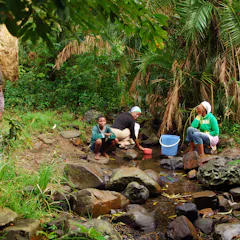
Experiencing nature helps people in times of joy and pain. However, inequity of access to green spaces means that South Africans cannot enjoy nature when they need to.

Before colonialism black South Africans viewed sex and morality very differently than today.

A national framework to address and prevent sexual and gender-based violence at post-secondary institutions includes a tool to guide responses to victims, alleged perpetrators and the community.

The repeal of outdated apartheid-era laws would have a far-reaching, positive impact on individual sex workers’ health and well-being.
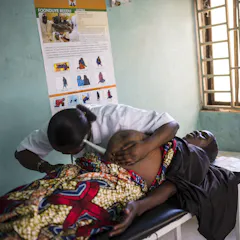
When women have opportunities, a country’s economic productivity and development is enhanced.

There are growing calls for a judicial inquiry to investigate abuse in Canadian sport. We argue that there are better alternatives to address the problem.

The tools for reach and influence that the internet provides might be unprecedented. But people like Tate are simply pedalling the age-old sexist views that fuel gendered violence.
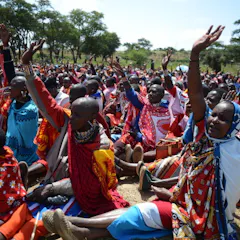
In Kenya, the prevalence of female genital mutilation has dropped by 24.2 percentage points where an alternative rite of passage is being tried.
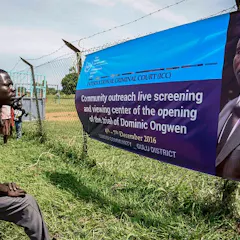
Ongwen’s case ends the blanket amnesty that African courts have always granted ex-child abductees over war crimes
Top contributors
-

Professor of Family and Sexual Violence, RMIT University
-
Professor (Practice), Faculty of Business and Economics, Monash University
-
Professor of Political Science and Chair of the South African Research Initiative in Gender Politics, Stellenbosch University
-
Associate Professor in Criminology, The University of Melbourne
-
Adjunct Assistant Professor, Media and Technology Studies, and Director of the Feminist Collaboratory and Data Visualization Centre, University of Alberta
-
Professor, Department of Sociology & Anthropology, University of Guelph
-
Director of Monash Indigenous Studies Centre, Chief Investigator for the Australian Research Council Centre of Excellence for the Elimination of Violence against Women (CEVAW), School of Philosophical, Historical & International Studies, School of Social Sciences (SOSS), Monash University
-
Senior Lecturer in Global Studies, RMIT University
-
Assistant Professor, Global Development Studies, Queen's University, Ontario
-
Associate Professor, Indigenous Education & Research Centre, James Cook University
-
Associate Professor of Disaster and Emergency Management, York University, Canada
-
Criminologist / Senior Lecturer, Stellenbosch University
-
Senior lecturer, University of Exeter
-
Assistant Professor, Vrije Universiteit Amsterdam; Independent Social Research Foundation
-
Professor of Social Work; Leneen Forde Chair in Child & Family Research, Griffith University