

The COVID-19 pandemic has shown that shelters helping survivors of domestic violence are essential. Retention and recruitment issues in the gender-based violence sector require systemic solutions.
Articles on Gender-based violence
Displaying 121 - 140 of 287 articles

Women described feeling dehumanised, powerless and violated. Some experienced psychological and emotional abuse, while others were threatened and yelled at.

Research shows that removing guns from violent abusers saves lives. But laws doing just that are at risk of being ruled unconstitutional, following a landmark Supreme Court guns case.

Improving access to affordable housing and increasing benefit assistance rates are some sustainable solutions to the chronic cycle of homelessness faced by women fleeing violence.

Black Panther and its sequel are more than just good movies: they can be used as teaching tools.

Study finds that the language used in news reports is often part of the problem, not the solution.
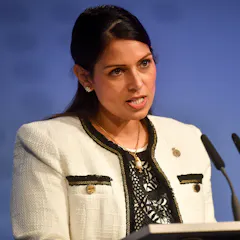
The Istanbul convention aims to tackle violence, including domestic abuse, rape, female genital mutilation and forced marriage. Some states are wavering in their commitment to its provisions.

We need not just an acknowledgement of children as victim-survivors in their own right but a commitment to boost resourcing of child-centred recovery support.
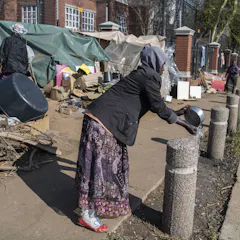
The continuing precarity and vulnerability to violence has long term consequences for these women’s health and well-being.

The incident at St. Xavier’s University in Kolkata amounts to gendered harassment.
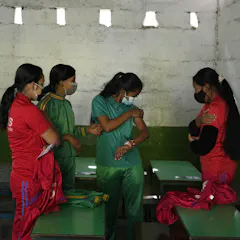
The impacts of COVID-19 must be incorporated into women, peace and security planning in order to improve the lives of women and girls in postwar countries like Nepal and Sri Lanka.

The country urgently needs more people who are committed to living decently to undo the systemic humiliation caused by political and economic institutions.

The government has opened a consultation about making public sexual harassment a distinct criminal offence.

The truth is that there are no easy and quick fixes, such as the governing party’s recent castration idea, which falls short on a range of scores.
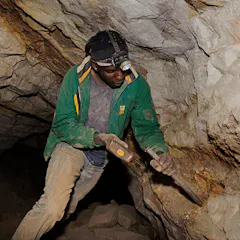
Artisanal gold mining is highly organised and rule-bound. Men, women and even children participate a hierarchy sustained by a web of buyers, sponsors and customers.

A recent jury examining murders of women urged the federal government to add the term femicide and its definition to the Criminal Code.

In today’s episode, we hear from two women who talk about how diamond mines in the Northwest Territories have negatively impacted women and girls and perpetuated gender violence.

Reform is needed to better balance the protection of men’s individual reputations with the rights of women to speak about their experiences.

We asked participants about why they think people (mostly men) harass others in public space. Their answers were revealing.

Contemporary fiction on screen increasingly tells the stories of abusive men in a realistic way. This documentary does not.
Top contributors
-

Professor of Family and Sexual Violence, RMIT University
-
Professor (Practice), Faculty of Business and Economics, Monash University
-
Professor of Political Science and Chair of the South African Research Initiative in Gender Politics, Stellenbosch University
-
Associate Professor in Criminology, The University of Melbourne
-
Adjunct Assistant Professor, Media and Technology Studies, and Director of the Feminist Collaboratory and Data Visualization Centre, University of Alberta
-
Professor, Department of Sociology & Anthropology, University of Guelph
-
Director of Monash Indigenous Studies Centre, Chief Investigator for the Australian Research Council Centre of Excellence for the Elimination of Violence against Women (CEVAW), School of Philosophical, Historical & International Studies, School of Social Sciences (SOSS), Monash University
-
Senior Lecturer in Global Studies, RMIT University
-
Assistant Professor, Global Development Studies, Queen's University, Ontario
-
Associate Professor, Indigenous Education & Research Centre, James Cook University
-
Associate Professor of Disaster and Emergency Management, York University, Canada
-
Criminologist / Senior Lecturer, Stellenbosch University
-
Senior lecturer, University of Exeter
-
Assistant Professor, Vrije Universiteit Amsterdam; Independent Social Research Foundation
-
Professor of Social Work; Leneen Forde Chair in Child & Family Research, Griffith University