

In urban Namibia, performance poetry provides a safe space for women to share their experiences and challenge traditional ideas.
Articles on Gender-based violence
Displaying 201 - 220 of 287 articles

Research shows familicides are almost exclusively committed by men and key risk factors include a desire for control, particularly in areas associated with masculinity.

A round-the-clock strike of Muslim women in a working-class neighborhood of Delhi is India’s most enduring pocket of resistance to religious discrimination, inequality and gender violence.

President Ramaphosa’s emphasis on fighting crime is well placed. Most categories of violent crimes have risen dramatically over the past eight years.

Dating app Tinder has come under increasing scrutiny over harassment facilitated by the platform. But its new safety measures, while undoubtedly an improvement, are unlikely to prevent abuse.

An estimated 2000 million women have undergone female genital mutilation and millions more are at risk. The practice is carried out mainly for cultural and economic reasons.

The state of emergency ultimately led to substantial legal changes that should better protect women and girls. But what really happened?
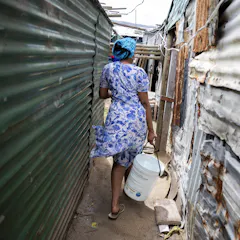
Two interventions proved effective in reducing men’s perpetration, but not women’s experiences of violence.

Underlying direct or personal violence is structural violence that is entrenched in unequal power relations in society.

Gender stereotyping might be funny, but it’s no joke. A public health professor explains why she took action against everyday sexism when she heard it in a radio advert.

Grace Millane’s murder trial demonstrated it is still possible to question a woman’s behaviour without understanding the gendered nature of men’s violence against women.
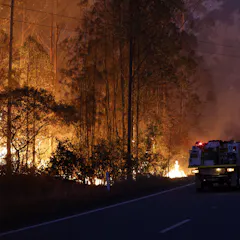
Natural disasters amplify the conditions leading to domestic violence. Yet Australia’s disaster policies are “gender blind”.

Research shows that abuse, violence and poor relationships in families may have dire consequences for society, and specifically children.
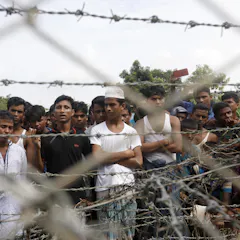
The sheer volume of pregnant women in the refugee camps was an early indicator of the extent sexual violence was used against Rohingya women and girls.

Research has a distinctive role to play because it gives pointers on what is needed to create long-term change.
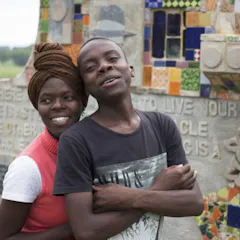
There are a number of effective interventions to prevent gender-based violence among adult women and men at risk of HIV infection. But little is known about the effectiveness of these in young people.

As protests continue in Mexico about violence against women, some have blamed macho culture. But that may do more harm.

New national data, on campuses and elsewhere, can help shift our shared narratives about the root causes of gender-based violence.

An increasing demand for sex robots is concerning, as there are ethical concerns about a possible related increase in gender-based violence.

Women in Mexico are lashing out against rampant sexual violence, police abuse and policies that hurt working mothers.
Top contributors
-

Professor of Family and Sexual Violence, RMIT University
-
Professor (Practice), Faculty of Business and Economics, Monash University
-
Professor of Political Science and Chair of the South African Research Initiative in Gender Politics, Stellenbosch University
-
Associate Professor in Criminology, The University of Melbourne
-
Adjunct Assistant Professor, Media and Technology Studies, and Director of the Feminist Collaboratory and Data Visualization Centre, University of Alberta
-
Professor, Department of Sociology & Anthropology, University of Guelph
-
Director of Monash Indigenous Studies Centre, Chief Investigator for the Australian Research Council Centre of Excellence for the Elimination of Violence against Women (CEVAW), School of Philosophical, Historical & International Studies, School of Social Sciences (SOSS), Monash University
-
Senior Lecturer in Global Studies, RMIT University
-
Assistant Professor, Global Development Studies, Queen's University, Ontario
-
Associate Professor, Indigenous Education & Research Centre, James Cook University
-
Associate Professor of Disaster and Emergency Management, York University, Canada
-
Criminologist / Senior Lecturer, Stellenbosch University
-
Senior lecturer, University of Exeter
-
Assistant Professor, Vrije Universiteit Amsterdam; Independent Social Research Foundation
-
Professor of Social Work; Leneen Forde Chair in Child & Family Research, Griffith University