The personal is now commercial – beauty, fashion and feminism
The Conversation22.2 MB(download)
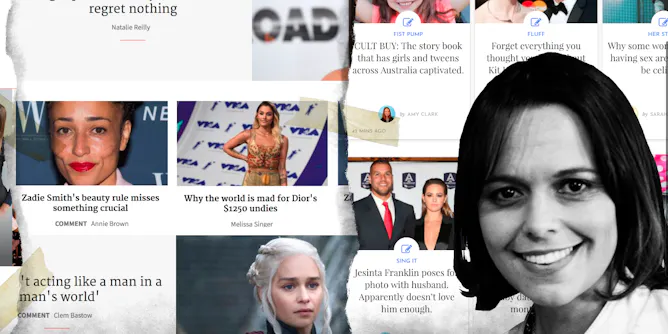
Sometimes I want to cheer online publications that combine politics, fashion and beauty for the way they are mainstreaming feminism. On closer inspection, though, it has produced some odd results.
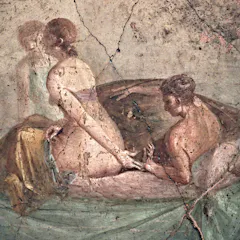
A fragment of a wall painting showing two lovers in bed from the House of L Caecilius Jucundus in Pompeii, now at Naples National Archaeological Museum.
Wikimedia Commons
From phallus-shaped wind chimes to explicit erotica on lamps and cups, sex is everywhere in ancient Greek and Roman art. But our interpretations of these images say much about our own culture.
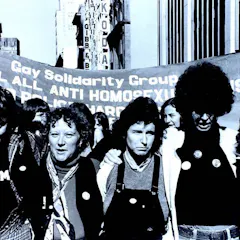
Marchers at the 1978 Mardi Gras parade.
Sally Colechin/The Pride History Group
On the Sydney Mardi Gras march of 1978
The Conversation, CC BY31.7 MB(download)
On a cold Saturday night in Sydney on June 24, 1978, a number of gay men, lesbians and transgender people marched into the pages of Australian social history. I was one of them.
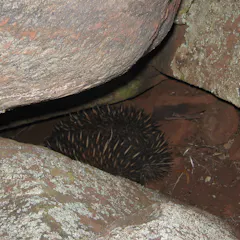
An echidna in the Western Granites at Jam Tree Gully.
John Kinsella
On his bush block in the WA wheatbelt, poet John Kinsella attempts habitat restoration and reflects on the responsibilities of the writer as a witness to species loss.
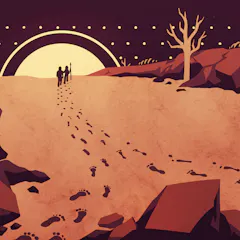
In July 2017, new research was published that pushed the opening chapters of Australian history back to 65,000 years ago.
Marcella Cheng/The Conversation
When did Australia’s human history begin?
The Conversation, CC BY16.6 MB(download)
Today's episode of Essays On Air, the audio version of our Friday essay series, seeks to move beyond the view of ancient Australia as a timeless and traditional foundation story.
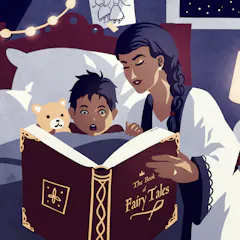
Fairy tales are extremely moral in their demarcation between good and evil, right and wrong.
Marcella Cheng/The Conversation NY-BD-CC
Why grown-ups still need fairy tales
The Conversation, CC BY22.8 MB(download)
We consciously and unconsciously tell fairy tales today, despite advances in logic and science. It’s as if there is something ingrained in us that compels us to see the world through this lens.
An ex-8th Division prisoner of war is reunited with his family at Ingleburn POW reception camp in New South Wales, November 1945.
Ernest McQuillan/Australian War Memorial
Over 20,000 former POWs returned to Australia at the end of the second world war. Archival research sheds light on those who struggled to readjust to life here - and the impact on their wives.
How will our children view this period in Manus in the future?
Michelle Rooney, 2017
The detention centre for asylum seekers generated some economic benefits for Manus Islanders. But how would their forefathers have reasoned with the incarceration of men in exchange for development and money?
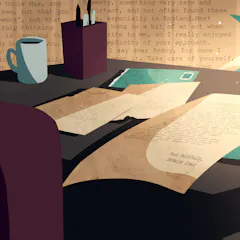
From the initial avalanche of mail triggered by Germaine Greer’s book The Female Eunuch grew a collection of 50 years of letters, emails, faxes, telegrams and newsletters.
Marcella Cheng/The Conversation NY-BD-CC
Essays On Air: Reading Germaine Greer’s mail
The Conversation24.4 MB(download)
The Germaine Greer Archive offers a powerful, often amusing, sometimes perplexing glimpse into the lives of people affected by her work, as well as the many faces of Greer herself.
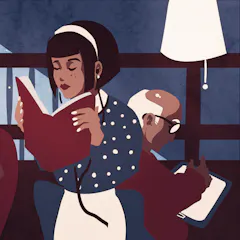
The much heralded ‘death of the book’ has nothing to do with the death of reading or writing. It is about a radical transformation in reading practices.
Marcella Cheng/NY-CC-BD
Essays On Air: Why libraries can and must change
The Conversation, CC BY23.3 MB(download)
The much heralded 'death of the book' has nothing to do with the death of reading or writing. It's about a radical transformation in reading practices, as explained in this episode of Essays On Air.
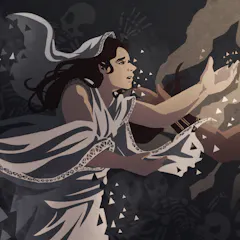
A central convention of Greek mythological narratives called katabasis, the hero’s journey to the underworld or land of the dead.
Marcella Cheng/The Conversation NY-BD-CC
Journeys to the Underworld – Greek myth, film and American anxiety
The Conversation36.9 MB(download)
Our new podcast, Essays On Air, features the most beautiful writing from Australian researchers. Today, classics expert Paul Salmond explores how modern cinema directors borrow from Greek legends.
Our first episode is from Paul Salmond, an expert on the Classics and Ancient History at La Trobe University, reading his essay ‘Journeys to the underworld – Greek myth, film and American anxiety’.
Wes Mountain CC-BY-ND
The Conversation is launching a new podcast, Essays On Air. It's the audio version of our Friday essays, where we bring you the best and most beautiful writing from Australian researchers.
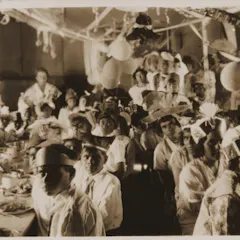
Christmas Dinner, Mt Margaret Mission 1933.
State Library of Western Australia
Aboriginal missions were notorious for their austerity, but Christmas was a brief time of joy. While celebrations had a sinister assimilationist edge, Aboriginal people often adopted traditions into their own culture.
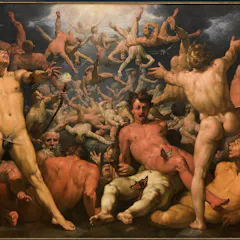
The Fall of the Titans, Cornelis Cornelisz van Haarlem, circa 1590.
Wikimedia
The dream of a “gay utopia” is a constant in gay and lesbian historical imaginings over the last 200 years. But the Greek attitude to same-sex attraction was not nearly as permissive as many have assumed.
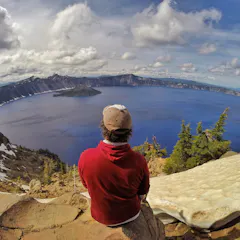
Mount Mazama, a volcano in Oregon. Indigenous stories preserve tales of its eruption more than 7,000 years ago.
Shutterstock.com
Old stories from around the world tell of drowned islands, volcanic eruptions and upheavals to the land around them. Increasingly we are realising these tales preserve actual memory, often from thousands of years ago.
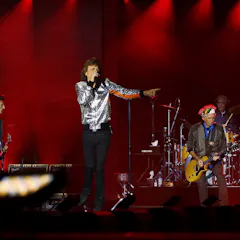
The Rolling Stones performing in Hamburg during the ‘No Filter’ European tour: the band’s legacy is entwined with the pioneers of black American music.
Morris Mac Matzen/Reuters
Pinching musical phrases and stylistic approaches has always been a part of art making and can be a respectful exchange. But shallow, ill-informed appropriation only perpetuates tired stereotypes.
Edmund Dulac’s 1910 illustration of Sleeping Beauty.
Wikimedia images
Fairy tales can be brutal, violent, sexual and laden with taboo. But they are are excellent narratives with which to think through a range of human experiences: from disappointment, and fear to envy and grief.
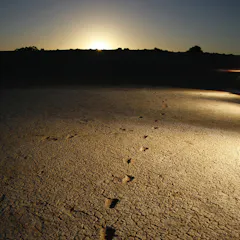
Fossilised ancient human footprints at the Mungo National Park. How are we to engage with a history that spans 65,000 years?
Michael Amendolia/AAP
Over the past half century, Australia has experienced a ‘time revolution’ with Indigenous history pushed back into the dizzying expanse of deep time. The latest discovery reminds us that science, like history, is an ongoing inquiry.
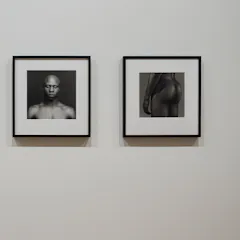
The distinctive visual style of Robert Mapplethorpe’s beautiful, oversized images seems now more classical than shocking. But he can still reveal the subconscious of an era we think we have outgrown.
Detail from Little Big Woman: Condescension, Debra Keenahan, 2017.
Designed and made by Debra Keenahan, Photograph by Robert Brindley.
For centuries, women with dwarfism were depicted in art as comic or grotesque fairytale beings. But artists are challenging these portrayals and notions of beauty and physical difference.