
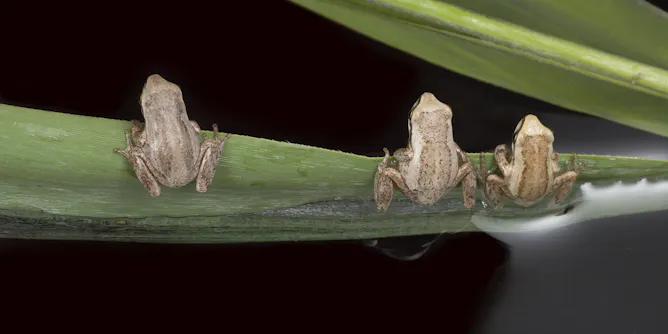
Climate change can seem far removed from our everyday lives, which is why a citizen science program measuring how frogs are dealing with a warming world is so important.
Articles on Friday essay
Displaying 301 - 320 of 399 articles
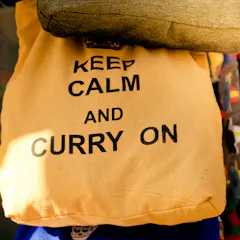
Whether being called ‘curry munchers’ or pigeonholed as authorities on a dish largely invented by the British, diasporic South Asians are emulsified in a deep pool of curry.

Coined in a science-fiction novel in 1995, the Anglosphere has become Australia’s cultural (and political) obsession. That leaves us blind to other perspectives.
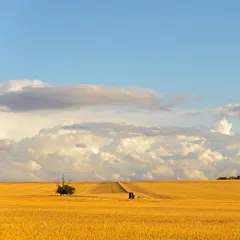
The powerful ideological connection between Australia and agriculture is being increasingly scrutinised. A spate of recent books have recast basic assumptions about our relationship to the land.
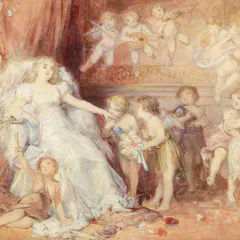
Notions of heaven have changed through the ages, from an eternity centred on God to a more secular place where loved ones will reunite.

In many legal jurisdictions of the world, including Australia, an offender’s remorse is a mitigating factor at sentencing. And yet how judges evaluate such expressions is unclear.
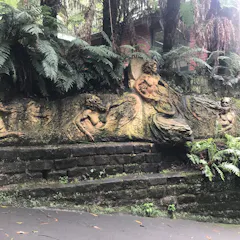
A mossy sanctuary in Victoria’s Dandenong Ranges houses 92 sculptures, mostly of Arrernte and Pitjantjatjara men, women and children. They are steeped in primitivism, yet the park is a popular tourist attraction.
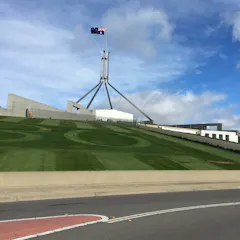
Why not turn the moat of parkland enclosing Parliament House into a new inner-city?
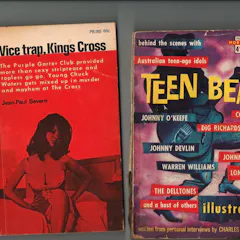
Mid-20th century pulp fiction was trashy, tasteless, exploitative and lurid. There’s a lot there to love. You might read pulp as a cultural Freudian slip, loony bulletins from the collective Id.
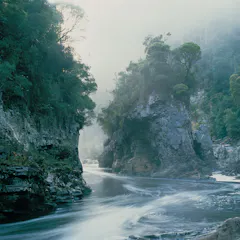
Essays on Air: how archaeology helped save the Franklin River
The Conversation23.2 MB (download)
The battle to save the Franklin River - an exhilarating story of politics, cultural heritage and passionate environmentalism - captivated the nation in 1983.
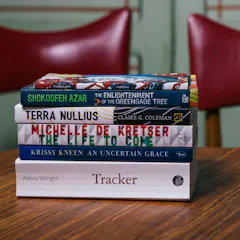
As major publishers chase bestselling books, small ones are leading the way in publishing Australian literary fiction. And of late, they have been sweeping our major literary awards.

At 14, writer Tony Birch had rarely travelled two miles out of the centre of Melbourne. Encountering a billabong on the Birrarung River was the first time that country spoke to him.
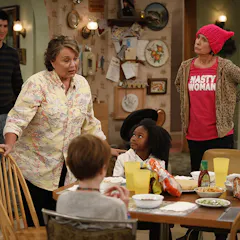
When it debuted in 1988, Roseanne was a breath of fresh air against the conservative middle class family sitcoms then on air. Its reboot in 2018 feels just as relevant.

Essays on Air: can art really make a difference?
The Conversation26.8 MB (download)
Art has always depicted the crimes of our times throughout centuries of wars and humanitarian crises. Can we really expect it to truly make a difference in the real world?
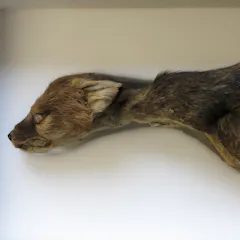
More than 160 thylacine specimens lie in museum collections in the UK. The sight of their bodies is a shocking reminder of loss.
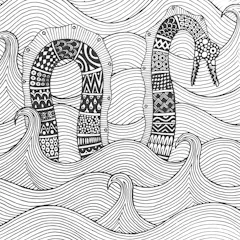
Essays On Air: Monsters in my closet - how a geographer began mining myths
So you think the Loch Ness Monster never existed? Think again. Traditional myths from our ancestors might actually reveal important clues about the geological history of the world.
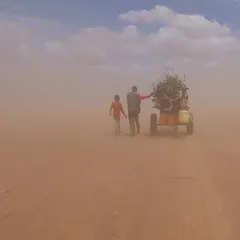
Artists have long tackled global issues, from war to human rights. While Picasso’s celebrated Guernica may not have stopped the Spanish Civil War (or any war), art still holds value, as witness and as truth teller.
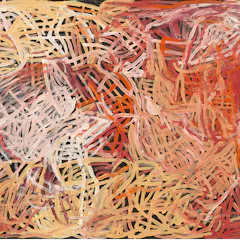
Today, beauty counts for little in the judgement of works of art. But our felt experience of beauty connects us with an object’s maker, revealing a pure moment of humanity.
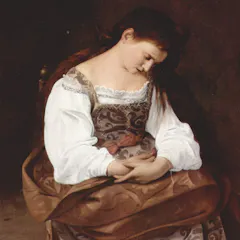
For centuries, Mary Magdalene was wrongly depicted as a repentant whore, diminishing her vital role as witness to the resurrection. A new film portraying her life does much to restore her character.

Essays On Air: Joan of Arc, our one true superhero
The Conversation22.1 MB (download)
Joan of Arc has been depicted as a national heroine, nationalist symbol, a rebellious heretic and a goodly saint. Forget Wonder Woman and Batman – Jeanne d’Arc may be our one and only true superhero.
Top contributors
-

Professor in Politics and Journalism, University of Notre Dame Australia
-
Associate Professor in Literary Studies, Monash University
-
Associate Professor in Creative Writing, Griffith University
-
Visiting Research Fellow, Department of English and Creative Writing, Adelaide University
-
Emeritus Professor in the History of Religious Thought, The University of Queensland
-
Honorary Professor of Classics and Ancient History, School of Historical and Philosophical Inquiry, The University of Queensland
-
Joanna Mendelssohn is a Friend of The Conversation.
Honorary Senior Fellow, School of Culture and Communication, The University of Melbourne
-
Senior Lecturer, Discipline of English and Writing, University of Sydney
-
PhD Candidate, Creative Writing, The University of Melbourne
-
Associate Professor (adjunct) in Creative Writing, Flinders University
-
Emeritus Professor of Creative Writing, The University of Melbourne
-
Lecturer, Deakin University
-
Professor Emeritus of Media and Culture, Griffith University, Griffith University
-
Professor of English, Flinders University
-
Research Fellow, Digital Cultures & Societies, The University of Queensland