
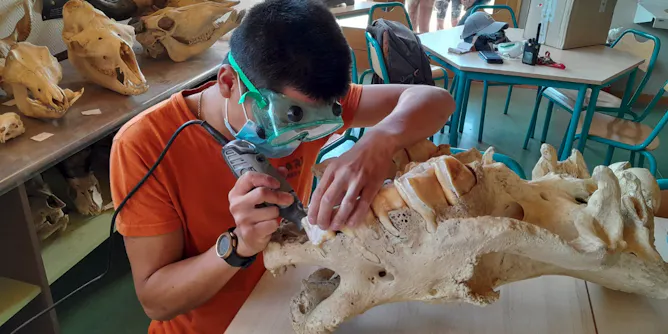
A recent study provides evidence that Neanderthals used rhinoceros teeth as tools.
Articles on Fossil teeth
Displaying all articles
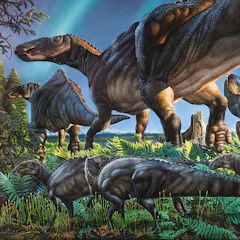
The Arctic was not simply a cold edge of the Cretaceous world, but a place where mammals adapted, diversified, migrated and originated.
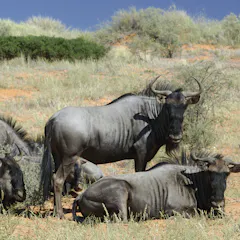
By studying antelope fossils, researchers can revisit long-standing questions about how the Cradle of Humankind’s environment evolved through time.
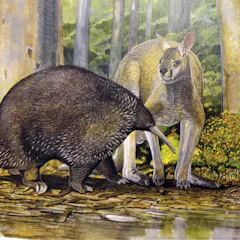
Australia doesn’t have any ‘kill sites’. In fact, there’s no hard evidence people hunted the megafauna.

A new discovery could reshape how we interpret the fossil record of humans and their closest relatives.

Using a method applied directly to ancient hominin teeth, researchers have calculated the age of several important fossils.
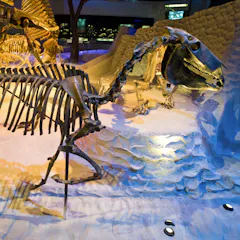
Horse fossils are abundant and widespread across North America. Scientists often use their long history to illustrate how species evolve in response to a changing environment.
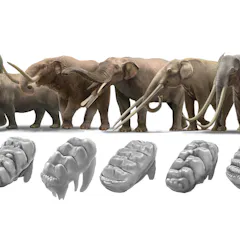
Groundbreaking study demonstrates how behaviour drives long-term evolution over 20 million years.
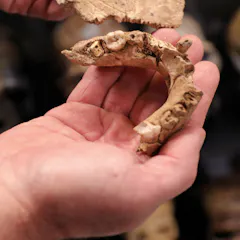
Using a new equation based on today’s primates, scientists can take a few molar teeth from an extinct fossil species and reconstruct exactly how fast their offspring grew during gestation.

Spectacular finds of the world’s oldest jawed fishes from China push back the origins of jaws and teeth, and suggest how limbs might have evolved.
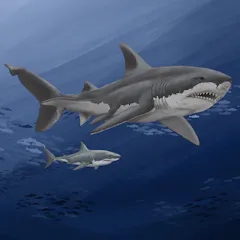
Megalodon, the world’s largest known shark species, swam the oceans long before humans existed. Its teeth are all that’s left, and they tell a story of an apex predator that vanished.
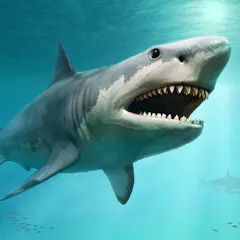
A terrifying sight in ancient waters, the megalodon shark was once the most feared creature in the sea.
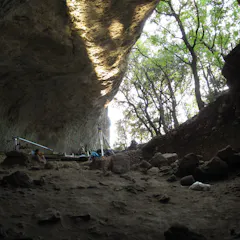
Stone artifacts and a fossil tooth point to Homo sapiens living at Grotte Mandrin 54,000 years ago, at a time when Neanderthals were still living in Europe.
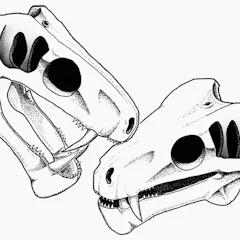
Finding a fossil tooth embedded in bone is always great news for palaeontologists, as it is the gateway to some otherwise out-of-reach understanding of the behaviour of extinct animals.
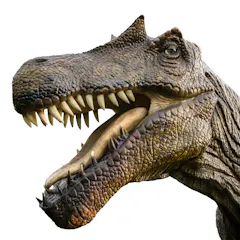
Teeth can reveal a lot about diversity when they are reasonably well-preserved.
Top contributors
-

Postdoctoral Fellow, University of the Witwatersrand
-
Curator: Geology and Invertebrate Palaeontology Collections, Iziko Museums of South Africa
-
Ph.D. Student in Geological Sciences, University of Florida
-
Professor of Anthropology, Western Washington University
-
Postdoctoral Research Fellow in Geosciences, University of Cambridge
-
Executive Dean of the College of Arts, Sciences & Education and Professor of Biological Sciences, Florida International University
-
Postdoctoral Researcher, University of Helsinki
-
Archéologue et chercheur au CNRS, Auteurs historiques The Conversation France; Université de Toulouse
-
Distinguished Professor Emeritus, University of Florida
-
Honorary Research Associate, Evolutionary Studies Institute, University of the Witwatersrand
-
Specialist in Geoscience, Goethe University Frankfurt am Main
-
Associate professor in Vertebrate Palaeontology, University of the Witwatersrand
-
Archéologue et chercheuse en anthropologie, Aix-Marseille Université (AMU)
-
Paleoanthropologist, Université de Bordeaux
-
Postdoctoral Researcher in Palaeontology, Utrecht University