
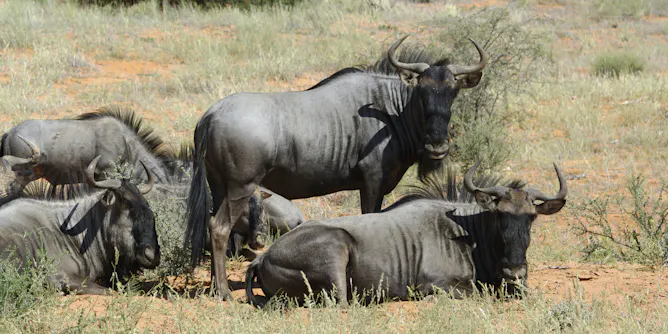
By studying antelope fossils, researchers can revisit long-standing questions about how the Cradle of Humankind’s environment evolved through time.
Articles on Cradle of Humankind
Displaying all articles
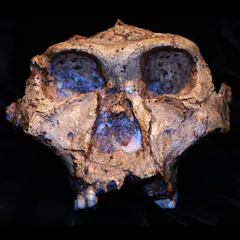
Researchers have extracted 2-million-year-old protein remains from Paranthropus robustus teeth to reveal biological sex and genetic variability.

Using a method applied directly to ancient hominin teeth, researchers have calculated the age of several important fossils.

The South African Khoe-San communities are no strangers to exploitative research. One research team is trying to provide genetic ancestry results to community members. But they still face many challenges.

Studying the lower back allows researchers to understand how the species’ anatomy was adapted for different kinds of movement.
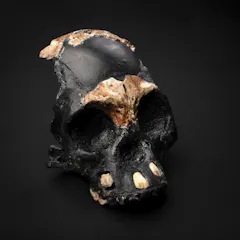
The fossil material was recovered from the surface of a tight, narrow passage that can only be accessed with difficulty by one person at a time.

Stone-walled structures such as Driefontein often store information that’s not written down and are the only remaining resources to help understand local histories.

It is essential to add genomic data from all global populations - including Africa. This will ensure that everyone can benefit from the advances in health.

This is a hugely important find. It means that one of our earlier ancestors possibly originated in southern Africa.
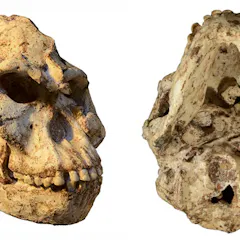
The findings suggest that this specimen could climb and move in trees. But it may also have been able to walk on the ground. This echoes previous studies.
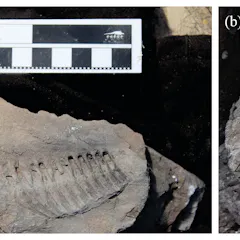
Geomythology can be a powerful way to inspire more people on the continent to become interested in Africa’s palaeoscience.

Thanks to hundreds of fossil remains found in Africa studies can explore new scenarios about how our ancestors lived and evolved.

South Africa’s fossils can step out of the shadows of being undated and undateable.
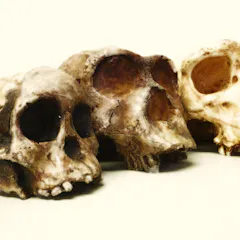
Recent research suggests that humankind’s origins lay outside of Africa. This is the nature of science: a paradigm that cannot be questioned on a regular basis becomes a dogma.
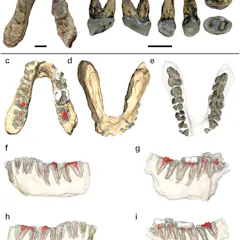
The theory that humankind originated in Europe is an old one. It was abandoned in 1924 when the first Australopithecus was discovered in South Africa.
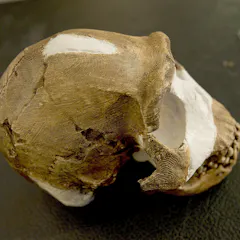
New evidence suggests that Homo naledi didn’t deliberately deposit their dead in a hidden chamber.
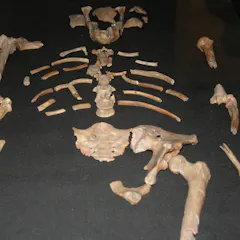
When it comes to valuable African fossils, much is at stake. They often unearth disputed ways of debating archaeology as a science of ‘discovery’.
Top contributors
-

Associate professor in Vertebrate Palaeontology, University of the Witwatersrand
-
Lecturer, University of Cambridge
-
Honorary Research Associate, Evolutionary Studies Institute, University of the Witwatersrand
-
PhD Researcher, La Trobe University
-
Professor of Palaeoanthropology, La Trobe University
-
Lecturer in Archaeology, University of Johannesburg
-
Associate Professor of Anthropology, University of California, Davis
-
PhD Candidate in Anthropology, University of California, Davis
-
Professor in Geochronology and Geochemistry, Southern Cross University
-
Researcher in Palaeoanthropology, University of Johannesburg
-
Research Associate, African Centre for Coastal Palaeoscience, Nelson Mandela University
-
Palaeoanthropologist
-
Senior Lecturer, University of Mpumalanga
-
Researcher, Physical and Biological Anthropology, Simon Fraser University
-
Associate Professor of Biological Anthropology, New York University