
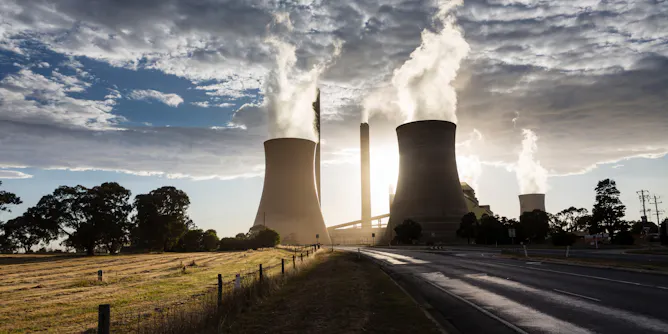
Some promising proposals have been put forward, but most suffer either from a lack of ambition or a lack of participation from key countries.
Articles on Fossil fuel subsidies
Displaying 21 - 38 of 38 articles
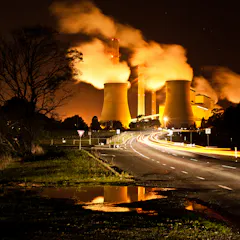
For a net-zero plan not to include a strategy to phase out this enormous contribution to climate change is an abrogation of responsibility.

Saudi Arabia and soon Australia are making net zero pledges, but they have no plans to wind down fossil fuel output soon.
Rich nations need to provide far greater climate adaptation financing to low income countries and plug the holes that siphon their limited fiscal resources to tax havens.

My new research shows Australia has spent more subsidising fossil fuel research indirectly via research and development tax credits than directly via grants.

Rhetoric is hardening, but government policies still honour the special relationship with fossil fuels.

The costs that fossil fuels impose on public health through air pollution alone are enormous.

Some speculated that voters in Pennsylvania, Ohio, Colorado and Texas would vote against Joe Biden because of his plans to phase out fossil fuels.

It’s encouraging that the federal government recognises its role in industry policy. But its choice to support some technologies is disappointing.

To reverse the current climate and ecological crises, governments must put an end to the damaging forms of technology, innovation, investments and incentives that contribute to it.
Contrary to the Morrison government’s claims, it does prop up the fossil fuel industry. But the money doesn’t create many jobs or much profit.

While it’s impossible to stop all extraction of fossil fuels now, renewable sources are already generating 25% of global electricity demand now and their contribution continues to grow.

The mass protests shine a spotlight on the tension between policies that raise energy prices and day-to-day energy affordability.

Had the EU eliminated all subsidies between 2010 and 2017, its emissions would have been 9% lower over the period and governments across the EU would have saved US$441 billion.
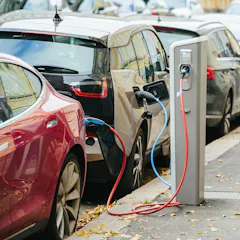
New Zealand has proposed new fuel standards, along with a consumer rebates for cleaner cars – paid for by higher costs for high-polluting cars – to cut its rising transport emissions.
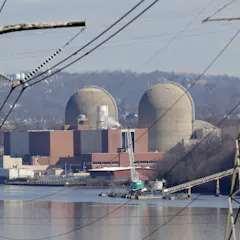
There is simply no credible evidence supporting the contention that America is experiencing a grid emergency.

Reforms to fossil fuel subsidies must be combined with effective anti-poverty policies.

Even Trump’s most destructive proposals pale in comparison. The president is merely throwing a match on a burning building.
Top contributors
-

Professor of Political Philosophy, UNSW
-
Senior Lecturer in Economics, University of St Andrews
-
Professor of Environmental Science, University of South Africa
-
Associate Fellow of Political Economy, Institute of Development Studies
-
Adjunct professor, Environment and Sustainability, University of Saskatchewan
-
Visiting Fellow in International Climate Governance, Columbia University
-
Professor in Technology and Society, Chalmers University of Technology
-
Senior Research Fellow, Monash University
-
Director, Center for Energy and Sustainable Development; Professor of Law, West Virginia University
-
Professeur d’économie, fondateur de la chaire « Économie du climat », Université Paris Dauphine – PSL
-
Professor of Sustainability, Rochester Institute of Technology
-
Senior Fellow, Centre for Free Expression, Toronto Metropolitan University; York University, Canada
-
Doctoral Fellow, The Fletcher School, Tufts University
-
Lecturer in Organisation Studies and Sustainability, Cardiff University
-
Professor, Département de droit, Université du Québec en Outaouais (UQO)