

Research shows that losing coverage, even temporarily, tends to make people less healthy, and it exposes them to financial losses.
Articles on Subsidies
Displaying 1 - 20 of 98 articles

A recent report into the federal government’s Cheaper Home Batteries Program found major problems with safety and compliance.

Reform must recognise that the sector’s social capital is its strength and its weakness.
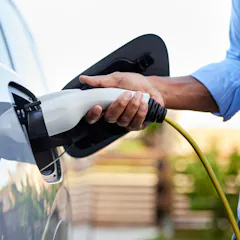
It’s easy to think cheaper EVs will encourage more people to switch. But new research shows subsidising these vehicles is poor value for money. There’s a better way.
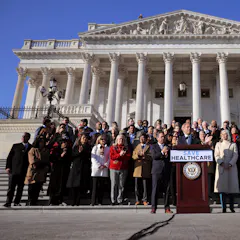
US health care policy will remain fractured until lawmakers address the core question of who is responsible for health care costs.

Changes to the Cheaper Home Batteries Program are a step in the right direction, but more are needed to make it fair.

Early warnings about the Cheaper Home Batteries Program have come true. But there are ways to fix it.
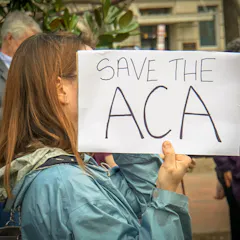
Short-term renewals of policies such as the ACA subsidies set up repeated battles in Congress.

As the battle for health care plays out in Washington, the shutdown itself could also make it harder for Americans to get the care they need.

For decades, government subsidies have helped industrial fishing fleets to expand, often with little regard for sustainability.

If the government supported rental assistance in amounts commensurate with the tax benefits given to homeowners, it would drastically alleviate the housing affordability crisis.
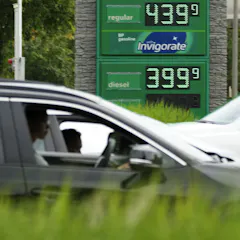
Countries have promised to reduce their fossil fuel subsidies to fight climate change, but that’s harder to do than it sounds, as an energy law expert explains.
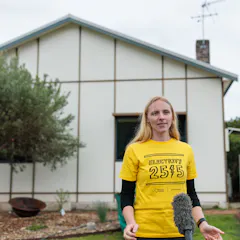
Getting off gas at home is healthier, cheaper and better for the planet. Now the Electrify 2515 community pilot project promises to demonstrate household electrification at scale.

Why do governments still give billions to encourage fossil fuel production? The answer is often to shore up energy supplies.

There’s already demand for critical minerals and solar panels. But what about green hydrogen?
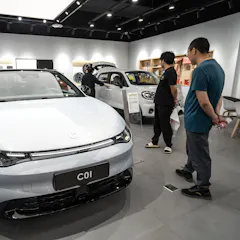
The US president is ramping up tariffs on Chinese-made products, including a 100% border tax on electric cars.

Carbon capture is turning the oil and gas industry into a critical player for mitigating climate change – while its products continue to heat up the planet.

A new UN report finds that the true global cost of producing food is $12.7 trillion more than consumers pay at the checkout counter. We pay those uncounted costs in other ways.

Louisiana’s governor made it easier for companies to receive property tax breaks – and schools will likely pay the price.

An estimated 95% of US cities provide economic development tax incentives to woo corporate investors, taking billions away from schools.
Top contributors
-

Professor of Government, The University of Texas at Austin
-
Assistant Professor of Landscape Architecture & Urban Planning, Texas A&M University
-
Professor of Education Policy & Law; Director of the National Education Policy Center, University of Colorado Boulder
-
Freelance Reporter and Editor, The Conversation
-
Professor of Economics & Business, Allegheny College
-
Associate Professor of Public Health, The Ohio State University
-
Executive Director, Swette Center for Sustainable Food Systems, Arizona State University
-
Senior Lecturer, Department of Economics, Macquarie University
-
Adjunct Lecturer in Urban Studies, The New School
-
UTS Distinguished Professor of Accounting, University of Technology Sydney
-
Professor of Civil and Environmental Engineering, Rice University
-
Senior Economist and Associate Director of Social Science and Policy, University of Michigan Energy Institute, University of Michigan
-
Professor of Management (Operations Management), The University of Melbourne
-
Senior Research Fellow in the Department of Political Economy, University of Sydney
-
Associate Professor, Department of Political Economy, University of Sydney