
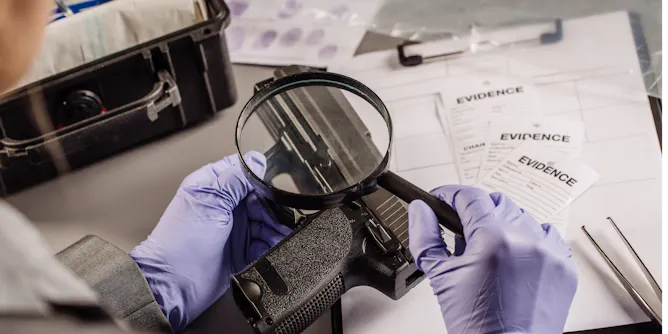
Lifting fingermarks from a crime scene often destroys the DNA they can contain.
Articles on Forensics
Displaying 61 - 80 of 104 articles
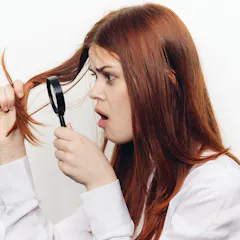
Your hair can reveal how much you drink, whether you smoke or take drugs, and perhaps even how stressed you are.
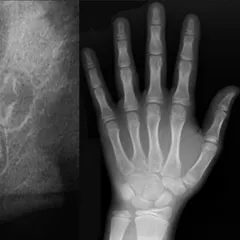
If an undocumented migrant is a minor or an adult can have far-reaching implications. A forensic anthropologist explains why relying solely on dental X-rays to determine age doesn’t work.
A bit of advice for any criminals inspired to try and edit their own genes – it’s unlikely to work, and it may present health risks.
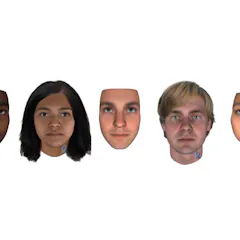
Our ability to reconstruct physical features from DNA is advancing, but can we ensure the privacy of “anonymised” genetic data if we can predict the face of its owner?
We’re at the point in DNA technology where individuals who – having parted with $99 and a small vial of saliva – may suddenly find themselves in a criminal investigation.
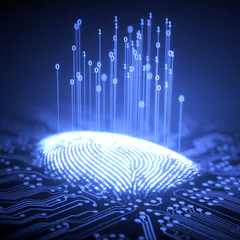
Research is increasingly proving fingerprints can be used for much more than identifying people.
Insights and approaches drawn from anthropology could be a useful part of the toolkit for a cop trying to catch a killer.
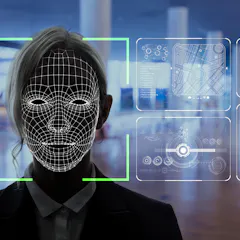
Facial recognition software isn’t ready for face-in-a-crowd applications. Specialist police officers are far superior at spotting criminals.
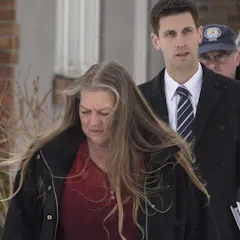
Police in Toronto say they’ve found the remains of at least six people in the midst of their investigation into alleged serial killer Bruce McArthur. Here’s what goes on in such investigations.
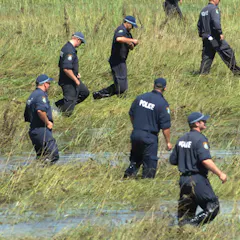
New evidence points to a possible burial site for South Australia’s Beaumont children, missing for 52 years. Specialist techniques will be applied to extract and sequence DNA if remains are found.
Applying actual science to forensic investigations can yield substantially different results from the findings of standard methods in the field.
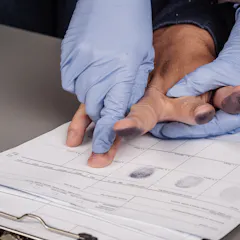
Fingerprinting is a valuable police tool for tracking down suspects, but it’s not perfect. However, we can reduce the risk of any mistaken identity if we work within the limits of fingerprinting.
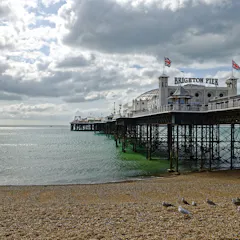
Anthill 17: Science by the seaside
CC BY-ND44.8 MB (download)
From the man who gave away his genome under open consent, to the 'Mathematikado', this episode of the podcast features highlights from the British Science Festival in Brighton.
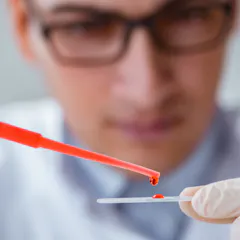
If only DNA samples and microfibres made crimes as easy to solve as on CSI.
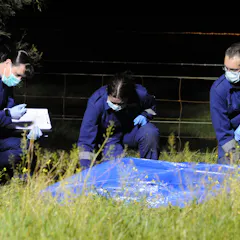
Genetic evidence has become a critical aspect of modern criminal investigations. What are the methods and approaches used in present-day DNA forensics?
Blood-detection dogs work paw in hand with scientists and Australia’s police to solve crimes and missing persons cases.
We live in a probabilistic world. The courts need to catch up – and start training juries in statistics.
Forensics has a way to go before it’s a mature, academic science. Attorney General Jeff Sessions just terminated an independent commission charged with helping it get there.
Is forensic science an oxymoron? A new White House report suggests there are major issues with many of the forensic disciplines used to convict defendants of crimes in the U.S.
Top contributors
-

Associate Professor of Forensic Science, Murdoch University
-
Research fellow, The University of Queensland
-
Lecturer, Business School & Centre for Policy Futures, The University of Queensland
-
Associate Professor of Domestic and Family Violence, Queensland Centre for Domestic and Family Violence Research, CQUniversity Australia
-
Visiting Scholar, University of Wollongong in Dubai (UOWD), University of Wollongong
-
Adjunct Associate Professor - Forensic Genetics, University of Technology Sydney; Adelaide University
-
Adjunct Lecturer in Forensic Sciences, Murdoch University
-
Chancellor’s Postdoctoral Research Fellow, University of Technology Sydney
-
Professor of Forensic Science, University of Lancashire
-
Lecturer in Chemistry, University of Surrey
-
Professor of Forensic Science, University of Hull
-
Director Leverhulme Research Centre for Forensic Science, University of Dundee
-
Professor of Forensic Genetics, University of Technology Sydney
-
Project Lead for International Technical Forensic Services Global Forensic Justice Center, Florida International University
-
Associate Professor of Environmental Sciences, Emory University