
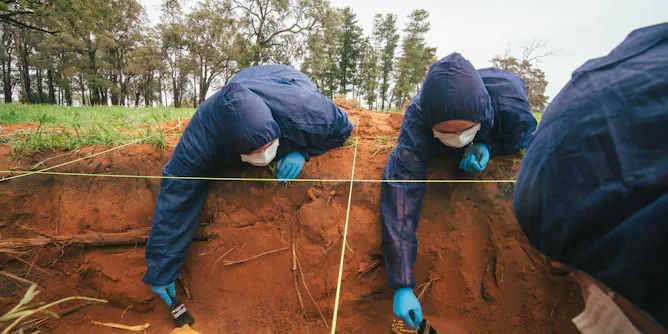
As a forensic scientist who has worked at thousands of homicide, sexual assault and serious crime scenes, I can tell you the process is not as straightforward as depicted on popular true crime shows.
Articles on Forensics
Displaying 41 - 60 of 104 articles
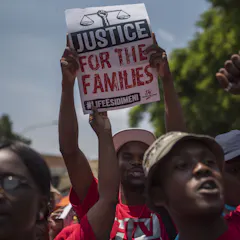
An immediate police investigation into the deaths was prevented because the cause of death was indicated as ‘natural causes’ on their death certificates.
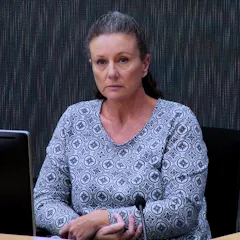
The science behind today’s petition to pardon Kathleen Folbigg has been peer reviewed. Here’s what it says.
For decades, forensic linguists have helped crack cases involving false author attribution, masked voices, false confessions in criminal cases and copyright disputes.
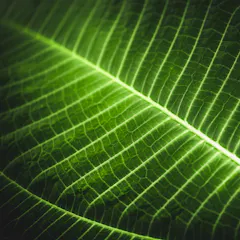
Researchers are figuring out how plants respond to the presence of human cadavers. The findings could prove important for discovering the locations of murder victims or mass graves.
No one knows exactly how AI-based DNA analysis software works, so it can’t be scrutinised in court.
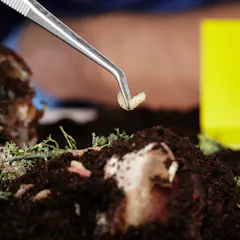
Trust Me, I’m An Expert: forensic entomology, or what bugs can tell police about when someone died
The Conversation, CC BY58.8 MB (download)
James Wallman is one of Australia's few forensic entomologists. It’s his job to unpack the tiny clues left behind by insects that can help police solve crimes.
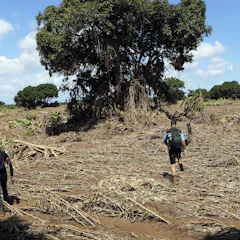
Meet the unsung aid workers who put their lives on the line during war and natural disaster to make sure the dead are treated with respect – and that their grieving families get closure.
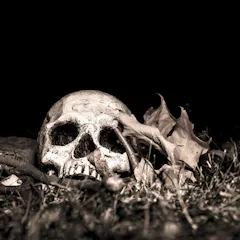
While forensic scientists mostly use fingerprints, dental records and DNA to identify human remains, they have many other techniques in their forensic toolkit. How many have you heard of?
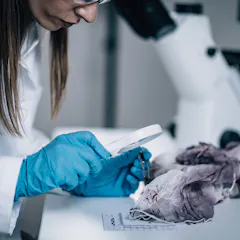
DNA profiling is one of the most reliable techniques we have, but it can be misused.

‘This is going to affect how we determine time since death’: how studying body donors in the bush is changing forensic science
The Conversation, CC BY77.2 MB (download)
On the outskirts of Sydney, in a secret bushland location, lies what's officially known as the Australian Facility for Taphonomic Experimental Research. In books or movies, it'd be called a body farm.
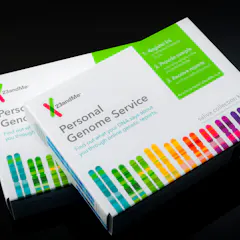
Despite privacy concerns over police use of DNA uploaded to ancestry websites, many people are just excited that their genetic material could get a killer off the streets.
A failure to introduce robust science means forensic science has reached crisis point. The UK has to act now to address this threat to justice.
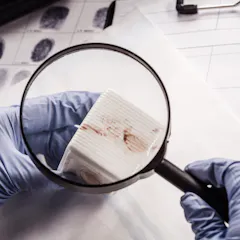
UK forensic science and technology is lurching from crisis to crisis. A fundamental reform of governance and policy making is needed.
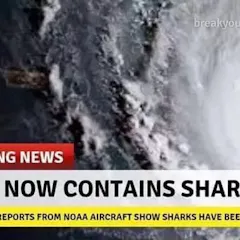
It’s easier than ever to create a fake image and spread it far and wide online. But there are steps that you can take to protect yourself from fishy photos.
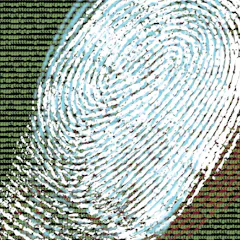
Police have powerful new genetic tools. How are we going to regulate their use? A Genetic Data Protection Act is one solution to ensure confidence in the way DNA is accessed and used.
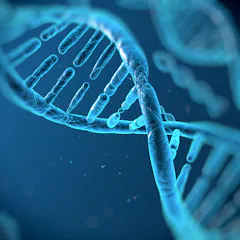
Self-examination DNA collection techniques can help women bring the perpetrators of sexual violence to justice.

Scavengers play an important but often poorly understood role in how fast bodies decompose.

Analysing the words used to place blame or give evidence can change how we see a situation.
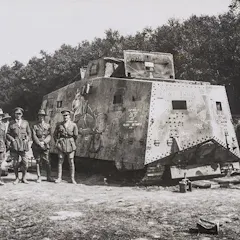
One hundred years after its capture from the battle fields of France, the last German battle tank of its kind is giving up its secrets to archeologists and forensic analysis.
Top contributors
-

Associate Professor of Forensic Science, Murdoch University
-
Research fellow, The University of Queensland
-
Lecturer, Business School & Centre for Policy Futures, The University of Queensland
-
Associate Professor of Domestic and Family Violence, Queensland Centre for Domestic and Family Violence Research, CQUniversity Australia
-
Visiting Scholar, University of Wollongong in Dubai (UOWD), University of Wollongong
-
Adjunct Associate Professor - Forensic Genetics, University of Technology Sydney; Adelaide University
-
Adjunct Lecturer in Forensic Sciences, Murdoch University
-
Chancellor’s Postdoctoral Research Fellow, University of Technology Sydney
-
Professor of Forensic Science, University of Lancashire
-
Lecturer in Chemistry, University of Surrey
-
Professor of Forensic Science, University of Hull
-
Director Leverhulme Research Centre for Forensic Science, University of Dundee
-
Professor of Forensic Genetics, University of Technology Sydney
-
Project Lead for International Technical Forensic Services Global Forensic Justice Center, Florida International University
-
Associate Professor of Environmental Sciences, Emory University