
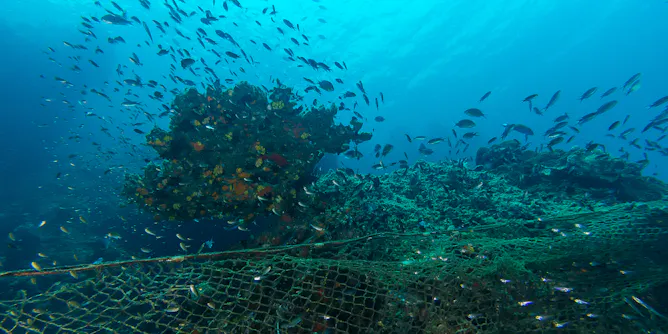
If ASEAN demands its member nations try to stop illegal and unregulated fishing, but without requiring matching financial commitments, we will continue to lose the battle against illegal fishing.
Articles on Fishing
Displaying 81 - 100 of 291 articles

Freshwater megafish numbers have fallen by 94%, according to one study.
Having a flexible and adaptable management system is necessary to sustainably manage fisheries, especially in times of a rapidly changing climate.
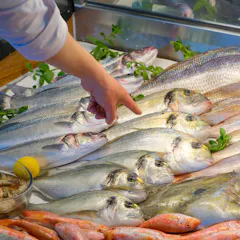
When you buy seafood, you can’t be sure it is what it says it is – and Australian wholesalers are resistant to new traceability technologies.

A guaranteed basic income is a promising tool for contributing to sustainability and justice across agriculture and fishing sectors.
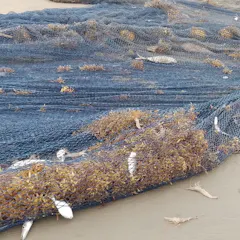
The seaweed invasion of parts of the Ghanaian shoreline is affecting coastal inhabitants.
It took almost 20 years. but the world has finally agreed on the so-called High Seas Treaty to better protect marine life in unregulated waters
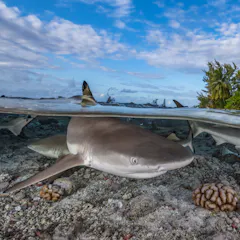
Over 100 shark and ray species were recently added to an international treaty, known as the CITES list, to protect them from the threat of unsustainable and illegal trade.
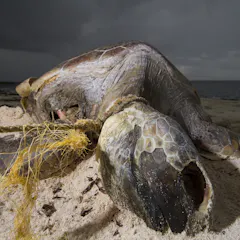
Remote islands in the Indian Ocean are now strewn with plastic waste – the origin of this waste has until now not been established.
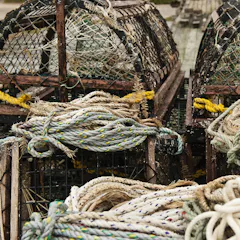
To fish the oceans sustainably, nations must reduce bycatch, or accidental catches. But fishermen often resist changing gear or techniques that kill nontargeted species.
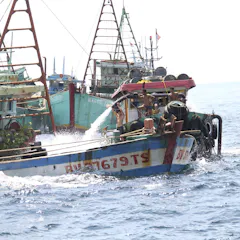
Understanding when, where and why fishing vessels sometimes turn off their transponders is a key step toward curbing illegal fishing and other crimes on the high seas.
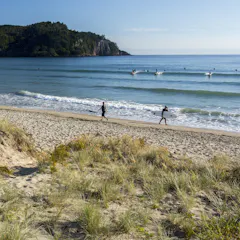
Last summer was the worst for drownings in a decade, with some groups tragically overrepresented. Community groups are urging a change of approach to water safety education.
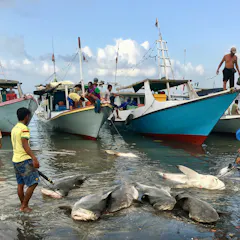
Countries have voted to limit the international shark trade, but this fails to account for the diversity in fishing contexts around the world.
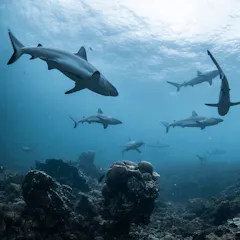
Fining and jailing Indonesian fishers taking shark fin is a knee-jerk solution. As long as sharks keep vanishing and demand for shark fin soup remains high, illegal fishing will continue.
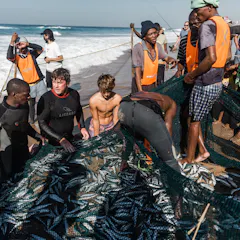
South Africa’s policies need to do more to protect vulnerable and marginalised small-scale fishers and fishing communities.
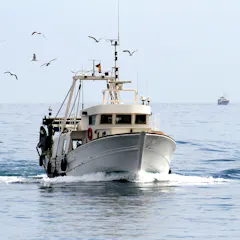
The warming observed in the Gulf of St. Lawrence is causing upheaval in the balance of the species living there. That is having direct repercussions on the commercial fishing sector.
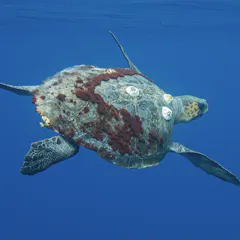
Standard marine protected areas with fixed boundaries can’t effectively shelter these ocean nomads.
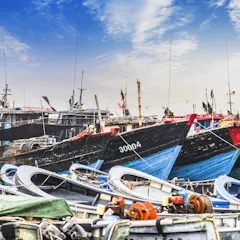
Every year, it’s estimated as many as 24,000 fishers die in fishing vessel accidents. That’s more than 10 times more lives claimed than on merchant ships, carrying cargo or passengers. Why?

A mass die-off of crustaceans occurred on England’s north-east coast last autumn – the government’s explanation of the cause is unlikely to be true.
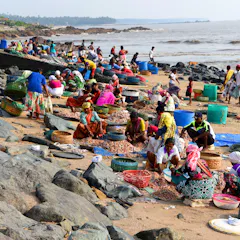
Facing human threats, Mumbai’s Koli community are taking risk reduction into their own hands – other vulnerable coastal settlements should take note.
Top contributors
-

Director & Professor, Fisheries Economics Research Unit, University of British Columbia
-
Wen Family Chair in Conservation, The University of Western Australia
-
Associate Professor, Marine Ecology and Fisheries Biology, University of Plymouth; Marine Biological Association
-
Professor of Marine Ecology, University of Technology Sydney
-
Professor of Complex Systems and Environmental Policy, Bournemouth University
-
Senior Research Fellow, Conservation Science, University of Oxford; Bangor University
-
Professor & ARC Laureate Fellow, Thriving Oceans Research Hub, School of Geosciences, University of Sydney
-
Research Scientist, Fisheries & Marine Institute, Memorial University of Newfoundland
-
Chief Scientist, Heriot-Watt University
-
Emeritus Professor of Environmental Governance, UCL
-
Researcher in Ecosystem Dynamics, University of California, Santa Cruz
-
Professor, Conservation Biology, The University of Queensland
-
Senior Principal Research Scientist, CSIRO
-
Associate professor, Singapore Management University
-
Associate Professor in Marine Biology, Swansea University